When someone struggles with alcohol addiction, it’s never an isolated battle. Addiction ripples outward — damaging relationships, eroding trust, creating emotional wounds, and destabilizing the entire family system.
Yet in that same truth lies something powerful: healing can ripple outward too. When families heal together, they don’t just support one person’s recovery — they transform the future of the entire family.
At Warsaw Recovery, a leading Addiction Treatment Center Virginia, we believe lasting sobriety is a collective victory. That’s why we integrate family support throughout every stage of care, from Medical Detox Program in Virginia through Residential Treatment Program in Virginia and beyond.
In this guide, we’ll explore how and why family support plays such a pivotal role in alcohol rehabilitation — and how healing together creates stronger, longer-lasting recovery.
How Alcohol Addiction Damages Family Relationships
Alcohol addiction strains family life in countless painful ways:
- Broken trust: Promises made and broken, again and again, erode confidence and reliability.
- Communication breakdown: Discussions often devolve into anger, denial, or silence.
- Emotional trauma: Family members carry fear, sadness, resentment, and guilt.
- Financial and legal instability: Job loss, DUIs, legal fees, and healthcare costs take their toll.
- Caretaking and enabling: Family members sometimes unintentionally enable the addiction while trying to “help.”
- Isolation and stigma: Families often withdraw out of shame, creating deep loneliness.
Without healing these wounds, even successful sobriety can feel unstable — because the relational foundations have been weakened.
At Warsaw Recovery, our Substance Abuse Treatment in Virginia actively addresses these family dynamics to rebuild stronger support systems around every client.
Why Family Involvement Is Critical in Alcohol Rehabilitation
Research consistently shows that family involvement dramatically improves recovery outcomes:
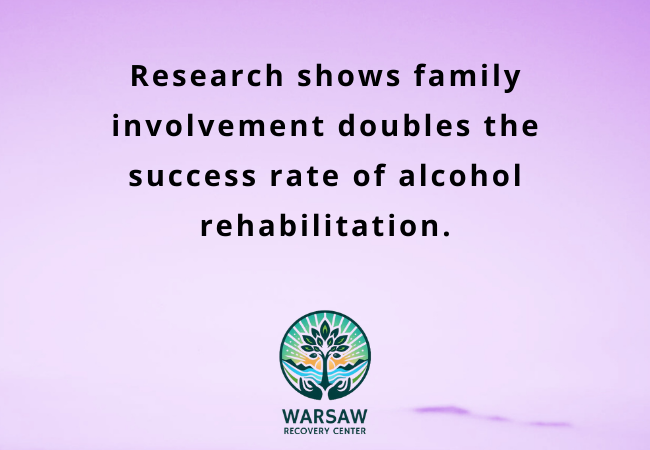
- Individuals whose families engage in therapy are twice as likely to stay sober after treatment.
- Family-supported clients report higher satisfaction with their recovery journey.
- Family therapy reduces relapse risk by helping rebuild trust, connection, and accountability.
Here’s why family support is so vital:
1. Rebuilding Trust: Healing the Core of Relationships
Addiction often centers around broken promises, secrecy, and betrayal.
Family therapy helps to:
- Address the hurts caused by addiction honestly and compassionately
- Facilitate new agreements and healthy boundaries
- Celebrate small, consistent steps toward rebuilding trust
At Warsaw Recovery, we guide families through this delicate process with expert-led therapy during Inpatient Treatment Programs in Virginia and outpatient care.
2. Educating Families About the Nature of Addiction
Many families misunderstand addiction, believing it’s purely a choice or a moral failing.
Our education programs teach:
- Addiction is a chronic, relapsing brain disease — not a lack of willpower
- What relapse really means (not failure, but part of recovery for some)
- The difference between support and enabling
- How to foster accountability and compassion simultaneously
Empowered families become stronger allies, not accidental obstacles, in recovery.
3. Creating a Healthy, Sober Environment at Home
Healing doesn’t end inside the rehab center.
A safe, supportive home is essential for long-term sobriety.
We help families:
- Eliminate alcohol and triggers from the environment
- Establish sober-friendly routines and activities
- Support sober milestones (not with alcohol-centered celebrations)
- Communicate about stressors before they escalate into crises
A stable home increases a recovering person’s confidence and decreases relapse risk dramatically.
4. Building Effective Communication Skills
Poor communication often feeds both addiction and relapse.
At Warsaw Recovery, families practice:
- Active listening
- Expressing needs and emotions clearly
- Managing conflict without escalation
- Building emotional intimacy without control or manipulation
Stronger communication strengthens trust — and trust strengthens sobriety.
5. Healing Past Trauma and Family Patterns
Sometimes addiction isn’t the beginning of family dysfunction — it’s the symptom.
Generational trauma, emotional neglect, abuse, or family mental health issues may have paved the way for addiction.
At Warsaw Recovery, we help families:
- Uncover and address deeper wounds
- Break toxic generational patterns
- Create new, healthier family legacies
Healing the “whole picture” creates sustainable, generational change.
How Warsaw Recovery Integrates Family into Every Stage of Healing
At Warsaw Recovery, family support isn’t an afterthought — it’s built into everything we do:
Family Therapy Sessions:
Weekly structured sessions during residential treatment to rebuild trust, resolve conflicts, and strengthen emotional bonds.
Family Education Workshops:
Seminars covering the disease model of addiction, relapse prevention, emotional support strategies, and healthy boundary setting.
Individualized Family Counseling:
One-on-one guidance for family members on navigating guilt, enabling behaviors, communication barriers, and their own emotional healing.
Family-Inclusive Aftercare Planning:
We work with families to build home support systems and sober routines after discharge from the Residential Treatment Program in Virginia.
Alumni and Family Events:
Continued connection, education, and community support after formal treatment ends.
Specialized Family Support for Complex Addiction Cases
Many of our clients — and their families — also face challenges related to polysubstance abuse, such as alcohol combined with:
- Benzo Addiction Treatment in Virginia (benzodiazepines like Xanax, Valium)
- Cocaine Addiction Treatment in Virginia
- Heroin Addiction Treatment in Virginia
- Meth Addiction Treatment in Virginia
Warsaw Recovery offers specialized, substance-specific education and support to ensure families are fully prepared to support lasting recovery.
The Lasting Benefits of Family Healing in Recovery
When families heal together, they don’t just support sobriety — they:
- Break cycles of addiction, dysfunction, and pain
- Create a foundation for healthier future generations
- Strengthen resilience during inevitable life challenges
- Build a family culture rooted in honesty, accountability, and love
Healing the family is one of the most profound gifts you can give — not just to the individual in recovery, but to everyone who loves them.
Why Families Trust Warsaw Recovery for Healing and Long-Term Recovery
At Warsaw Recovery, we believe that recovery doesn’t happen in isolation — it happens through connection, compassion, and community.
We don’t just focus on treating the individual — we focus on healing families, rebuilding trust, and restoring hope for everyone impacted by addiction.
Here’s why Warsaw Recovery is the right choice for your family’s journey to healing:
Comprehensive Family Integration:
Family therapy, education, coaching, and support are built into every stage of our Residential Treatment Program in Virginia and outpatient services.
Expertise in Complex Cases:
Whether the challenge involves alcohol alone or alcohol combined with benzodiazepines, cocaine, heroin, or meth, our specialized programs like Benzo Addiction Treatment in Virginia and Heroin Addiction Treatment in Virginia ensure expert, individualized care.
Compassionate, Judgment-Free Environment:
At Warsaw Recovery, families are met with kindness, understanding, and guidance — never blame or shame.
Customized Aftercare and Family Support Plans:
Healing doesn’t end at discharge. We work with families to create long-term aftercare strategies that keep support systems strong.
Trusted Leader in Drug Rehabilitation Virginia:
With a reputation built on success, compassion, and clinical excellence, Warsaw Recovery is proud to be a trusted resource for families throughout Virginia seeking real, lasting change.
When you choose Warsaw Recovery, you choose a partner that believes healing isn’t just about getting sober — it’s about getting stronger, together.
Conclusion
Recovery from alcohol addiction is not just about one person changing — it’s about families growing, forgiving, and building a new future together.
At Warsaw Recovery, we know that when families heal alongside their loved ones, recovery becomes deeper, stronger, and far more lasting.
If alcohol has strained the bonds between you and your family, hope is not lost. Healing is possible — and it starts with reaching out for help. Call Warsaw Recovery today at 888.511.9480. Let us help you rebuild trust, restore connection, and create a new story — one rooted in love, resilience, and recovery. Together, we can heal. Together, we can recover. Together, we are stronger
FAQ on Family Support in Alcohol Rehabilitation
Why is family support important in alcohol rehabilitation?
Family support strengthens emotional resilience, improves communication, rebuilds trust, and creates a safe home environment that supports sobriety. At Warsaw Recovery, we integrate family healing into every stage of care.
How does Warsaw Recovery involve families in the recovery process?
We offer family therapy sessions, educational workshops, individualized counseling, and family-inclusive aftercare planning within our Residential Treatment Program in Virginia and outpatient programs.
Can family support reduce the risk of relapse?
Yes. Research shows that individuals with strong family involvement during treatment are significantly less likely to relapse. Our programs at Warsaw Recovery, a leading Addiction Treatment Center Virginia, prioritize family connection as a key to long-term recovery.
What if my family has a history of trauma or conflict?
Healing generational wounds is a core part of family therapy. Our clinicians provide trauma-informed care to help families address deeper issues and build healthier patterns moving forward.