I didn’t expect to be here again.
Not after 90 days sober. Not after everything I’d worked through, all the hard conversations, all the “I’m proud of you” texts from people who saw the old version of me and worried I’d never come back.
But relapse doesn’t care about progress markers. It doesn’t care that you stayed clean through holidays or that you were just starting to feel like a person again. It shows up when you’re tired. When your guard’s down. When you tell yourself one sip, one hit, one moment won’t undo the rest.
But sometimes it does. Or it feels like it does.
What I learned—slowly, painfully, and then with some clarity—is that relapse isn’t the end. It’s information. It’s a signal that something needs attention. And maybe more than anything, it’s a chance to start again with a little more honesty and a little less shame.
What helped me find my footing again was going back to what worked the first time: structure, support, and safe distance from everything that kept pulling me back under. That meant returning to an inpatient treatment program—this time, not as a broken version of myself, but as someone willing to keep trying.
Here’s how that choice helped me rebuild—again.
1. It Gave Me a Place to Land, Not Just a Place to Fix
There’s a difference between being admitted and being welcomed.
When I returned to inpatient treatment, I was terrified of judgment. I thought someone would say, “Didn’t we already do this with you?” But what I found at Warsaw Recovery Center was relief. Relief that someone still had space for me. Relief that I didn’t have to be okay right away.
The days that followed were structured but gentle. I had a bed. A routine. A place to breathe without performing. I wasn’t punished—I was held.
That matters more than people realize.
2. It Let Me Be Honest in a Way I Couldn’t Be Outside
There’s something weird that happens after a few months sober: people start seeing you as “the success story.”
That’s great… until you’re not.
When I relapsed, I couldn’t bear the idea of disappointing everyone. So I kept quiet. Hid it. Pretended I was just “off” or “busy.” But inside, I was unraveling. And the pressure to pretend made it worse.
Back in inpatient care, I didn’t have to carry the lie anymore. I could say: “Yeah, I used. Yeah, I lied. I don’t even know why.”
And no one flinched.
The freedom to tell the truth without consequence? That’s what makes real change possible.
3. It Helped Me Understand the Why—Not Just Stop the What
The hardest part of relapse isn’t admitting you used. It’s admitting you don’t fully understand why.
I thought I had my triggers figured out. I’d been to therapy. I’d journaled. I’d meditated and meal-prepped and gone to meetings. But clearly, something was still there—unseen, unaddressed.
In inpatient treatment, I had time to slow down and really look. Not just at stress or social pressure, but at deeper things:
- The shame I still carried
- The grief I hadn’t processed
- The part of me that still didn’t believe I deserved peace
That’s what therapy in treatment did for me. It didn’t just say, “Don’t do that again.” It said, “Let’s talk about what made doing it feel necessary.”
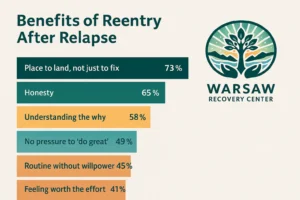
4. It Reconnected Me with People Who Didn’t Need Me to Be “Doing Great”
After relapse, the hardest conversations are with people who only knew the best version of you. The version who was 90 days in, glowing, grounded, full of hope.
I didn’t want to be anyone’s inspiration if I couldn’t even stay clean. And I definitely didn’t want to sit in a support group full of new people and say, “Yeah, I was here before.”
But in inpatient, something shifted. I met people who didn’t need my résumé. They weren’t impressed or disappointed. They were just… there. Holding their own pain. Doing their own work. Offering a nod when I admitted I was struggling.
That kind of connection—the real kind—was everything.
5. It Let Me Rebuild a Routine That Didn’t Rely on Willpower
Outside, I was managing sobriety like a full-time job. Scripting every hour. Avoiding triggers. Drinking iced coffee like it was a shield.
Inside treatment, I didn’t have to micromanage everything. The schedule held me. I woke up, ate, went to therapy, rested, processed. It wasn’t rigid. It was supportive.
And it reminded me that recovery doesn’t have to be exhausting. It can be gentle. It can be sustainable. It can be something that supports you, not something you have to constantly prop up.
6. It Reminded Me That I’m Still Worth the Effort
After relapse, the loudest voice in your head is often the cruelest one.
It says things like:
“You blew it.”
“People are over it.”
“You should’ve known better.”
“This is who you really are.”
But inpatient care gave me new voices. Not platitudes, not toxic positivity—just people who looked me in the eye and said:
“You’re still here.”
“You’re still worth showing up for.”
“You don’t have to go back to the beginning. You get to begin again.”
There’s power in being reminded of your own humanity—especially when you’ve forgotten how to hold it.
FAQ: Returning to Inpatient Treatment After a Relapse
Is relapse common after 90+ days of sobriety?
Yes. Many people relapse during the first year of recovery—even after building significant time. It doesn’t mean you failed. It means you need more support.
Will a treatment center judge me for coming back?
Not at Warsaw Recovery. Our team understands relapse as part of many people’s process. We don’t shame—we support. Returning is a sign of courage, not defeat.
Can I benefit from inpatient care even if I’ve already done it once?
Absolutely. In fact, coming back with more insight and self-awareness often leads to deeper healing. Your second time through will likely be different and more focused.
Will insurance still cover a second inpatient stay?
In many cases, yes. Our admissions team can verify your benefits and walk you through options. Don’t let finances keep you from getting support.
What happens after inpatient this time?
We’ll help you build a better aftercare plan—one that fits your current needs. That might include outpatient therapy, recovery housing, peer support, and more.
You’re not broken. You’re just still healing.
Call (888) 511-9480 to learn more about our Inpatient Treatment Programs services in Warsaw, Virginia. You haven’t lost your place in recovery. The door is still open—and we’re still here.