You’ve made a decision that takes more courage than most people realize.
Maybe you haven’t told anyone yet. Maybe you’ve been quietly Googling treatment options, reading reviews, and scanning blogs like this one in the middle of the night. You know you need help. But you still don’t quite know what to expect—and that makes the next step feel big, maybe too big.
Let’s shrink it down a little.
Here’s an honest look at what daily life in a residential treatment program can actually feel like—especially if you’ve never been in one before.
Warsaw Recovery Center offers residential treatment in Virginia for people just like you: people who are ready to get help, even if they’re scared. Even if they’re not sure what healing looks like yet.
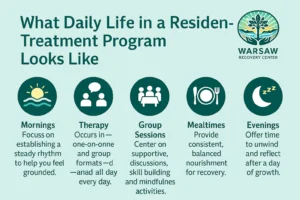
Mornings Are About Steady Starts—Not Stress
Most days in residential care begin around the same time. That consistency helps your mind and body settle into a safer rhythm.
You’ll wake up, take care of your personal needs, and start your day with breakfast—usually eaten with your peers. That might sound intimidating now, but those shared moments often become small anchors of comfort.
Some mornings start with group check-ins or mindfulness. Others might include light physical activity, reflection, or a short goal-setting session to help orient your day.
The goal isn’t to pressure or perform. It’s to help you feel grounded.
You’ll Be in Therapy—but Not All Day
A lot of people imagine residential treatment as one long therapy session, stretched across every hour of the day. That’s not what it looks like here.
You’ll have structured therapy time, yes—but you’ll also have breaks, meals, and space to just be.
In a typical residential treatment program, you can expect:
- Group therapy – You’ll sit with others facing similar challenges. It’s not about trauma-dumping or forced sharing. It’s about finding common ground and feeling less alone.
- Individual therapy – One-on-one time with a counselor who’s trained to listen, guide, and help you work through the deeper layers of what brought you here.
- Skills-based sessions – These might focus on relapse prevention, healthy coping, emotional regulation, or processing grief and anger.
You don’t have to open up on day one. You don’t have to say everything. You just have to show up. That’s where healing starts.
Midday Offers Nourishment, Routine, and Breathing Room
You’ll eat lunch with your peers, take a breather, and prepare for the second half of the day.
In between core therapy sessions, you may have educational groups or holistic wellness blocks—things like:
- Nutrition support
- Light fitness or yoga
- Art or music therapy
- Recovery journaling
- Guided meditation or breathwork
These activities are more than “extras.” They help your nervous system stabilize and give your brain new ways to process emotion, trauma, and stress.
Some days will feel light. Others may feel heavy. The point isn’t to make every day perfect—it’s to give you a structure that holds, even when you’re hurting.
You’ll Be Gently Guided, Not Controlled
Let’s clear something up: residential treatment isn’t jail. It’s not punishment. It’s not about taking away your autonomy.
At Warsaw Recovery Center in Virginia, we believe treatment should feel safe—not strict for the sake of control.
Yes, there are boundaries. That’s how safety is created. But they’re there to protect your recovery—not punish your humanity.
If you need to talk to someone privately, you can. If you have a concern, we listen. We’re here to support—not police—your healing.
Mealtimes Are Shared, Balanced, and Simple
Food becomes a quiet form of stability in treatment.
You’ll have three meals a day, plus snacks, prepared to support your physical and emotional recovery. Meals are usually eaten with the group—not to pressure you socially, but to offer a steady rhythm to your day.
Some clients are surprised by how emotional eating in community can be—especially if addiction has disrupted basic self-care. Sharing meals in recovery can feel like reclaiming something you didn’t know you’d lost.
If you have dietary needs or concerns, we’ll make sure they’re addressed. You’ll be fed, supported, and respected.
Evenings Are for Integration, Not Isolation
After dinner, the day starts to slow down.
Evenings might include:
- A reflection group to help you process the day
- Quiet time for journaling, reading, or letter writing
- Optional activities like board games or movie nights
- A wind-down routine that cues your brain to prepare for rest
You’ll have a consistent bedtime. That structure helps restore sleep cycles that addiction or stress may have disrupted.
For many clients, those first nights in residential care feel unfamiliar. The quiet can be jarring. But soon, that stillness becomes a relief. A space to rest without fear, without noise, without running.
You’ll Be Around People Who Are Trying Too
You’re not going to be the only one who feels nervous. Everyone else in the room had a first day. Everyone else knows what it’s like to sit in a chair wondering if they belong.
And slowly—but surely—you’ll start to connect. It won’t always be deep talks or instant friendships. Sometimes it’s just someone nodding across the circle when you say, “I don’t know what I’m doing here.”
You belong. Even before you believe that, we’ll believe it for you.
What Makes Our Residential Treatment Program in Virginia Different?
At Warsaw Recovery Center, we built our residential treatment program around a simple but radical idea:
You don’t have to earn your right to heal.
We don’t make you prove you’re serious. We don’t shame you for struggling. We offer:
- Trauma-informed care, so your pain is never minimized
- Personalized plans, because healing isn’t one-size-fits-all
- A real community, not just a clinical system
We serve people from across Virginia and surrounding areas, including those looking for residential treatment in Warsaw and the Northern Neck region. And we’d be honored to serve you, too.
FAQ: Residential Treatment Program Essentials
How long will I stay?
It depends on your needs. Many residential programs last 30 to 90 days, but we’ll talk with you about what’s realistic and right for your recovery.
Can I talk to my family during treatment?
Yes—with boundaries. Family contact is typically supported through scheduled calls or family therapy sessions. We’ll walk you through the details.
Will I have roommates?
Most residential programs include shared rooms, but accommodations vary. We’ll do our best to make you feel comfortable and safe.
What should I pack?
We’ll provide a packing list. In general, bring comfortable clothes, personal hygiene items, and any approved medications. Leave valuables and anything triggering at home.
What if I’ve never done therapy before?
That’s completely okay. We’ll meet you where you are and explain each step. No pressure to “perform.” Just come as you are.
Still wondering if it’s the right time? Let’s talk.
Call (888) 511-9480 to learn more about our Residential Treatment Program services in Warsaw, Virginia. You don’t have to do this alone—and you don’t have to have it all figured out to begin.