If you’ve been thinking about making a change—cutting back, taking a break, or stopping completely—you might’ve come across the word detox and felt a little uneasy. What does that actually mean? Is it something only for “serious cases”? Do people really go to a detox center just for alcohol or pills?
These are real, honest questions. And they deserve real, honest answers.
At Warsaw Recovery Center, we hear from people in every stage of questioning—whether they’re actively struggling, quietly curious, or cautiously hopeful. And one of the most important things we can offer is clarity: what detox actually looks like, who it’s for, and why starting close to home might be the most powerful first step.
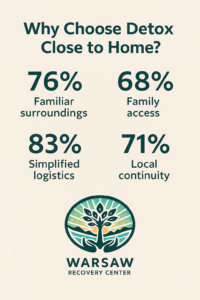
Why Choose Detox Close to Home?
When you picture a treatment center, your mind might jump to something far away—an isolated facility in another state, maybe. And while those options exist, there’s something deeply grounding about beginning your healing right where you live.
Choosing a medical detox program near home comes with powerful benefits:
- Familiar surroundings. The trees, the roads, the accents—these small familiarities help reduce emotional overwhelm.
- Community-rooted care. Staff who understand local needs, norms, and resources.
- Family access. If appropriate, loved ones can support you without long travel or missed work.
- Simplified logistics. No flights. No big transitions. Just a drive across town or from a nearby county.
- Local continuity. You can transition into ongoing care without feeling like you’re starting over.
Healing doesn’t have to mean disappearing. It can mean returning—to your health, your strength, and your own front yard.
What a Medical Detox Center Looks Like in Warsaw
Our detox center isn’t a hospital. And it’s not a bootcamp. It’s a calm, medically supported environment designed to help your body and mind gently let go of substances in a safe, structured, and stigma-free way.
Here’s what that actually means at Warsaw Recovery Center:
- Clean, comfortable rooms with natural light
- Round-the-clock nursing and medical support
- Counselors who check in—without pressure
- Quiet places to rest, breathe, and stabilize
- No judgment. No scare tactics. Just support.
Whether you’re detoxing from alcohol, opioids, benzos, or other substances, you’ll be cared for by a team that knows how to support both your physical safety and your emotional well-being.
Day 1: Orientation and Medical Check-In
The first day is all about safety and clarity. You’ll be welcomed, shown around, and given a chance to rest while we gently learn more about your health.
Your check-in includes:
- Full medical assessment (including vitals and labs)
- Substance use history and current symptom check
- Questions about your mental health and any diagnoses
- Room assignment and schedule overview
- Medications (if needed) to manage early withdrawal symptoms
There’s no big group introduction. No pressure to share. Day 1 is about helping you feel safe enough to stay.
Days 2–5: Physical Withdrawal and Stabilization
This is the heart of detox. It’s when your body begins to recalibrate—often for the first time in a long time.
What to expect:
- Medical monitoring 24/7
- Supportive medications as needed to reduce discomfort
- Meals, fluids, and rest encouraged gently
- Emotional support and check-ins (you don’t have to talk, but you can)
- A mix of quiet time and optional gentle activities
This phase can be intense for some and milder for others. Either way, our team is trained to help you feel as stable and comfortable as possible.
Emotional Healing and Daily Structure
Even in a short detox stay, emotional healing begins.
Many people report feeling waves of emotion they didn’t expect: sadness, relief, shame, clarity, anxiety. That’s normal. Your nervous system is waking up. Your brain is recalibrating.
We help with:
- Light structure to create safety (mealtimes, optional groups, quiet hours)
- One-on-one counseling sessions as needed
- Peer support and staff who listen without judgment
- Simple movement, rest, or creative activities if you’re up for them
You won’t be pushed to go deep before you’re ready. We focus on grounding and stabilization—so you leave feeling stronger, not scrambled.
Visiting Rules, Family Connection, and Peer Support
We recognize the impact detox has on families and loved ones. That’s why we have visitation policies that balance safety with support.
What’s allowed:
- Phone check-ins with approved loved ones (usually after day 1)
- Visiting hours if cleared by the clinical team
- Staff support for family members who want to learn more
- Peer support from others going through detox who “get it”
You won’t be isolated. You’ll be supported in ways that respect your space while reminding you—you’re not alone.
How Warsaw Recovery Center Supports Aftercare
One of the biggest fears people have is: What happens when I leave detox?
You won’t be discharged without a plan. We offer:
- Care planning sessions to explore what’s next
- Referrals to local outpatient or residential programs
- Follow-up check-ins and community support options
- Continued medication support if needed
Some people choose to continue with our own residential program. Others return home with outpatient services. After completing our Medical Detox Program in Virginia, we help you decide—without pressure, based on what feels right.
Detox FAQ for First-Time Seekers
Is detox only for people with severe addictions?
Not at all. Detox is appropriate when your body has developed a physical dependence. Even if your use seems “mild” to others, if you feel unwell or anxious trying to stop, medical detox is often safer than going it alone.
Will I be stuck there or forced to stay longer than I want?
No. We don’t trap or trick people. We offer stabilization care and make recommendations, but you’re not held against your will. We’ll talk about next steps—but the decision is always yours.
What substances do you detox for?
We provide detox support for alcohol, opioids, benzodiazepines, stimulants, and other commonly used substances. If you’re unsure if you “qualify,” just call—we’ll talk it through with no pressure.
Can I visit first or talk to someone before deciding?
Yes. You’re welcome to tour or call to ask questions. We believe in informed, choice-based care. No one should feel pushed into a decision they don’t understand.
Wondering If It’s Time? Let’s Talk.
You don’t have to decide everything today. But if you’re starting to think about detox, or if you’ve been quietly struggling and want to know your options, we’re here, Call (888) 511-9480 or Contact Us.