There’s a loneliness that surprises people in early recovery.
You expect withdrawal. You might even prepare for cravings. But no one really warns you about the silence that follows—the long stretches of time, the space in your head, the friends who’ve vanished or the ones you had to leave behind. And it hits hardest after the substances are gone.
You’re clear-headed. You made the hard call. You’re in detox. But everything feels raw and weirdly empty.
That’s not a sign you’re doing it wrong. That’s early recovery.
At this point, what you need isn’t just medication or a bed to sleep in—it’s human connection. A sense of safety. Proof that you’re not invisible. And that’s exactly what a drug detox program can offer, when it’s built with care.
If you’re wondering how a detox center can possibly help with something as tender as loneliness, this FAQ was written for you.
What kind of emotional support is offered during detox?
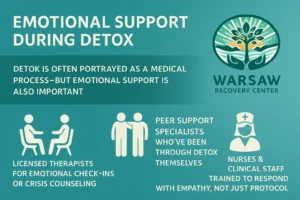
Detox is often portrayed as a medical process—and yes, safely managing withdrawal symptoms is a core priority. But at centers like Warsaw Recovery Center, emotional support is part of the care from the moment you arrive.
Clients typically have access to:
- Licensed therapists for emotional check-ins or crisis counseling
- Peer support specialists who’ve been through detox themselves and know how isolating it can feel
- Nurses and clinical staff trained to respond with empathy, not just protocol
It’s not about overprocessing every feeling or forcing deep talks. Sometimes, emotional support means someone sees you’re not okay—and doesn’t look away.
What if I don’t feel like talking to anyone?
That’s more common than you might think.
In early recovery, especially in detox, many people feel numb, guarded, or just… exhausted. Talking might feel too vulnerable—or too pointless.
Good programs know this. You’ll never be forced to share. Instead, staff create safe spaces where connection is offered, not demanded. Some clients just sit quietly during group time. Others speak up only after a few days. There’s no “right” speed.
You don’t have to be ready to open up. You just have to be here.
Does being around others actually help?
Surprisingly—yes. Even if you’re not someone who normally leans on others.
There’s something quietly healing about sitting in a room with people who don’t need you to explain your pain. Who know what withdrawal feels like. Who aren’t judging how you got here.
Even if you never speak a word, that shared experience can break the silence of early sobriety.
You might see someone struggling just like you. You might see someone laugh again for the first time in weeks. And you might start to realize: maybe there’s room for you, too.
How is detox structured to reduce emotional isolation?
Structure is one of the unsung heroes of recovery.
In detox, days are intentionally planned. Meals happen at predictable times. Medication is scheduled. Light group sessions might be offered in the afternoon. All of this isn’t just about logistics—it’s about rhythm.
When your inner world feels chaotic, that external rhythm creates a sense of containment. A kind of emotional scaffolding to hold onto.
And within that structure, you’re not left to fend for yourself. Staff do rounds. They check on you without being intrusive. You’re invited—not forced—into moments of connection. That gentle consistency begins to feel like safety.
What makes a detox program emotionally safe?
Emotional safety isn’t about pretending everything is fine. It’s about making room for what’s real—grief, rage, emptiness, even indifference.
Programs that prioritize emotional safety:
- Allow space for big feelings without punishment
- Offer trauma-informed care
- Avoid shaming language or moralizing
- Keep staff ratios low enough that people aren’t overlooked
At Warsaw Recovery Center, emotional safety means you don’t have to wear a mask to be cared for. Your silence is respected. Your fear is met with steadiness. And your needs are listened to, not dismissed.
What if I start feeling worse emotionally during detox?
That can happen. And it doesn’t mean you’re doing anything wrong.
Sometimes when substances leave your system, feelings that were numbed come roaring back. For others, it’s a dull fog—like nothing matters anymore. Either way, it can feel overwhelming.
Detox staff are trained for this. Emotional crashes are common. That’s why having licensed therapists or peer staff on-site is so crucial. Whether you’re crying through lunch or going totally blank during group, there’s support.
You won’t be labeled dramatic. You won’t be punished for your feelings. You’ll be seen—and helped.
Is detox enough to help with loneliness?
Detox is the first step. And sometimes, the loneliest.
Think of it like the doorway to recovery. You walk through it sick, scared, and often emotionally exposed. But you’re not meant to live in that doorway. Detox prepares you for what comes next.
That might be:
- A residential program where deeper emotional work can happen
- An intensive outpatient program (IOP) that lets you stay connected while rebuilding daily life
- A sober living house with structure and peer support
- Regular therapy or support groups in your community
At Warsaw Recovery Center, staff begin discharge planning early—so you never have to face the question, “What now?” alone. The goal is to connect you to a next step that feels right for you, not just check a box.
Why does detox feel so lonely in the first place?
Because you’re in between.
You’re not using—but you’re not yet living the kind of sober life people talk about. Your body is healing, but your heart hasn’t caught up. You’ve left old relationships behind, and new ones haven’t formed yet.
It’s a weird, tender middle space. And it can feel brutal.
But you’re not broken. You’re not weak. You’re just early. Early recovery is awkward, raw, and often quiet. That’s why being in a place with built-in support matters so much.
Can a detox program really help me start trusting people again?
Not all at once. But it can start the process.
Trust isn’t just about confiding your secrets. Sometimes, it starts when:
- A nurse remembers your name
- A tech sits with you during a hard moment
- A peer makes eye contact and doesn’t flinch
These moments are small. But they add up. Over time, they chip away at the belief that you’re alone in this—or that people will always hurt or leave.
What happens if I relapse after detox?
Relapse is part of many people’s recovery stories. It doesn’t undo your effort or erase your worth.
If you relapse after detox, it’s not a reason to give up. It’s a reason to reconnect. Many people return for a second (or third) detox. Each time is a step forward—not a failure.
At Warsaw Recovery Center, we believe in open doors. You’re always welcome back, without shame.
Will I be judged for how I got here?
No. And if you are—that’s not the right place for you.
The best detox programs are nonjudgmental by design. They recognize addiction as a health issue, not a moral failing. You won’t be asked to justify your story or prove you’re worth helping.
You’re worth helping because you’re human. Full stop.
What makes Warsaw Recovery Center different?
Our Drug Detox Program in Warsaw, Virginia is rooted in both clinical excellence and emotional care. We understand that detox is about more than withdrawal—it’s about reclaiming connection after a long stretch of emotional survival.
Here’s what we offer:
- 24/7 medical supervision
- Licensed clinical staff and therapists on-site
- Trauma-informed, nonjudgmental support
- Group and individual sessions focused on stabilization
- Local connection to continuing care services and community
We serve people from across Virginia, including the Northern Neck and surrounding counties, and we pride ourselves on knowing our community—and honoring every person who walks through our doors.
Final Thought: You’re Not Failing If You Feel Lonely
Early recovery is full of contradictions. You’re proud of yourself, but you feel like crying. You’re clear-headed, but disoriented. You’re technically doing the right thing, but you feel worse than when you were using.
That doesn’t mean detox isn’t working. It means it’s real.
And real healing is messy. But it’s also communal. You don’t have to carry this alone. Not today.
Ready to feel less alone?
Call (888) 511-9480 to learn more about our Drug Detox Program services in Warsaw, Virginia. Let us help you take the next step—with real support, not just empty words.