Addiction doesn’t develop in a vacuum—and recovery doesn’t happen in one either. Substance use disorders often impact, and are impacted by, the family unit. For clients in residential rehab, healing is significantly enhanced when the family is part of the process. That’s why Family Systems Therapy is a powerful and transformative tool at Warsaw Recovery, a leading Addiction Treatment Center in Virginia.
Whether someone is receiving Alcohol Addiction Treatment, Benzodiazepine Addiction Treatment, or Methamphetamine Addiction Treatment in Virginia, involving the family through structured therapy can improve communication, rebuild trust, and reduce relapse risk.
What Is Family Systems Therapy?
Family Systems Therapy is a therapeutic approach that views the family as an interconnected unit. It focuses on patterns of interaction, roles, boundaries, and dynamics that may contribute to substance use. Rather than isolating the individual with addiction, this model acknowledges that lasting recovery often requires changes in the entire family system.
At Warsaw Recovery, we integrate Family Systems Therapy into our Residential Treatment Programs in Virginia to help clients and their loved ones rebuild healthier relationships and support networks.
Why Involve the Family in Residential Rehab?
Addiction affects every member of the family—not just the person using substances. Pain, mistrust, codependency, enabling behaviors, and emotional trauma are common. When families are engaged in the healing process, the benefits are profound:
Greater Insight and Empathy
Family members begin to understand addiction as a disease—not a moral failure—leading to more compassionate support.
Improved Communication
Therapy provides tools for respectful dialogue, conflict resolution, and emotional expression, reducing the tension that can trigger relapse.
Rebuilding Trust
Addressing past harms in a safe setting allows families to begin the process of forgiveness and reconnection.
Shared Accountability
Everyone learns new roles and responsibilities, reducing enabling and promoting healthier boundaries.
How Family Systems Therapy Is Used at Warsaw Recovery
In our Inpatient Treatment Programs in Virginia, Family Systems Therapy is facilitated by licensed clinicians and may include:
- Weekly or bi-weekly family therapy sessions (in-person or virtual)
- Multi-family educational workshops
- Psychoeducation on addiction, trauma, and communication
- Goal-setting for family re-entry and aftercare
Each session is tailored to the family’s unique needs and the client’s stage of recovery—whether they’ve just completed Medical Detox in Virginia or are deep into trauma processing.
Common Issues Addressed in Family Therapy
1. Codependency and Enabling
Families often unintentionally support addiction through over-functioning or rescuing behaviors. Therapy helps them redefine supportive roles.
2. Intergenerational Trauma
Unresolved trauma can pass from one generation to the next. We help families break cycles of abuse, neglect, or emotional repression.
3. Boundaries and Autonomy
Learning how to give space, respect independence, and avoid micromanagement is critical for post-rehab success.
4. Guilt, Shame, and Resentment
Therapy provides space to acknowledge pain without blame—so healing, not hostility, becomes the focus.
Case Study: The Power of Family Healing
Client Profile:
- 29-year-old male, struggling with methamphetamine use
- Two prior inpatient admissions
- Estranged from father and siblings
Family Therapy Outcomes:
- Reconnected with family after 5 years of silence
- Family learned to set boundaries around emotional manipulation
- Client began understanding family history of addiction and trauma
- Family committed to supporting structured aftercare
Result: Client successfully transitioned to outpatient care with weekly family check-ins and remains sober 14 months later.
Breaking the Cycle of Dysfunctional Patterns
Addiction often arises in families where unhealthy communication, unresolved trauma, or generational substance use are normalized. Family Systems Therapy helps bring these patterns to the surface.
Common Dysfunctional Family Patterns:
-
“Scapegoating” one family member as the problem while ignoring broader dynamics
-
“Parentification” of children who take on adult roles in chaotic households
-
Unspoken rules like “Don’t feel,” “Don’t talk,” or “Don’t trust”
Through therapy, families learn to identify these invisible rules and replace them with new, healthy dynamics—supporting not just the client’s recovery, but the entire family’s healing.
Empowering Families to Set Healthy Boundaries
Many family members, out of love or fear, enable destructive behavior by avoiding conflict, rescuing the client, or overcompensating for their mistakes. Family Systems Therapy teaches clear, respectful boundary-setting.
Boundary Work Includes:
-
Saying “no” without guilt
-
Detaching with love—not anger or rejection
-
Creating structure around finances, communication, and expectations
-
Learning to support recovery without controlling it
At Warsaw Recovery, we coach families to move from crisis-based reactions to calm, values-driven responses that build trust and autonomy.
Involving Families in Relapse Prevention Planning
Recovery doesn’t end at discharge—it’s just beginning. Families play a vital role in helping clients maintain sobriety long-term. That’s why we include family members in relapse prevention planning during the final phase of residential treatment.
What Families Learn:
-
Early warning signs of emotional and behavioral relapse
-
How to hold clients accountable in supportive ways
-
The importance of routine, purpose, and community in recovery
-
What to do—and not do—if a relapse occurs
With the right tools, families become allies in recovery, not unintentional triggers or rescuers.
Family Systems Therapy in Dual Diagnosis Cases
Clients with both addiction and mental health conditions (e.g., depression, anxiety, PTSD) benefit even more when their families are engaged. These situations often involve deeper emotional wounds, stigma, and confusion.
Family Therapy in Dual Diagnosis Treatment Helps:
-
Normalize mental health treatment and medication use
-
Educate families on how trauma affects the brain and behavior
-
Build empathy around mood shifts, emotional triggers, and support needs
Warsaw Recovery offers integrated care for dual diagnosis clients, including those in Alcohol Addiction Treatment, Benzodiazepine Detox, or Methamphetamine Recovery in Virginia, with family therapy built in.
The Science Behind Family Involvement
Studies consistently show that family engagement improves treatment outcomes:
- According to SAMHSA, family involvement in rehab increases retention rates by over 50%
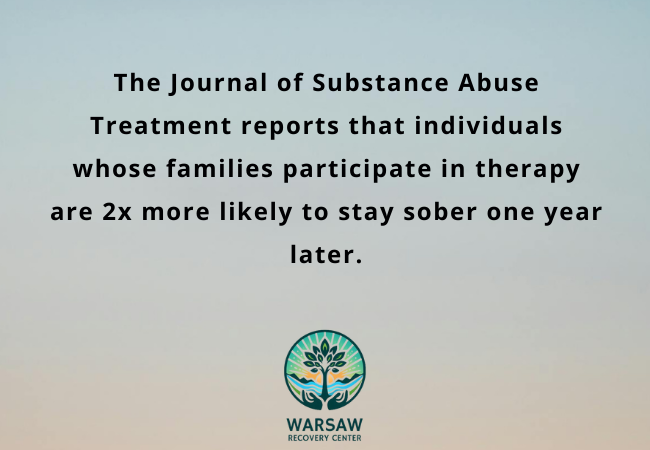
- A study in the Journal of Substance Abuse Treatment found that individuals whose families participated in therapy were twice as likely to maintain sobriety one year post-treatment
- Clients in family-focused programs report higher satisfaction and stronger aftercare adherence
Benefits for All Addiction Types
For Alcohol Addiction Treatment in Virginia:
Family therapy helps address denial, normalize the recovery process, and rebuild communication after years of dysfunction.
For Benzodiazepine Addiction Treatment in Virginia:
Therapy supports the family in understanding dependence, managing anxiety triggers, and assisting with healthy routines.
For Methamphetamine Addiction Treatment in Virginia:
The approach helps families recognize behavioral signs, regulate emotional responses, and rebuild broken trust.
Preparing Families for Life After Rehab
Transitioning out of residential treatment can be one of the most vulnerable periods in recovery. Family Systems Therapy helps everyone prepare for:
- Triggers and stressors that may arise post-treatment
- Creating a recovery-safe home environment
- Setting healthy boundaries around finances, communication, and expectations
- Identifying relapse warning signs
At Warsaw Recovery, we don’t just discharge clients—we empower families with a shared vision for long-term recovery success.
Why Choose Warsaw Recovery for Family-Inclusive Treatment?
As a leader in Substance Abuse Treatment in Virginia, Warsaw Recovery believes healing must extend beyond the individual. Our Residential Treatment Programs in Virginia prioritize family involvement as a core element of sustained sobriety.
We provide:
- Licensed family therapists trained in systems theory
- Flexible scheduling for local and remote participation
- Trauma-informed, non-shaming approaches
- Bilingual options and culturally sensitive care
- Integrated aftercare planning that includes the entire family system
Conclusion
Recovery is stronger when it’s shared. At Warsaw Recovery, we know that involving families through Family Systems Therapy creates the support, understanding, and stability needed to turn temporary sobriety into lifelong recovery.
Whether your loved one is entering our Medical Detox Program, or engaging in long-term residential rehab in Virginia, now is the time to heal—together. Call 888.511.9480 today to speak with an admissions specialist and learn how family involvement can transform the recovery journey for you and your loved ones.
FAQs on Family Systems Therapy in Residential Rehab
Do I have to be local to participate in family therapy?
No. We offer virtual sessions to include families across Virginia or out of state.
What if our family has experienced trauma or conflict?
That’s exactly what therapy is for. Our clinicians create safe, nonjudgmental space to address deep issues at your own pace.
How early does family therapy start during rehab?
It typically begins within the first 2–3 weeks, depending on the client’s stabilization progress and consent.
Can family therapy continue after discharge?
Yes. We provide referrals to local or virtual family counselors and often incorporate it into aftercare plans.
What if my loved one doesn’t want me involved?
Participation is always voluntary, but many clients become more open to family support once they feel emotionally safe and stabilized.