

You didn’t mean to fall off. One missed day. Then another. Life got loud, shame crept in, and now it feels like you’ve messed it all up. But here’s the thing most people won’t tell you: treatment isn’t a straight line. And leaving doesn’t mean you failed. It means something got too hard, too fast—and that’s worth listening to, not punishing yourself for.
Whether you ghosted your IOP, stepped away from therapy, or quietly stopped answering the phone, you’re not alone. It happens. What matters now is that you’re thinking about coming back—and that’s something we deeply respect at Warsaw Recovery Center’s heroin addiction treatment program.
This blog is your soft landing. Not a lecture, not a guilt trip—just a guide for rebuilding momentum after stepping away.
1. Let Go of the Guilt Narrative
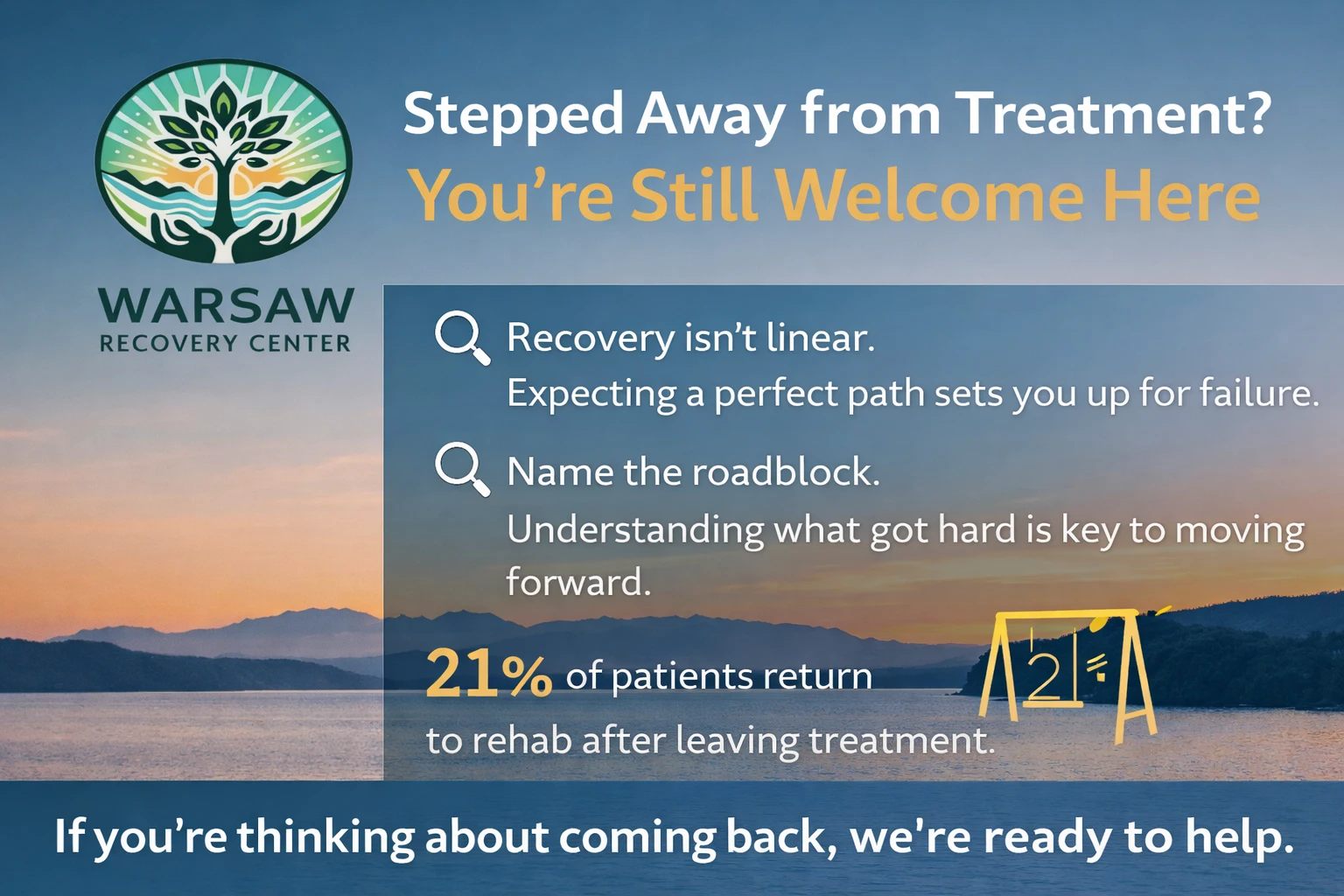
It’s so easy to believe you “blew your chance.” That you were given a shot and wasted it. But here’s the truth: recovery isn’t linear. Most people in heroin addiction treatment struggle with consistency at some point. Whether it’s a relapse, emotional shutdown, or just burnout, pulling away doesn’t cancel the work you’ve done.
Think of momentum like a swing. You may have slowed down or even stopped—but that doesn’t mean you can’t get moving again. All it takes is one push.
2. Ask Yourself—What Really Got in the Way?
Take a moment and ask—not in judgment, but in curiosity: What made staying in treatment hard?
- Was it the schedule?
- The emotional intensity?
- Transportation or work demands?
- Feeling unseen in group?
- The weight of shame after a slip?
Name it. Not so you can excuse it—but so you can understand it. Most people don’t drop out because they don’t care. They drop out because they hit something they didn’t know how to handle.
Identifying that roadblock is the first step in making sure it doesn’t trip you again.
3. Reach Out Without the Speech
Here’s a secret: you don’t need a dramatic apology or detailed explanation to return to care. No one at Warsaw is waiting with a clipboard and a quiz. We’re just people who’ve seen how heroin addiction plays out—and who genuinely want to help you interrupt the cycle.
When you’re ready to reach out, you can say something as simple as:
“Hi, I was in treatment a little while ago. I’ve been struggling and I think I need help again. Can we talk?”
That’s all it takes. No guilt, no groveling, no perfect words.
4. Reconnect with a Human First
Before you re-enroll in anything, find a familiar name or face. Someone from your past care team. Maybe it’s the counselor you clicked with, or the front desk staff who made you feel seen.
Rebuilding momentum isn’t just about returning to a program. It’s about reconnecting with people who remember you sober—people who can help remind you of who you were becoming before things got heavy.
5. Don’t Just Pick Up Where You Left Off
You are not the same person who left treatment—and that’s okay. Don’t feel pressured to jump back into the exact same routine.
Maybe you need more individual therapy this time. Maybe group sessions felt overwhelming. Maybe medication could help with anxiety. You can talk to your team about adjusting the approach.
At Warsaw, we don’t copy-paste your old plan. We listen, and we start where you are now.
6. Say the Hard Things Out Loud
One of the best ways to regain traction is to speak the shame before it festers.
You can say:
- “I thought you wouldn’t want me back.”
- “I feel stupid coming back again.”
- “I used again and I didn’t know if I was allowed back.”
And your team should say:
- “You’re not the only one.”
- “We’re glad you came back.”
- “Let’s figure out the next step together.”
Saying it out loud is like opening a window in a stuffy room. You don’t have to carry it all alone.
7. Give Yourself Permission to Start Small
Maybe you’re not ready to commit to 5 days a week of group. Maybe picking up the phone is all you can do today.
That counts.
Recovery isn’t about huge leaps. It’s about returning, gently and honestly, to what helps you stay grounded.
So if all you can manage is reading this, or bookmarking the heroin addiction treatment page, or texting your old case manager: that is enough for today.
8. Use This Experience to Build a Stronger Plan
You didn’t just “fail.” You learned. You now know what doesn’t work—or at least, what needs more support.
That wisdom can shape your next phase:
- More check-ins.
- New coping tools.
- A ride arranged ahead of time.
- A backup plan for when cravings spike.
You don’t have to repeat the same cycle. You can write a new script, one that expects obstacles and includes ways to navigate them.
9. Don’t Wait for Rock Bottom
It’s easy to think you have to wait for things to get “bad enough” before you’re allowed to come back. But that’s a trap.
Rock bottom isn’t a requirement. Suffering more doesn’t make you more deserving of help.
If you’re thinking about re-entering treatment—even while still using, even while unsure—that’s reason enough to act now. Don’t wait for things to break harder than they already have.
FAQs About Returning to Heroin Addiction Treatment
Will they judge me for leaving?
No. Most programs understand that leaving treatment is part of many people’s story. You won’t be shamed or punished. If anything, returning shows courage.
Do I have to start over from day one?
Not always. Depending on how long you were gone, some progress can carry over—especially if you’re returning to the same program. We meet you where you are.
What if I used again?
You’re still welcome. Relapse or continued use doesn’t disqualify you from care. In fact, that’s when treatment matters most.
I feel too embarrassed to call. What should I do?
Try texting or emailing if talking feels too hard. Or ask someone you trust to call with you. We’ll respond with kindness—no pressure.
Can I get a different therapist or group this time?
Yes. If something in your past experience didn’t work, you can request changes. The goal is a plan that fits you better this time.
You’re Still Welcome Here
You might think too much time has passed. That you’ve undone all your progress. That the door has quietly closed behind you.
It hasn’t.
Treatment doesn’t forget you. The people who saw your strength the first time still believe in it now. You can pick up where you left off, or start somewhere new—either way, you’re still allowed back in.
Call (888) 511-9480 to learn more about our heroin addiction treatment in Richmond, Virginia.