
If you’re here, it probably took more than one hard night to get you to this point.
Maybe you’ve known for a while that drinking has crossed the line. That it’s not just a habit anymore—it’s something your body needs to get through the day, to calm the shaking, to feel normal. Maybe you’ve tried cutting back, quitting at home, white-knuckling your way through mornings only to fall back into it by night.
And maybe, underneath all that, there’s a quieter question tugging at you:
“Can I really get help… if I don’t have money?”
Let’s answer that clearly—yes, you can.
At Warsaw Recovery Center, we offer an alcohol detox program that works with Virginia Medicaid. That means if you qualify, you can get medical detox—without paying out of pocket, without private insurance, and without waiting for things to get even worse.
If you’re ready (or even just willing to learn), this blog will walk you through how alcohol detox works, what Medicaid covers, and how to take that first step safely.
First, What Is Alcohol Detox—And Why Does It Matter?
Detox isn’t recovery in full—it’s the foundation.
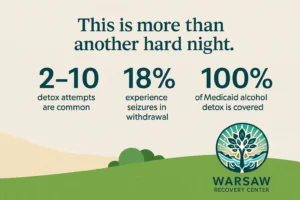
Alcohol detox is the first step for people whose bodies have developed a dependence on alcohol. If you’ve been drinking heavily for weeks, months, or years, stopping suddenly can be dangerous. Symptoms like tremors, nausea, anxiety, insomnia, and even seizures can show up fast.
Detox is how you stop drinking safely.
In a detox program:
- You’re medically monitored 24/7
- You may receive medication to reduce symptoms
- You’re given rest, nutrition, fluids, and care
- You’re stabilized so you can think clearly again
Without detox, withdrawal symptoms can spiral—and they’re not just uncomfortable. They can be life-threatening. Getting professional support helps you start the right way, with medical backup and people who know what to do.
You Don’t Need to Pay Out of Pocket to Detox
Here’s where things get more hopeful: Virginia Medicaid covers alcohol detox.
That means if you qualify for Medicaid, the cost of your detox program—the stay, the support, the supervision, and the transition planning—can be fully covered. No monthly premium. No co-pay surprises. No credit card debt.
And if you’re not sure if you qualify? We can help you figure that out. Most people earning below a certain income, or facing unemployment, job loss, or housing instability, are eligible. Even if you’ve been denied Medicaid before, there may be another way.
Don’t let paperwork be the thing that stops you from healing.
We’ve walked hundreds of clients through the process. You don’t have to do it alone.
What Starting Detox Looks Like (Step-by-Step)
Let’s take the mystery out of it.
Here’s how it usually works when someone reaches out to us:
- You call. You don’t need a doctor’s referral. Just call our number and say, “I think I need detox.”
- We ask a few questions. These are basic—how much you’re drinking, any withdrawal symptoms, medical history, etc. No judgment, no lectures.
- We check your Medicaid coverage. If you’re already covered, great. If not, we help you apply quickly. You may be eligible for emergency coverage or fast-track enrollment.
- We find your safest entry point. If detox is needed, we’ll talk through when and how to come in. If you’re already in withdrawal, we’ll prioritize getting you safely admitted.
- You arrive, and we take it from there. You’ll be greeted, assessed, and supported—not shamed or punished.
Detox isn’t glamorous. But it is lifesaving. And starting it doesn’t require perfection—just one moment of courage.
What Medicaid Covers in an Alcohol Detox Program
Virginia Medicaid isn’t limited to a one-size-fits-all plan. Here’s what’s typically covered when you enter an alcohol detox program like ours:
- 24/7 medical monitoring during your withdrawal period
- Medication to reduce symptoms like anxiety, nausea, or seizures
- Short-term residential stay (usually 3–7 days) in a safe, quiet environment
- Case management to help you decide what comes next
- Transition planning into further care (outpatient, IOP, or residential) if you want it
- Supportive meals and housing during your detox stay
And if you’re dealing with other medical or mental health issues, Medicaid can often support those too—ensuring you’re treated as a whole person, not just a diagnosis.
Detox Isn’t the Whole Journey—But It’s a Real Beginning
Some people think detox is enough. They stop drinking for a week, feel a little better, and try to move on. And sometimes it works. But often? It doesn’t hold.
Here’s why: detox treats the body, not the mind. It helps you stop, but not necessarily stay stopped.
At Warsaw Recovery Center, we don’t leave you hanging after detox. If you’re ready to keep going, we can help you step into:
- Intensive Outpatient Programs (IOP)
- Medication-Assisted Treatment (MAT)
- Therapy and counseling
- Peer recovery support
- Longer-term planning for sobriety and stability
What you choose next is up to you—but we’ll help you explore it without pressure.
You Don’t Need to Be Ready Forever—Just Ready to Start
People imagine the decision to detox like a big, cinematic moment. But most of the time? It’s quiet.
It’s sitting in your car outside a clinic. It’s rereading this blog at 1:42 a.m. It’s waking up hungover again and thinking, “I can’t do this one more time.”
That moment matters.
You don’t need to have your life figured out. You don’t need to believe in yourself yet. You don’t even have to be sure you’ll stay sober. You just have to start. We’ll meet you there.
FAQs: Medicaid-Covered Alcohol Detox in Virginia
How fast can I get into detox?
If you already have Medicaid, we may be able to admit you the same day. If not, we’ll help you apply and determine the fastest entry point based on your symptoms and eligibility.
Do I have to stop drinking before I come in?
No. You can come in actively drinking. Detox is designed to help you stop safely, with professional medical support.
Will I be in a hospital?
Not necessarily. Our detox program provides a medical setting that’s safe and quiet—but not cold or clinical. We focus on comfort and care, not punishment.
Can I bring someone with me?
You can bring a friend or loved one to help you check in, but once detox begins, the stay is individual. Your support people can call and check on you if you’d like.
What happens after detox?
We’ll help you decide. You might transition into outpatient care, stay for longer residential treatment, or take time to think. We’ll support whatever comes next—no pressure.
You’re Allowed to Ask for Help—Even if You’ve Never Done It Before
There’s nothing weak about asking for help. And there’s nothing shameful about needing detox.
If alcohol has taken over your mornings, your evenings, your body, your brain—this is your sign. It doesn’t have to get worse. It doesn’t have to end badly. And it doesn’t have to cost you a cent.
Medicaid makes alcohol detox possible.
You make it meaningful.
Ready to take the first safe step?
Call (888) 511-9480 or visit our Alcohol Detox Program page to learn how Warsaw Recovery Center can help you detox safely and start fresh—without fear, without judgment, and without a bill.