The holidays used to be my free pass to spiral.
Drink too much? It’s the holidays. Hide out the next day? Blame the eggnog. Feel like hell by January 2nd? “That’s just the season.” I wasn’t just numbing—I was normalizing it. And the scariest part? No one really questioned it. Holiday chaos gave me cover.
But behind all the lights, I was unraveling. And I knew—deep down—that if I didn’t do something soon, I was going to lose the parts of me I actually liked.
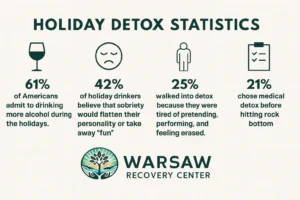
I didn’t walk into detox on a New Year’s resolution high. I walked in on a cold December day because I was tired of performing, tired of pretending, and even more tired of being afraid that sobriety would erase the version of me I thought was worth knowing.
It didn’t erase me. A medical detox program gave me back my original wiring—before the world told me I had to dull or distort it to belong.
Holiday Drinking Was My Disguise
Let me be clear: I didn’t always drink to party. Sometimes I drank to survive—the noise, the expectations, the unspoken grief that bubbles up every December. Sometimes I drank because I didn’t know how else to be in a room full of people I loved who didn’t really see me.
But over the years, my drinking shifted from seasonal stress relief to year-round scaffolding. The holidays were just when I could get away with it. No questions asked. No awkward glances. Just another refill in a festive cup.
And it wasn’t just the drinking. It was who I became when I drank—louder, more charming, more “fun.” But also disconnected, unrooted, and chasing connection I could never quite keep.
I Was Scared Sobriety Would Flatten Me
This fear ran deep: that if I got sober, I’d become someone dull. That the weird, creative, expressive version of me that thrived on intensity would disappear in recovery.
I didn’t want to be “fine.” I didn’t want to become someone who went to bed at 9 and said things like “I’m just grateful.” I wanted to feel alive—and I was terrified that sobriety meant sedation.
But the truth is: I was already fading. I wasn’t creating. I was just coping. I wasn’t connecting. I was performing. The version of me I was so afraid of losing? That person had been gone for a long time.
Detox Wasn’t the End—It Was the First Clean Page
I chose a medical detox program because I knew I couldn’t stop on my own. I’d tried. I’d white-knuckled it through dry Januaries and half-hearted breaks. It never stuck because my nervous system was shot, my body was dependent, and my emotions were a wreck.
The program at Warsaw Recovery Center wasn’t dramatic. It was structured. Calm. Professional, but deeply human. They didn’t overpromise transformation. They promised safety—and delivered it.
Withdrawal was real. But so was the relief. I wasn’t white-knuckling anymore. I was being held, medically and emotionally, by people who understood that detox is about stabilization, not instant redemption.
I didn’t wake up on day five “healed.” I woke up clear. And that was everything.
The Creativity Came Back Quietly
People say sobriety brings clarity—but I always thought that meant boredom.
What it brought me instead was access. To my thoughts. My emotions. My ideas. I started writing again—not brilliantly, not productively. Just honestly. Messy journal entries. Late-night phrases. Scribbles with sharp edges and softness underneath.
It didn’t feel like “my edge” was gone. It felt like I could finally touch it without bleeding.
That old fear—that detox would erase my identity—turned out to be backward. I hadn’t realized how much of my personality had become a performance. In detox, I got still enough to remember who I was before the survival strategies took over.
What Surprised Me Most? I Didn’t Miss It
I thought I’d miss the rituals—the champagne, the old songs, the shared “cheers.” But I didn’t.
What I missed was myself. My real laugh. My focus. The feeling of being in a room and actually being in it—not watching myself from some blurry distance.
The holidays look different now. Quieter. Clearer. Sometimes lonelier. But never hollow.
I’ve replaced the chaos with something else: mornings I remember, conversations I actually hear, and a body that isn’t constantly in repair mode.
A Medical Detox Program Isn’t Just for Rock Bottom
You don’t have to be in a hospital bed or facing legal trouble to go to detox.
You can go because you’re tired. Because you feel disconnected. Because your rituals are starting to feel more like cages than choices. That’s enough.
The medical detox program in Warsaw, Virginia offered me something I didn’t even know I needed: a pause. A safe, medically supported pause where I could stop spiraling long enough to breathe.
It wasn’t punishment. It was a reboot.
FAQs About Holiday Detox and Identity
Will detox erase my creativity or numb who I am?
No. If anything, you might feel more connected to your thoughts, feelings, and imagination once your system isn’t fogged by substances. Detox clears the clutter so your mind and heart can get reacquainted.
Can I still go to a medical detox program even if I’m “high-functioning”?
Yes. High-functioning doesn’t mean healthy. If your substance use is causing mental fog, emotional swings, relationship strain, or growing fear—you qualify. You deserve support.
How long does medical detox take?
Most detox programs last between 5 to 10 days, depending on what substances are involved and your health history. The team at Warsaw Recovery Center personalizes care to your needs.
Is it weird to go to detox over the holidays?
Not at all. The holidays are often when substance use peaks. Choosing to get help now isn’t “unfestive”—it’s smart. And brave. You’re not missing the season. You’re giving yourself the chance to experience future ones more fully.
Will I have support after detox?
Yes. Warsaw Recovery Center helps you plan next steps—whether that’s outpatient treatment, therapy, or sober community options. Detox is just the beginning of long-term support.
You don’t have to drink through another December pretending it’s fine.
Call (888) 511-9480 or visit our Medical Detox Program in Warsaw, Virginia to take the first real step back to yourself.