
I thought 90 days clean would feel like a gold medal around my neck.
I expected the world to look brighter, clearer, easier. I thought leaving my residential treatment program would feel like freedom. Like a fresh start. Like I’d be ready.
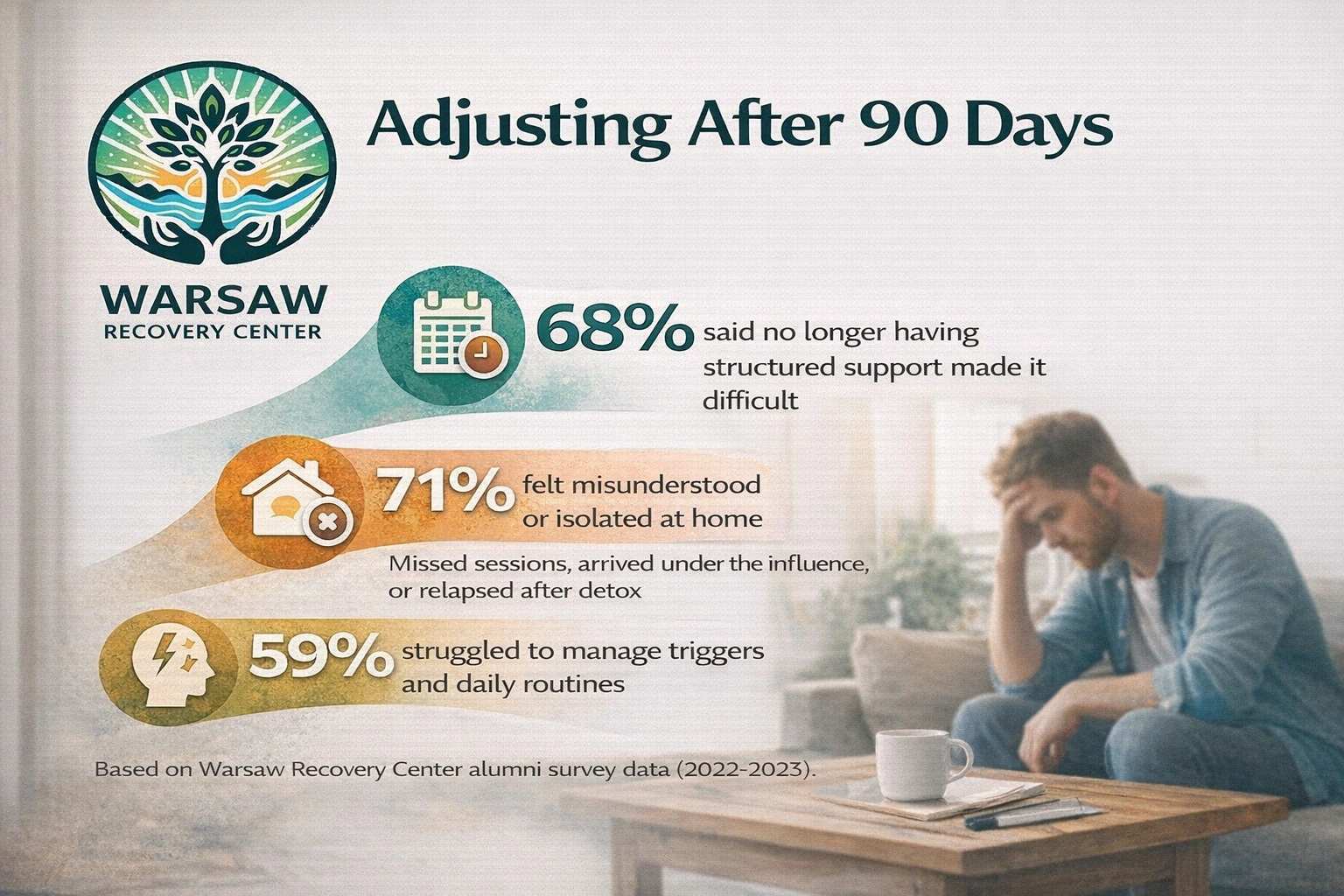
But instead, I got hit with a silence I wasn’t prepared for.
No group check-ins. No staff asking how I was really doing. No one handing me a schedule to structure my day or reminding me that the chaos was over.
What no one warned me about was this: coming home was harder than going in.
And I wish someone had told me that didn’t mean I failed.
I Didn’t Know How Quiet Recovery Could Feel
In treatment, I was never alone—not in the scary way.
There was always someone nearby. A peer in the common room. A staff member walking the halls. A familiar face at dinner.
Coming home meant staring at my own kitchen table, feeling like no one in the world remembered what I’d just gone through.
The noise of life—the texts, the bills, the job hunt—picked back up fast. But inside? It was still and heavy.
I didn’t relapse because I didn’t know better. I relapsed because I didn’t know what to do with the silence.
Everything Was Familiar, But Nothing Felt Right
I stepped back into my apartment, my car, my friend group—and it all felt off.
I didn’t recognize myself in those places anymore. Not in a dramatic, “I’m a new person” kind of way. Just in a subtle, disorienting way. Like I’d outgrown a room I used to love.
I wasn’t sure how to explain this to anyone.
Why sitting at my old bar stool made my skin crawl.
Why small talk drained me.
Why I couldn’t laugh at the same jokes anymore.
That’s what no one warns you about. After treatment, you don’t just have to stay sober—you have to relearn who you are in the world you left behind.
People Wanted the Success Story—Not the Struggle
I knew the moment I hit 90 days that people expected me to be okay.
“I’m so proud of you.”
“You’re killing it.”
“You must feel amazing.”
I nodded. Smiled. Swallowed the truth.
The truth was that I missed treatment.
I missed having space to fall apart without judgment.
I missed being surrounded by people who understood what it meant to feel everything at once and still choose not to numb it.
The pressure to perform “recovery” nearly crushed me. And when I slipped? I didn’t want to tell anyone.
Not because I didn’t care about sobriety. But because I didn’t want to disappoint the people who’d already decided I was their inspiration.
The Real Work Started After Discharge
Treatment helped me stop using.
But staying stopped? That’s where the real work began.
No one was waking me up for morning group.
No one was holding my spot in line at meds.
No one was giving me worksheets or offering me grounding exercises in the hallway.
I had to start doing all of it—by myself.
And when the motivation faded (because it always does), I had to rely on something deeper: habit, connection, and willingness.
I wasn’t building a new life. I was learning to live in a new way.
And that’s much harder when the scaffolding of residential care disappears overnight.
Relapsing Didn’t Erase What I Learned
When I used again after 90 days, it wasn’t a full-on crash. It was a quiet unraveling.
I skipped a meeting.
I lied to my sponsor.
I told myself one night wouldn’t hurt.
I wish someone had told me this happens. Not always, but often. And it doesn’t mean the 90 days were wasted. It doesn’t mean I “threw it all away.”
It means I needed more support. That’s it.
Clients from Fredericksburg, Virginia have told me they felt ashamed to even admit they missed the structure of treatment. But that’s real. The environment works for a reason. If you need that structure again, asking for it doesn’t make you weak. It makes you wise.
Here’s What Helped Me Come Back—Stronger
- I reached out to the same center I had left.
They didn’t guilt me. They didn’t shame me. They helped me get back in. That second round? It landed deeper. - I stopped pretending everything was okay.
The minute I told one person the truth, the weight started to lift. Secrets are heavy. - I created structure at home that mirrored treatment.
Set wake-up time. Movement. Journaling. A weekly group. Recovery needs rhythm. - I let go of needing to “catch up.”
Recovery isn’t a race. I picked up where I left off—just with more honesty this time. - I talked to other alumni who had relapsed.
And you know what? Almost all of them had. It didn’t ruin them. It taught them. And it taught me.
FAQs from People Who’ve Been Here Too
What if I don’t feel ready to go back to treatment, but I know I need something?
That’s okay. Outpatient, therapy, sober living, alumni groups—there are steps between nothing and everything. You don’t have to go it alone.
Do I have to restart the clock?
Only if you want to. Some people count days. Some count honesty. Both are valid.
Will people judge me for relapsing?
Some might. But the ones who matter—the ones who get it—won’t. In fact, your honesty might help them get honest too.
What if I’m not sure I want to be sober forever?
Forever is too heavy sometimes. Just stay curious about what happens when you try again. Clarity comes with action.
Is it normal to miss treatment?
Yes. Desperately. It’s normal to grieve the space that held you when nothing else could. Missing it means it mattered.
If You’re in That In-Between Space—You’re Not Alone
You’re not failing. You’re adjusting. You’re learning what sticks and what slips.
This part—the part after treatment—isn’t talked about enough. But it matters just as much.
And if you need to come back? You can.
If you need to talk to someone who won’t flinch when you say, “I used again,”—those people exist.
Reach out to Warsaw Recovery Center if you need a place to land, again. Whether it’s your second stay, your third, or just a conversation to feel seen—we’re still here.
Call (888) 511-9480 to learn more about our Residential treatment program in Richmond, Virginia.