I remember sitting across from a client who looked like the last person anyone would expect to be struggling.
He had a successful career.
He coached his son’s baseball team.
He paid his mortgage on time.
His coworkers respected him.
His family trusted him.
If you had met him on the street, you probably would have described him as responsible, dependable, and successful.
Yet there he was, asking a question he had been carrying around for months:
“How do I know what’s actually safe?”
Not because he was uncertain about needing help.
Because he was uncertain about how to get help.
Like many high-functioning individuals, he had spent years solving problems on his own. He wasn’t looking for someone to tell him what to do.
He wanted enough information to make a smart decision.
If you’re reading this, you may be carrying a similar question.
You might be researching detox options while trying to maintain your career, relationships, reputation, and daily responsibilities.
You may be wondering whether you can recover without stepping away from your life entirely.
You may also be wondering if choosing the wrong level of support could put you at risk.
Many people begin exploring drug detoxification in Virginia because they realize something important:
The goal isn’t simply getting through withdrawal.
The goal is getting through it safely.
High-Functioning Doesn’t Mean Low Risk
One of the biggest misconceptions about addiction is that danger is always obvious.
People imagine missed work.
Lost relationships.
Financial collapse.
Legal problems.
Sometimes those things happen.
But many individuals continue functioning for a long time while struggling privately.
They maintain careers.
They care for their families.
They meet responsibilities.
From the outside, everything appears normal.
That’s often what makes seeking help so difficult.
Because life still appears manageable, they convince themselves they can wait.
The problem is that addiction doesn’t measure risk based on appearances.
The body doesn’t care how successful someone looks.
Withdrawal risks don’t disappear because a person has a good job.
That’s why functioning and safety should never be confused with one another.
Why This Decision Feels So Difficult
Most people searching for information about detox aren’t comparing treatment options because they’re curious.
They’re comparing options because they’re scared.
They worry about making the wrong decision.
They worry about missing work.
They worry about being away from family.
They worry about withdrawal symptoms.
They worry about judgment.
Most of all, they worry about losing control.
That’s understandable.
When you’ve spent years managing your life, handing over any part of that control can feel uncomfortable.
Yet one of the hardest realities of addiction is that many people are already carrying more risk than they realize.
The question becomes:
Do you continue managing that risk alone?
Or do you allow experienced professionals to help you navigate it safely?
The Cost of Assuming You Already Know the Answer
One thing I’ve noticed over the years is that many people decide what kind of support they need before speaking with anyone.
They create a plan in their head.
They read a few articles.
They compare themselves to friends.
They tell themselves:
“My situation isn’t that bad.”
“I can probably handle this myself.”
“I don’t need much help.”
Sometimes they’re right.
Sometimes they aren’t.
The challenge is that addiction has a way of convincing people that less support is always preferable.
Not because they’re careless.
Because they’re trying to preserve normalcy.
They want recovery to fit neatly into their existing life.
Unfortunately, withdrawal and recovery don’t always cooperate with our preferences.
That’s why professional assessment matters.
The safest decision is usually the informed one.
Why Comparing Yourself to Other People Can Be Dangerous
The internet is filled with stories about recovery.
Someone quit on their own.
Someone detoxed at home.
Someone continued working through the process.
Someone else needed extensive medical support.
Reading those stories can be helpful.
But they can also create false confidence.
Recovery isn’t a competition.
Your body isn’t someone else’s body.
Your health history isn’t someone else’s health history.
Your substance use history isn’t someone else’s history.
Comparing your situation to another person’s experience is a little like comparing two houses during a storm.
From the outside they may look similar.
The foundations underneath may be completely different.
That’s why personalized evaluation matters so much.
What People Are Really Asking
When people search for outpatient vs inpatient detox, they’re usually asking a deeper question.
They aren’t looking for a technical comparison.
They’re asking:
“Which option gives me the best chance of staying safe?”
That’s a very different question.
Because the answer isn’t always about convenience.
It isn’t always about cost.
And it isn’t always about what feels easiest.
The safest option is usually the one that matches the realities of your situation.
Factors such as physical health, mental health, withdrawal history, substance use patterns, and home environment all influence that decision.
That’s why what works well for one person may not be appropriate for another.
The Hidden Risk of Waiting for More Proof
Many people spend months collecting evidence.
They wait for a sign.
A consequence.
A wake-up call.
Something that proves they truly need help.
The problem is that addiction rarely provides neat timing.
Waiting often feels productive because it postpones a difficult decision.
But waiting comes with its own risks.
Substance use can continue escalating.
Physical health concerns can worsen.
Withdrawal can become more complicated.
Relationships can become strained.
Opportunities for early intervention can disappear.
One of the most painful things I hear from former clients is:
“I wish I had done this sooner.”
Not because treatment was easy.
Because they realized how much energy they had spent delaying a decision they already knew needed to be made.
Why Strength Sometimes Looks Different Than We Expect
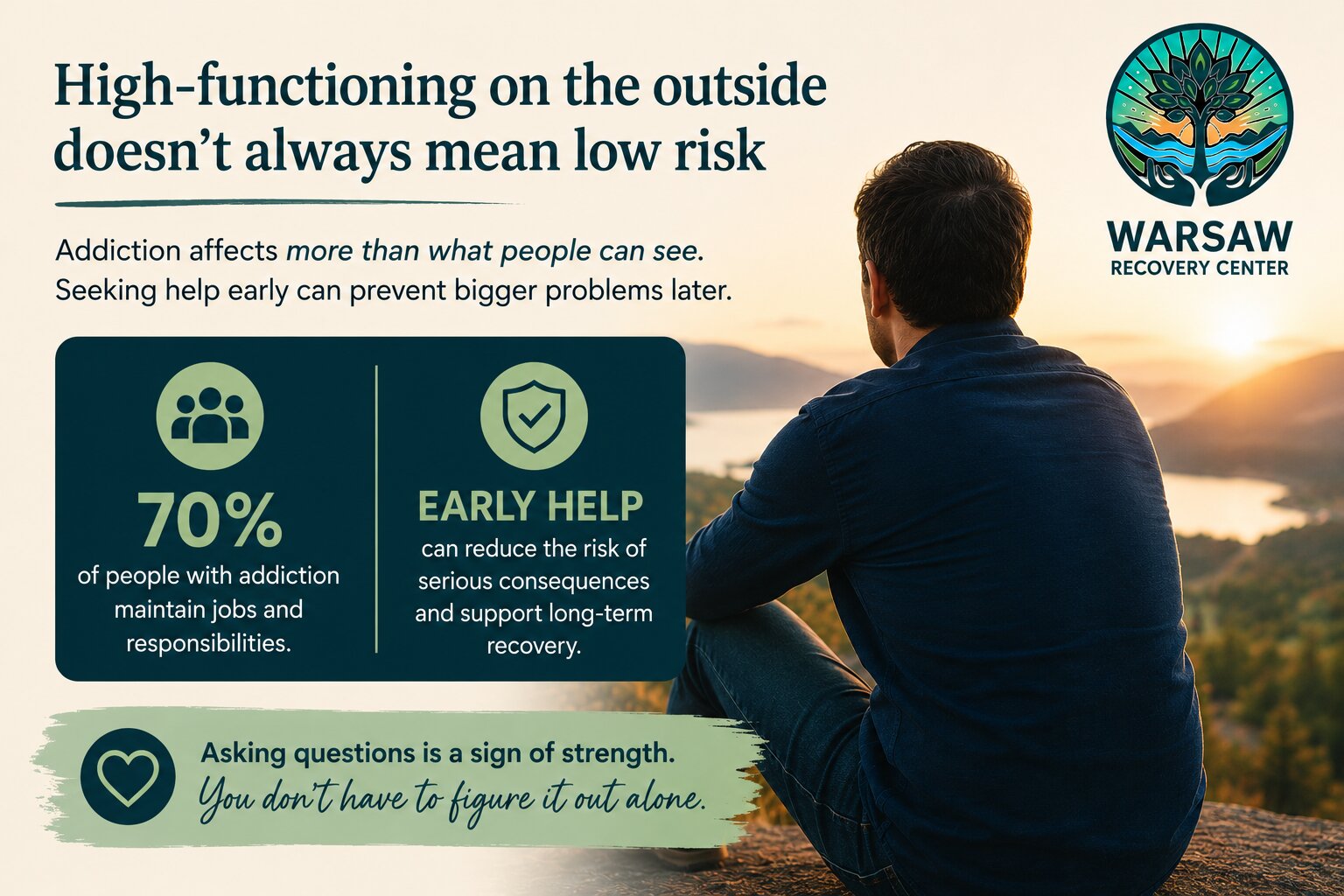
Many high-functioning individuals pride themselves on independence.
They solve problems.
They push through adversity.
They keep moving forward even when things are difficult.
Those qualities are admirable.
But recovery often requires a different kind of strength.
The strength to ask questions.
The strength to be honest.
The strength to acknowledge uncertainty.
The strength to accept support.
I’ve never met someone whose life improved because they suffered in silence longer.
I have met many people whose lives changed because they stopped trying to handle everything alone.
Recovery Usually Starts With a Conversation
People often imagine treatment begins with admission paperwork.
It usually starts much earlier.
It begins with curiosity.
Then concern.
Then a conversation.
That conversation creates clarity.
What substances are involved?
What symptoms are present?
What has withdrawal looked like in the past?
What responsibilities are creating stress?
What level of support may make sense?
These discussions help remove guesswork from the equation.
Because recovery decisions should be guided by facts, not fear.
You Don’t Need to Earn Help
One belief keeps many people stuck.
They think they need to become worse before they deserve support.
As though there is an invisible threshold they haven’t crossed yet.
That threshold doesn’t exist.
You don’t need to lose everything.
You don’t need to experience a crisis.
You don’t need to prove your suffering.
The moment you begin questioning whether you need help is often the moment it’s worth having a conversation.
Recovery isn’t reserved for people at rock bottom.
It’s available to anyone willing to take a step forward.
The Quiet Decisions That Change Lives
Recovery stories often sound dramatic.
But most actually begin quietly.
A late-night search.
A private conversation.
A phone call nobody else knows about.
A decision made while sitting alone with difficult questions.
Those moments may not look significant.
But they often become turning points.
If you’re reading this article, you’re already doing something important.
You’re gathering information.
You’re asking questions.
You’re considering possibilities.
That’s how change often begins.
Not with certainty.
With curiosity.
Frequently Asked Questions
How do I know which detox option is safest?
The safest approach depends on several factors, including your substance use history, physical health, mental health concerns, previous withdrawal experiences, and overall support system. A professional assessment is the best way to determine the appropriate level of care.
Can I detox while continuing to work?
Some individuals may be able to maintain certain responsibilities during recovery, while others benefit from stepping away temporarily. The safest recommendation depends on the individual’s circumstances and withdrawal risks.
Why is professional supervision important during withdrawal?
Withdrawal experiences vary significantly. Professional supervision helps monitor symptoms, address concerns promptly, and support overall safety throughout the process.
What if I’ve detoxed on my own before?
Previous experiences don’t always predict future outcomes. Withdrawal can change over time, which is why it’s important to seek professional guidance before making assumptions about safety.
Is asking about treatment the same as committing to treatment?
No. Reaching out for information is simply a way to understand your options. Learning more allows you to make informed decisions without pressure.
What if I don’t think my situation is serious enough?
Many people seek support before reaching a crisis point. You don’t need severe consequences to justify asking questions or exploring available resources.
How soon should I seek help if I’m considering detox?
If detox is already on your mind, it’s worth speaking with a professional sooner rather than later. Early conversations can provide valuable guidance and help prevent unnecessary risks.
Take the Next Step Toward Safe Recovery
You don’t need perfect certainty before reaching out.
You don’t need to have everything figured out.
You simply need enough willingness to ask what comes next.
Call (888) 511-9480 or visit our level of care Virginia, detoxification program Virginia, and drug detoxification in Virginia services to learn more about our level of care Virginia, detoxification program Virginia, and drug detoxification services Williamsburg, VA.