

I didn’t go to treatment to find connection. I went because everything else had stopped working.
At 24, I felt like the only person in the world who both hated drinking and didn’t know how to live without it. Parties made me anxious, nights alone made me spiral, and somehow everyone else seemed to be balancing shots, school, and situationships like it was nothing.
When I finally entered alcohol addiction treatment in Warsaw, Virginia, I braced myself for awkward silence and bad coffee. I wasn’t totally wrong—but what I didn’t expect were the friendships that met me in the weirdest, rawest parts of early recovery. Not the kind I imagined, but the kind I actually needed.
Here are seven of them.
1. The 40-Something Guy Who Made Me Laugh When I Wanted to Cry
We had nothing in common—except the ache in our eyes and the way we avoided the “check-in” question on Mondays. He was in treatment after a DUI and a rough divorce, while I was there after a blackout that ended in the ER. He could’ve been my dad’s age. But he was the first one to notice when I hadn’t spoken in group.
He slid me a note once that said: “You don’t have to say anything. But you do have to eat lunch.”
It made me laugh—and that laugh cracked something open.
He didn’t try to fix me. He just shared terrible jokes and reminded me that life didn’t have to be this heavy all the time.
2. The Counselor Who Actually Got Me
There’s always that one counselor who doesn’t say, “Just focus on yourself right now.” Mine wore Converse, cursed once in a while, and admitted that being sober in your twenties can feel like social exile.
She didn’t force positivity. She asked better questions. Like: “What are you afraid you’ll lose if you stay sober?”
No one had asked me that before. I told her: “My personality.”
She didn’t argue. She just said, “Let’s see if that’s true.”
Turns out, the parts of me I thought alcohol gave me—funny, deep, chill—were still there. Just slower to show up. But real this time.
3. The Girl Who Came In Angry
She slammed her chair down on her first day in group. Rolled her eyes at everyone. Didn’t speak until the second week, then said: “I don’t trust any of you.”
I weirdly liked her right away.
She brought hot Cheetos to group and passed them around without saying a word. And one afternoon, she stayed behind after session and said, “You look like you want to scream.”
I did.
We talked. Well—whispered, really. And laughed at how cringe early sobriety feels. She was the first person who made me feel cool for trying to stay alive.
We still talk sometimes. She’s on her third year sober.
4. The Quiet One in the Back of Group
He never shared. But he never missed a session either.
I noticed that whenever someone cried, he looked down—not out of discomfort, but out of respect. Like he was holding space without intruding.
One day, after I spoke about a panic attack I had while sober at a concert, I felt completely exposed. I thought I’d said too much. That night, as we were walking to dinner, he caught up with me.
He just said: “I’ve been there too.”
That’s it.
No advice. No small talk. Just solidarity.
Sometimes, the best friendships in treatment don’t involve talking. They involve staying.
5. The Yoga Lady from the Tuesday Class
I had no intention of doing yoga. I showed up because I heard they gave out granola bars.
She greeted everyone like we were regulars at a cozy retreat, not people crawling out of emotional holes.
But she didn’t fake it. When I confessed that holding still made me feel panicky, she said, “Good. That means we’re in the right place.”
She taught me how to breathe through cravings. Not just not drink—but be with the feeling and let it pass. That was a bigger gift than I knew.
The class ended after six weeks, but I still do the breath thing when my chest tightens.
6. The Old-Timer at My First Meeting
He looked like someone’s grandpa and spoke like a retired biker. I almost bailed before the meeting started.
But when I sat down—arms crossed, hood up—he handed me a folded piece of paper. It was a list of phone numbers.
He said, “You don’t have to call any of us. But don’t say you don’t have support.”
I never did call, but I kept the paper.
And every week, he greeted me like I’d been sober for years: “Glad you made it, kid.”
No one had said that to me before. Not like they meant it.
7. The Younger Me I Met in Group
She was 19. Big sweatshirt. Shaky hands.
When she shared about waking up in places she didn’t remember, I felt nauseous. Not because it was shocking—but because it sounded exactly like me, a year earlier.
I wanted to run out of the room. Instead, I stayed. I asked if she wanted to get coffee after group.
We ended up talking for hours—about music, about being the “sober friend,” about how lonely it feels to care more about your life than your image.
That day, I realized I wasn’t the weird one. I was just healing in a culture that romanticizes self-destruction.
Why These Friendships Mattered More Than I Thought
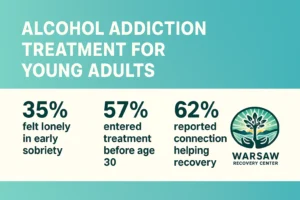
Here’s the thing no one tells you: Sobriety is lonely before it’s full.
There’s this quiet void that opens up when the chaos stops. And you think: Is this it?
That’s when connection becomes survival. Not big, bold friendships. Just small moments of being seen.
In alcohol addiction treatment, those moments stacked up. A joke here. A nod there. A deep 3 a.m. talk over vending machine snacks. These weren’t the friendships I dreamed of. But they were the ones that held me up.
If you’re just starting out, especially if you’re young and sober and feel like the odd one out—please know: connection doesn’t always come wrapped in glitter. Sometimes it’s wearing Crocs and passing you a pen in group.
What Alcohol Addiction Treatment in Virginia Taught Me About People
At Warsaw Recovery Center, it wasn’t about becoming besties with everyone. It was about learning how to let people in—even when I felt unworthy. Even when I was terrified they’d leave.
Friendship in recovery doesn’t mean perfection. It means people who are willing to show up anyway.
If you’re thinking about starting treatment and worried about fitting in, let this be proof that you don’t have to. You just have to arrive. The rest unfolds.
Explore Alcohol Addiction Treatment in Warsaw, Virginia
FAQs About Alcohol Addiction Treatment for Young Adults
Is it weird to be the youngest one in treatment?
It can feel that way at first. But most programs, including Warsaw Recovery Center, are used to working with people across age groups—and they know how to create space where you can connect, no matter your age. You might even find strength in those differences.
Will I be forced to make friends in treatment?
Nope. Connection is encouraged, but not pressured. Friendships in treatment often develop naturally through shared experiences. You can go at your own pace.
What if I don’t want group therapy?
That’s valid. Group can feel scary. But many people find it becomes their favorite part over time. It’s where a lot of unexpected healing happens—even just by listening.
How do I know if I need alcohol addiction treatment?
If alcohol is interfering with your mental health, your relationships, or your ability to show up for your life, treatment could help. You don’t need to hit a stereotypical “rock bottom” to reach out.
Is there alcohol addiction treatment in Warsaw, Virginia for young adults?
Yes—Warsaw Recovery Center offers evidence-based, personalized care for young adults. Whether you’re in college, working, or just trying to find your footing, the team understands how unique early sobriety can be.
Ready to Feel Less Alone?
If you’re young and sober—or thinking about getting sober—and feel like the weird one, just know this: That feeling doesn’t mean you’re broken. It might mean you’re brave.
Warsaw Recovery Center offers alcohol addiction treatment in Warsaw, Virginia that meets you where you are—with honesty, support, and connection that doesn’t feel forced.
Call (888) 511-9480 or visit our Alcohol Addiction Treatment page to learn more. Whether you’re ready or just curious, we’ll meet you there.