

Even in a safe space, dark thoughts can surface. You might not want to die, but you might feel like you can’t keep living the way you are. That’s a hard truth to carry—especially if you’ve already taken the brave step of entering a residential treatment program and don’t know what happens if things get worse before they get better.
The short answer? You won’t be left alone in it.
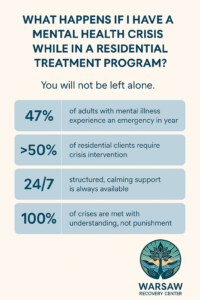
In treatment, we don’t see a crisis as a failure—it’s a moment when your care becomes even more focused, even more tailored to what you need.
You’re Not in Trouble
One of the most common fears clients have is that telling someone they’re in crisis will get them “in trouble.” That they’ll be punished, sent away, or treated like they’ve done something wrong.
But a mental health crisis is not a rule violation. It’s not proof that treatment isn’t working. It’s a signal—your mind and body’s way of saying, “I need more help right now.”
At Warsaw Recovery Center, staff are trained to respond without judgment or panic. You’ll be met with calm eyes and a steady voice, not rushed decisions or sharp words.
Immediate Safety Checks Happen First
The very first priority in a crisis is ensuring physical safety—yours and others’. That might mean moving you to a quieter, more private space, staying physically close to offer reassurance, or temporarily removing items that could cause harm.
This isn’t about control or taking away your independence. It’s about creating a buffer, a small stretch of breathing room between you and the part of your brain that feels overwhelmed. Sometimes that’s all it takes to start turning the tide.
On-Site Psychiatric Support Steps In
When you share that you’re in crisis, you won’t have to wait days to speak with a provider. Our residential program has psychiatric professionals available to assess your needs quickly.
They’ll ask questions in a way that feels safe, not interrogating. If medication adjustments could help, those are discussed. If you’d benefit from more frequent therapy sessions, we make it happen. If you simply need someone to sit with you for a while before talking—yes, that’s part of care too.
You won’t be left to guess what you need. We’ll walk you through each option, step by step.
Crisis Support Is Part of the Program, Not Outside It
Some people imagine they’d have to leave treatment if they “got worse.” In reality, a crisis is exactly when the program leans in the most.
Rather than being discharged, you’ll stay in the same therapeutic environment—but with added support. This might include:
- Increased one-on-one check-ins with your therapist
- Daily meetings with nursing or psychiatric staff
- Adjustments to group therapy schedules so you can focus on stabilization
- Optional activities that soothe and ground you rather than overstimulate
One client told us:
“They didn’t make me feel broken. They just stayed with me until I could breathe again.” – Residential Client, 2024
Your Care Plan Adapts With You
No two crises are identical. For one person, it’s exhaustion and emotional numbness. For another, it’s overwhelming anxiety or the sudden thought that not existing would be easier.
Your treatment plan is a living document, not a fixed prescription. We adapt it to meet you exactly where you are. That might mean more rest, less stimulation, or changing how your therapy sessions are structured. As you regain stability, we gradually guide you back into your full schedule.
You Can Talk About It Without Losing Ground
A lot of people hesitate to speak up because they fear it will erase their progress. “If I admit I’m struggling, will they think I’m back at square one?”
The truth is, honesty about what’s going on inside is one of the strongest steps forward you can take in recovery. We hold those conversations in private, with respect, and without judgment. Speaking up is not weakness—it’s an act of courage that keeps you connected to life.
Why Crisis Support Matters in Residential Care
Being in a residential setting means you already have a team around you. That’s the difference between struggling in silence at home and being in an environment designed to catch you before you fall.
In Warsaw, Virginia, our program’s structure allows for:
- Immediate monitoring when symptoms spike
- Coordinated care between therapists, nurses, and psychiatric staff
- Daily adjustments to your care plan as needed
- A safe physical environment free from outside stressors that can intensify crisis
Local Safety and Comfort in Warsaw, Virginia
Crisis support isn’t just about clinical care—it’s about creating a setting where you feel human. Here in Warsaw, there’s a slower pace. You can walk outside without feeling swallowed by noise. You can hear the wind in the trees during a quiet moment between sessions.
That sense of calm matters, especially when the inside of your mind feels anything but.
FAQ: Mental Health Crisis in Residential Treatment
What counts as a mental health crisis?
A crisis can be any moment where your emotional distress feels unmanageable or unsafe—this might include suicidal thoughts, panic attacks, uncontrollable anxiety, or feeling like you can’t keep living the way you are. You don’t need to wait until it’s “severe enough” to ask for help.
Will I be kicked out of treatment if I’m in crisis?
No. In a residential treatment program, a crisis is met with more support, not less. You’ll remain in the program unless you require a higher level of care, in which case we’ll coordinate that with you.
What if I’m afraid to tell someone I’m having suicidal thoughts?
We understand that fear. Talking about these thoughts won’t make you lose privileges or be judged. It’s a sign of trust—and it helps us keep you safe.
Will people know I’m in crisis?
We protect your privacy. Only the staff involved in your care will be informed, and they’ll speak with you respectfully and discreetly.
What happens after the crisis passes?
Your care plan will be reviewed and adjusted based on what you found helpful. You’ll have space to talk through what happened, what you felt, and how to prevent another crisis or respond sooner if one starts again.
If you’re in treatment—or considering it—and worry about what would happen if you had a mental health crisis, know this: you will not be left alone. You’ll be heard, protected, and guided toward relief, one small step at a time.
Call (888) 511-9480 or visit our residential treatment program page to learn more about our residential treatment program services in Warsaw, Virginia.