
Stress is something most people learn to live with. Deadlines, responsibilities, family obligations—it all adds up. For a while, you might tell yourself it’s normal. That everyone feels this way sometimes.
But then something shifts.
The exhaustion doesn’t go away after a weekend. The tension lingers even on quiet days. Small things start to feel overwhelming. And somewhere in the back of your mind, a quieter thought begins to surface: this might be more than just stress.
In communities like Fredericksburg, Virginia and Williamsburg, Virginia, where life can feel both fast-paced and deeply rooted in responsibility, many people carry this silent weight longer than they should. Not because they want to—but because they’re not sure what they’re actually experiencing.
This blog helps you understand that difference. Because recognizing it is often the first step toward feeling like yourself again.
The Subtle Line Between Stress and Something Deeper
Stress has a purpose. It’s your body’s way of responding to pressure or perceived challenges. In small doses, it can even help you stay focused or motivated.
But stress is supposed to pass.
It rises when something demands your attention—and then it falls once that moment is over. The problem begins when it doesn’t.
You might notice:
- You’re constantly on edge, even without a clear reason
- Your body feels tense or restless most of the time
- You struggle to relax, even in safe or calm environments
At that point, what you’re experiencing may not be temporary stress anymore. It may be shifting into anxiety, emotional fatigue, or even burnout that’s affecting your nervous system more deeply.
The difference isn’t always obvious. It builds slowly.
And that’s why so many people miss it.
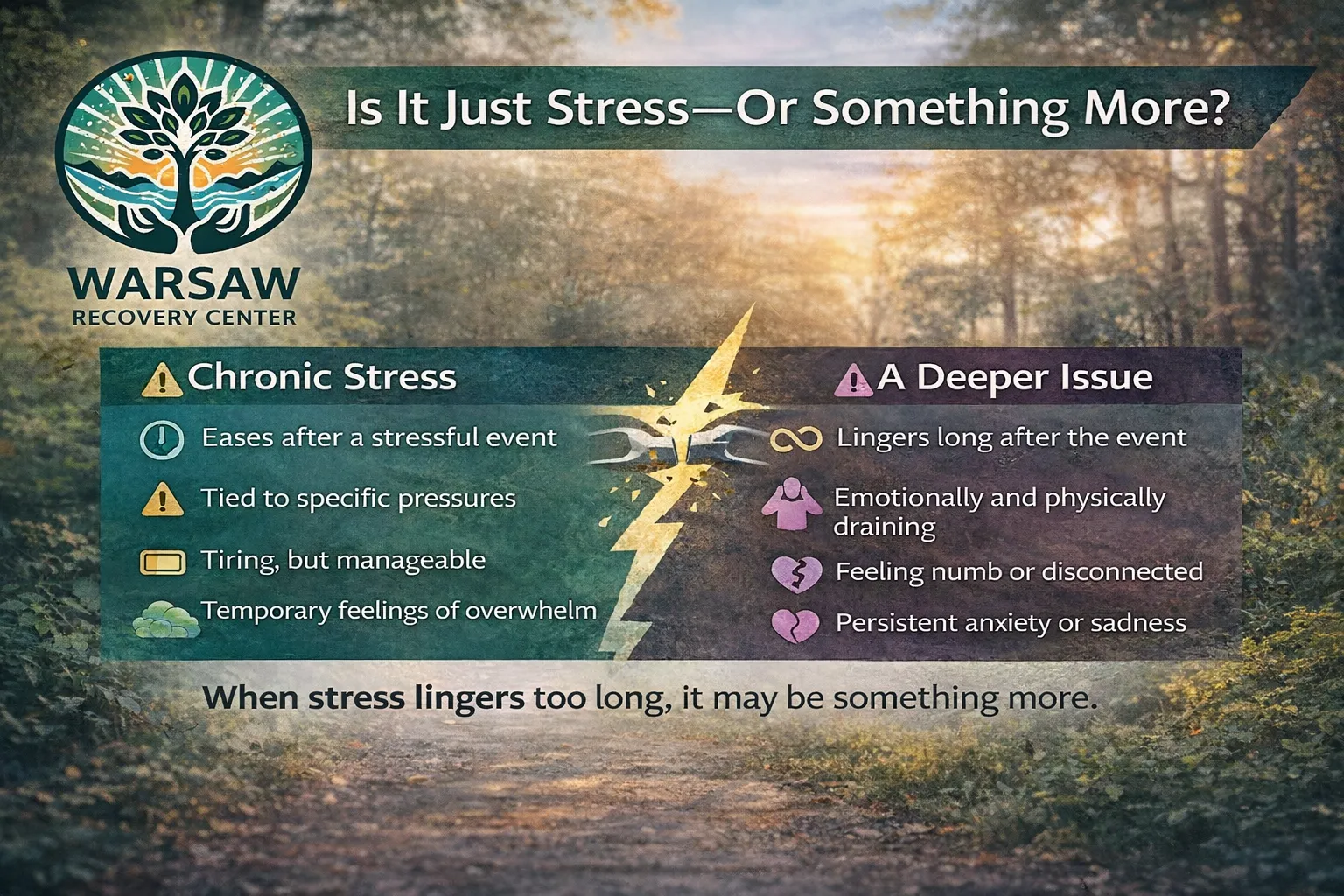
Signs Your Stress Isn’t Just Temporary Anymore
There’s no single moment where stress officially “becomes” something else. But there are patterns that signal a deeper issue.
You’re Always Tired—But Can’t Fully Rest
This kind of exhaustion feels different.
You might sleep, but still wake up drained. Or you might struggle to fall asleep at all because your mind won’t slow down. Even downtime feels unproductive or uncomfortable.
It’s not just physical fatigue—it’s emotional and mental depletion.
Your Mind Won’t Turn Off
Overthinking becomes constant.
You replay conversations. You anticipate problems that haven’t happened. You feel stuck in loops of worry that don’t resolve, no matter how much you think them through.
This kind of mental activity isn’t productive—it’s exhausting.
Small Things Feel Bigger Than They Should
A minor inconvenience can feel overwhelming.
You might find yourself snapping more easily, withdrawing from others, or feeling emotionally reactive in ways that don’t match the situation. It’s not that you’re “overreacting”—your system is simply overloaded.
You Feel Disconnected From Yourself
This one is harder to explain, but many people recognize it instantly.
You don’t feel fully present. Things that used to matter don’t hit the same way. You might feel numb, detached, or like you’re just going through the motions.
That’s often a sign your mind is trying to protect you from prolonged stress.
Why This Happens More Often Than People Realize
Modern life doesn’t always give people space to recover.
You’re expected to keep going. To stay productive. To manage everything without slowing down too much. And when stress becomes constant, your body adapts to it.
That adaptation is where the problem begins.
Instead of returning to a calm baseline, your system stays in a heightened state. Over time, this can affect:
- Your sleep patterns
- Your emotional regulation
- Your focus and memory
- Your overall sense of well-being
And because this shift happens gradually, it often feels like “this is just how life is now.”
But it doesn’t have to be.
The Emotional Cost of Ignoring It
One of the hardest parts about this kind of stress is how invisible it can be.
From the outside, things might look fine. You’re still showing up. Still functioning. Still handling responsibilities.
But internally, it’s different.
You might feel:
- Constantly overwhelmed, even without a clear reason
- Irritable or emotionally drained
- Disconnected from people you care about
- Unmotivated or stuck
Over time, this can lead to deeper mental health challenges like chronic anxiety or depression.
Not because you did anything wrong—but because your system hasn’t had a chance to reset.
What It Means to Actually Address It
Recognizing the problem is one step. Responding to it is another.
And it doesn’t have to be dramatic.
You don’t need to completely change your life overnight. But you do need to start listening to what your mind and body are telling you.
That might look like:
- Creating small moments of quiet in your day
- Setting limits around work or responsibilities
- Talking to someone you trust about how you’re feeling
- Seeking professional support if things feel persistent or overwhelming
The goal isn’t perfection. It’s relief.
Even small changes can begin to shift how you feel over time.
You’re Not “Weak” for Feeling This Way
This is something a lot of people struggle to accept.
There’s a tendency to believe that if you’re overwhelmed, it means you’re not handling things well enough. That you should be stronger. More resilient. More capable.
But that’s not how stress works.
Your response to prolonged pressure isn’t a failure—it’s a signal.
A signal that something needs attention. That your current pace or load isn’t sustainable in the long term.
And listening to that signal is one of the most responsible things you can do for yourself.
Finding Your Way Back to Balance
Recovery from chronic stress isn’t about eliminating stress completely. That’s not realistic.
It’s about creating space for your system to come back to baseline.
For some people, that starts with rest. For others, it starts with clarity—understanding what’s actually happening internally.
You might begin to notice:
- Moments where your mind feels quieter
- Improved sleep, even slightly
- Less emotional reactivity
- A gradual return of energy or interest
These shifts don’t happen all at once. But they do happen.
And they matter more than you might think.
FAQs
How do I know if it’s stress or anxiety?
Stress is usually tied to a specific situation and tends to ease once that situation changes. Anxiety, on the other hand, can persist even without a clear trigger and often involves ongoing worry, restlessness, or physical symptoms like tension and rapid thoughts.
If what you’re feeling doesn’t go away—or feels disproportionate to the situation—it may be more than stress.
Can stress really affect my physical health?
Yes, absolutely.
Chronic stress can impact sleep, digestion, immune function, and even cardiovascular health. It’s not just something that exists in your mind—it affects your entire body over time.
What if I’ve been feeling this way for a long time?
That’s more common than you might think.
Many people adapt to prolonged stress without realizing how much it’s affecting them. The important thing is that it’s never too late to address it. Even small steps toward support or change can make a meaningful difference.
Do I need therapy for this?
Not always—but it can help.
If your stress feels constant, overwhelming, or is affecting your daily life, talking to a mental health professional can provide clarity and tools to manage it more effectively. It’s not about something being “wrong” with you—it’s about support.
What’s the first step I should take?
Start by noticing.
Pay attention to how you feel throughout the day—mentally, emotionally, physically. That awareness alone can help you understand whether what you’re experiencing is temporary stress or something deeper.
From there, small changes become easier to identify.
Closing Thought
There’s a version of you that doesn’t feel constantly overwhelmed. A version that can think clearly, rest deeply, and move through the day without carrying so much tension.
That version isn’t gone.
It’s just been buried under too much, for too long.
And recognizing that is where things begin to shift.