
Watching a young adult return to drinking after everything your family has already been through can feel like a quiet heartbreak.
You might replay conversations in your head. Wonder what you missed. Question whether you pushed too hard or not hard enough.
Most parents in this situation carry the same heavy thought: “We already tried to help. Why didn’t it work?”
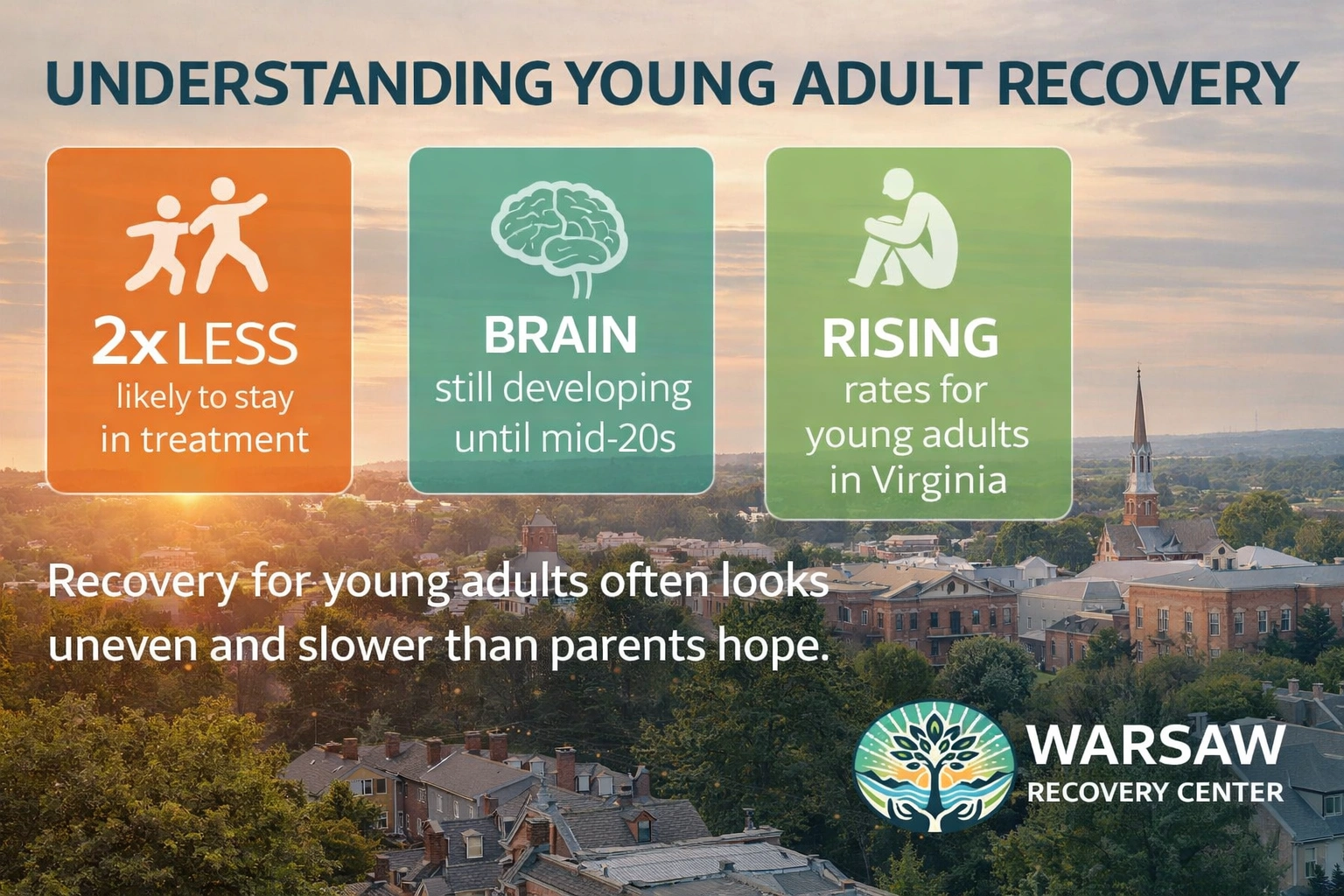
As a clinician, I want to gently say something many families aren’t told early enough—recovery for young adults rarely looks the way parents expect. The path is often uneven, frustrating, and slower than anyone hopes.
That doesn’t mean nothing is working. It often means your child is still learning how to grow into a life where alcohol no longer feels necessary.
In some communities like Fredericksburg, Virginia, clinicians and families alike are seeing a rising number of young adults navigating this complicated stage between adolescence and adulthood while trying to find stability.
Understanding why recovery looks different at this age can help you respond with more clarity—and a little less fear.
Early conversations about support options often include learning more about alcohol addiction treatment and how programs adapt care specifically for young adults who are still building their identity and independence.
Young Adulthood Is a Unique Stage of Life
A 20-year-old may look like an adult from the outside, but developmentally they’re still in a period of major growth.
The brain continues maturing well into the mid-twenties, particularly in areas tied to impulse control, decision-making, and risk evaluation. At the same time, young adults are navigating enormous life transitions: leaving home, starting college or work, forming adult relationships, and shaping their sense of identity.
That combination creates emotional pressure many parents underestimate.
Alcohol can become a quick way to manage that pressure. For some young people, it temporarily reduces anxiety, quiets social insecurity, or helps them escape feelings they don’t know how to handle yet.
When alcohol fills that emotional role, stopping isn’t just about willpower. It means learning entirely new ways to cope with life.
Relapse Often Happens During Identity Building
Many parents assume that if their child returns to drinking after treatment, the treatment “failed.”
But for young adults, relapse is often part of a longer learning process.
This age group is still figuring out who they are and what they want their lives to look like. That experimentation can include testing boundaries, rejecting advice, and sometimes returning to old behaviors—even ones they know caused problems.
From a clinical perspective, relapse in early adulthood often reflects unfinished emotional work rather than lack of effort.
Your child may understand the consequences of drinking but still feel pulled toward it when stress, loneliness, or uncertainty builds up.
Recovery at this stage involves helping them build a life that feels meaningful enough to protect.
Shame Is Often Stronger Than Parents Realize
Many young adults who start drinking again already know they’ve disappointed their families.
They carry that awareness quietly.
Instead of saying “I’m struggling again,” they often withdraw. They avoid calls. They minimize what’s happening. Sometimes they promise change simply to ease the tension in the moment.
Underneath those behaviors is often deep shame.
Shame tells them they’ve already failed. It whispers that asking for help will only confirm everyone’s worst fears.
When treatment environments focus on curiosity rather than criticism, young adults often feel safe enough to start telling the truth about what’s actually happening in their lives.
And honesty is where real change begins.
Independence Matters More Than Ever
One of the hardest dynamics for families is the shift in control that happens when a child becomes a young adult.
At 20, they may still rely on you emotionally or financially—but they also want to make their own decisions.
If recovery feels like something forced on them, resistance can grow quickly.
But when young adults are invited into the process—helping shape their goals, discussing what support actually helps, and exploring the kind of life they want to build—they often engage more fully.
This doesn’t mean parents step away.
It means shifting from directing every move to supporting a process that encourages responsibility and self-discovery.
Structure Still Plays a Critical Role
Even though independence matters, young adults often need more structure than they realize.
This is where thoughtfully designed programs make a difference. Some individuals benefit from live-in support environments that provide stability during early recovery. Others respond better to structured daytime care that allows them to continue school or work while receiving consistent guidance.
Multi-day weekly treatment can also provide a balance between accountability and flexibility.
The goal of these environments isn’t punishment or restriction.
It’s to create a rhythm where young adults can rebuild routines, process emotions, and practice healthier choices while still developing independence.
In places like Williamsburg, Virginia, families are increasingly seeking treatment environments that understand the specific developmental challenges young adults face, rather than expecting them to respond to care designed for older adults.
Mental Health Often Plays a Larger Role Than Expected
Many parents initially focus only on the drinking itself.
But for young adults, alcohol use frequently overlaps with deeper emotional struggles.
Anxiety about the future.
Depression that makes everyday tasks feel exhausting.
Loneliness that comes from feeling disconnected from peers.
Sometimes alcohol becomes a coping mechanism for feelings they don’t yet know how to talk about.
When treatment addresses both emotional wellbeing and substance use together, young adults are more likely to understand what’s driving their behavior—and how to change it.
Parents Carry Invisible Weight
While much attention is placed on the young person struggling with alcohol, parents often carry their own heavy emotional burden.
You might feel guilt, wondering if something you did contributed to the problem.
You may feel anger when promises are broken again.
And beneath it all is often fear—fear for your child’s safety, their future, and whether things will ever stabilize.
These feelings are not signs of weakness or failure.
They are the natural response of someone who deeply loves their child and wants to protect them.
Parents benefit from support as well. When families receive guidance on communication, boundaries, and emotional resilience, they often become a powerful part of the recovery process.
Progress Is Often Slower Than Families Hope
One of the hardest truths about recovery is that progress rarely moves in a straight line.
Young adults might show signs of growth for weeks or months before slipping back into old patterns. They may express commitment to change one day and seem resistant the next.
This inconsistency can feel exhausting for families.
But from a developmental perspective, it often reflects a young person learning through experience rather than simply accepting advice.
Over time, those experiences can accumulate into genuine insight.
A young adult who returns to treatment after relapse often arrives with a deeper understanding of their triggers, challenges, and motivations.
That insight can become the foundation for more lasting recovery.
Love Still Matters More Than You Think
Parents sometimes reach a point where they wonder if stepping away emotionally might be easier.
After repeated disappointments, protecting your own heart can feel necessary.
But many young adults in recovery later describe something powerful: the quiet knowledge that their family never completely gave up on them.
That steady presence—combined with healthy boundaries—often becomes a source of motivation when they’re ready to change.
Your love is not the problem.
It may, in fact, be one of the strongest supports your child has.
What Realistic Hope Looks Like
Hope in this situation doesn’t always look dramatic.
It might look like your child agreeing to one honest conversation.
Or acknowledging that drinking has started affecting their life again.
Or asking questions about getting help.
Small moments like these often signal something important: the door is opening.
Learning about structured recovery options, including specialized alcohol addiction treatment, can help families understand what resources exist and how support can be tailored to young adults who are still shaping their future.
Frequently Asked Questions
Why do young adults relapse even after getting help?
Relapse among young adults often happens because they’re still learning how to manage stress, identity changes, and emotional challenges without alcohol. Treatment can provide tools, but applying those tools consistently takes time and experience.
Is it normal for recovery to take several attempts?
Yes. Many people—especially young adults—experience multiple attempts before achieving long-term stability. Each experience can contribute to deeper understanding and stronger coping strategies.
Should parents stay involved in their adult child’s recovery?
Healthy involvement can be very helpful. Encouragement, clear communication, and appropriate boundaries often support recovery while still respecting the young adult’s independence.
How can parents support their child without enabling them?
Parents can focus on emotional support while maintaining firm boundaries around behavior. This might include offering encouragement and resources while avoiding actions that shield the young adult from natural consequences.
What signs suggest a young adult may need additional help?
Signs may include increasing secrecy, changes in mood, declining school or work performance, social withdrawal, or escalating alcohol use. These patterns can signal that more structured support may be helpful.
What if my child refuses help right now?
It’s common for young adults to resist treatment initially. Continuing open conversations, expressing concern without blame, and keeping resources available can sometimes make it easier for them to reconsider later.
If your family is navigating this painful and confusing situation, you don’t have to figure it out alone.
Call (888) 511-9480 to learn more about our Alcohol addiction treatment in Richmond, Virginia.