
I’d been sober before. Long enough to collect chips. Long enough to become “the one who made it back.” Long enough that people stopped worrying about me every day.
So when fentanyl became part of my relapse, I didn’t just feel scared. I felt confused.
None of it matched the story I thought I knew about myself anymore.
That’s the thing about fentanyl that can blindside people in long-term recovery: it changes the emotional landscape as much as the physical one. The old routines that once helped you stabilize suddenly don’t seem strong enough. The fear of withdrawal feels sharper. The risk feels heavier. Even asking for help can feel more complicated than it used to.
A lot of people searching for options like drug detoxification in Virginia aren’t looking for inspiration or motivational speeches. They’re looking for a place that understands how different fentanyl can feel from previous relapses—and why someone who once had years sober might suddenly feel completely overwhelmed.
I Kept Waiting for My Old Recovery Mindset to Kick In
At first, I treated the relapse like a temporary detour.
I told myself I already knew how recovery worked. I’d done meetings before. I’d rebuilt my life before. I thought eventually my “sober brain” would wake back up and take control.
But fentanyl didn’t leave much room for confidence.
It created this strange cycle where every day felt urgent, but also emotionally numb at the same time. I wasn’t spiraling loudly. I wasn’t living in chaos every second. From the outside, parts of my life still looked functional enough.
That made it easier to stay stuck.
And honestly, that’s one of the most dangerous parts. You can look relatively okay while feeling completely trapped internally.
Especially if you’ve been sober before.
People assume prior sobriety protects you from getting pulled under again. Sometimes it actually adds another layer of shame because you think you should “know better.”
The Withdrawal Fear Became Bigger Than My Desire to Quit
I don’t think people fully understand how much fear controls fentanyl use once dependence sets in.
It wasn’t even about getting high anymore. Most days, it was about avoiding withdrawal. Avoiding panic. Avoiding that crawling, unbearable feeling that made my entire nervous system feel like it was trying to escape my body.
That fear changes the conversation in your head.
You stop asking:
“Should I quit?”
And start asking:
“How bad is this going to hurt?”
That’s why medical support matters so much for many people. Not because someone is weak. Not because they lack willpower. But because fear can keep people trapped long after they desperately want out.
I remember searching things late at night trying to figure out if there was medical help available that wasn’t just another emergency room visit. I wasn’t looking for a dramatic rescue. I was looking for a safer landing.
That’s where searches like “fentanyl detox near me” often come from. Not from people trying to game Google. From exhausted people trying to figure out how to survive the next step.
Going Back for Help Felt More Humiliating Than My First Treatment Stay
Nobody talks enough about how hard it is to return after long-term sobriety.
The first time I got sober, I was desperate enough to surrender completely. I had fewer expectations. Less pride to protect.
The second time? I carried years of identity with me.
I wasn’t just admitting I needed help. I was admitting I had lost something I fought hard to build.
That hit differently.
I worried people would see me as a fraud. I worried staff would silently judge me. I worried I’d walk into treatment and feel like the “relapse guy” instead of a human being who was struggling.
But what actually helped was finding people who understood that relapse after years sober often comes with grief, not just addiction.
Grief for your confidence.
Grief for your routines.
Grief for the version of yourself you thought was permanent.
That emotional side matters more than people realize.
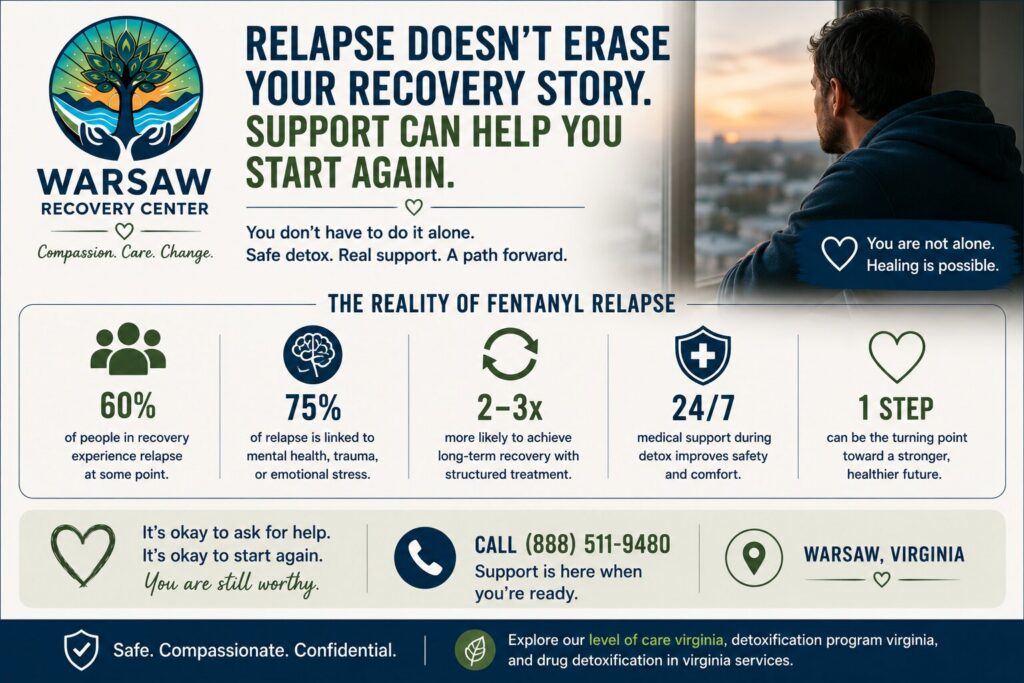
I Didn’t Need to Be Fixed— I Needed to Feel Safe Enough to Be Honest
There’s a difference.
A huge one.
A lot of alumni come back into treatment exhausted from pretending they’re okay. They know the language of recovery. They know how to say the right things. They know how to sound hopeful even when they feel emotionally disconnected inside.
But fentanyl has a way of stripping away performance eventually.
At some point, I stopped trying to sound inspiring and started saying things like:
- “I’m terrified of withdrawal.”
- “I don’t trust myself right now.”
- “I feel emotionally flat.”
- “Part of me wants help, and part of me wants to disappear.”
That honesty changed everything.
Because recovery became less about proving I could still be sober and more about rebuilding trust with myself again.
The ER Wasn’t Built for What I Actually Needed
Emergency rooms save lives. Full stop.
But surviving the immediate crisis and stabilizing emotionally are two very different things.
The ER helped me get through dangerous moments. What it couldn’t fully provide was the ongoing structure, emotional support, and continuity that recovery often requires afterward.
I needed:
- Medical monitoring during withdrawal
- A calmer environment
- Time to mentally stabilize
- Conversations that went deeper than immediate discharge instructions
- Support that acknowledged both addiction and emotional exhaustion
That’s why some people look specifically for structured detox care instead of relying solely on crisis stabilization settings.
Not because they’re being dramatic.
Because they know they need more than one hard night to rebuild momentum.
Fentanyl Relapse Doesn’t Always Look the Way People Expect
This part matters.
A lot of people imagine fentanyl addiction as constant visible collapse. Sometimes it looks like that. Sometimes it doesn’t.
Sometimes it looks like:
- Answering emails while secretly panicking
- Isolating without fully disappearing
- Avoiding friends who knew you sober
- Making quiet promises to quit tomorrow
- Feeling emotionally numb even while functioning outwardly
- Living with a constant low-grade fear in your chest
That hidden exhaustion can go on for a long time before someone finally reaches for help.
And by then, many people feel deeply disconnected from themselves.
Like they’re watching their life happen from a distance.
I Had to Stop Romanticizing My Old Recovery
This one hurt.
I kept comparing myself to who I used to be instead of paying attention to who I actually was now.
I wanted recovery to feel exactly like it did the first time. I wanted the same motivation. The same hope. The same emotional breakthroughs.
But recovery after fentanyl felt quieter for me.
More practical.
More grounded.
Less dramatic.
I stopped chasing the feeling of becoming a completely different person and started focusing on smaller things:
- Sleeping through the night
- Eating normally again
- Feeling present during conversations
- Not waking up terrified
- Being honest without rehearsing what I’d say first
That ended up mattering more than the big emotional moments.
Because stability isn’t flashy. It’s repetitive. Quiet. Sometimes even boring.
But boring started to feel beautiful after a while.
The Right Support Didn’t Treat Me Like a Failure
That’s what finally helped me stay.
Not pressure.
Not shame.
Not lectures about throwing my sobriety away.
Just people who understood that fentanyl relapse can leave even experienced alumni feeling emotionally scrambled and physically terrified.
People who understood that asking for help again takes courage most outsiders never fully see.
And honestly, that changed the entire experience for me.
Because once someone stops feeling judged, they usually stop hiding as much too.
FAQ: Fentanyl Relapse, Detox, and Starting Again
Is fentanyl withdrawal really different from other opioids?
For many people, yes. Withdrawal can feel more intense, more unpredictable, and emotionally overwhelming. That’s one reason some individuals seek medically supervised support instead of trying to stop alone.
Why do people with long-term sobriety relapse on fentanyl?
Relapse can happen for a lot of reasons—stress, emotional burnout, trauma, isolation, mental health struggles, or simply believing they could manage occasional use again. Fentanyl’s potency can also escalate dependence very quickly, even for people who previously maintained sobriety for years.
Does going back to treatment mean I failed?
No. Many people return to treatment more than once. Recovery is not erased because someone struggles again. In fact, prior sobriety often means you already have insight and recovery tools that can still help moving forward.
What’s the difference between detox and the emergency room?
Emergency rooms focus on immediate medical safety and crisis stabilization. Detox programs may provide additional structure, monitoring, emotional support, and transition planning during withdrawal and early recovery.
Why are people searching for “fentanyl detox near me”?
Usually because they’re scared, overwhelmed, or unsure how to stop safely. Many people aren’t looking for a perfect solution—they’re looking for support that feels medically safe and emotionally manageable.
What if I feel emotionally disconnected even after getting sober again?
That’s more common than people think, especially for long-term alumni. Emotional numbness, exhaustion, and disconnection don’t mean recovery is failing. Sometimes they’re signs that deeper healing, support, and reconnection are still needed.
Can detox help if I’m afraid to start over?
Detox can help create physical and emotional stabilization so people can think more clearly about next steps. For many people, the hardest part is not wanting recovery—it’s being terrified of the process itself.
You Don’t Have to Pretend You’re Fine Just Because You’ve Been Sober Before
There’s a unique kind of loneliness that can happen after relapse in long-term recovery.
People assume you already know what to do. Meanwhile, you’re sitting there wondering why everything feels harder than it used to.
If that’s where you are right now, you’re not broken. And you’re not the only one quietly searching for help that feels realistic, medically safe, and emotionally grounded.
Sometimes the bravest thing a person can do is stop pretending they can carry it alone.
Call (888) 511-9480 or explore our level of care Virginia, detoxification program Virginia, drug detoxification in Virginia services to learn more.