
I remember staring at my phone in the dark, searching the same phrases over and over again like somehow the wording would change the reality.
“24/7 detox support.”
“Can withdrawal kill you?”
“Medical detox near me.”
Then eventually:
“Medical detox richmond va.”
Not because I wanted treatment.
Because I was scared.
Scared of withdrawal. Scared of disappointing everyone again. Scared that relapse after real sobriety meant maybe I was never actually recovering in the first place.
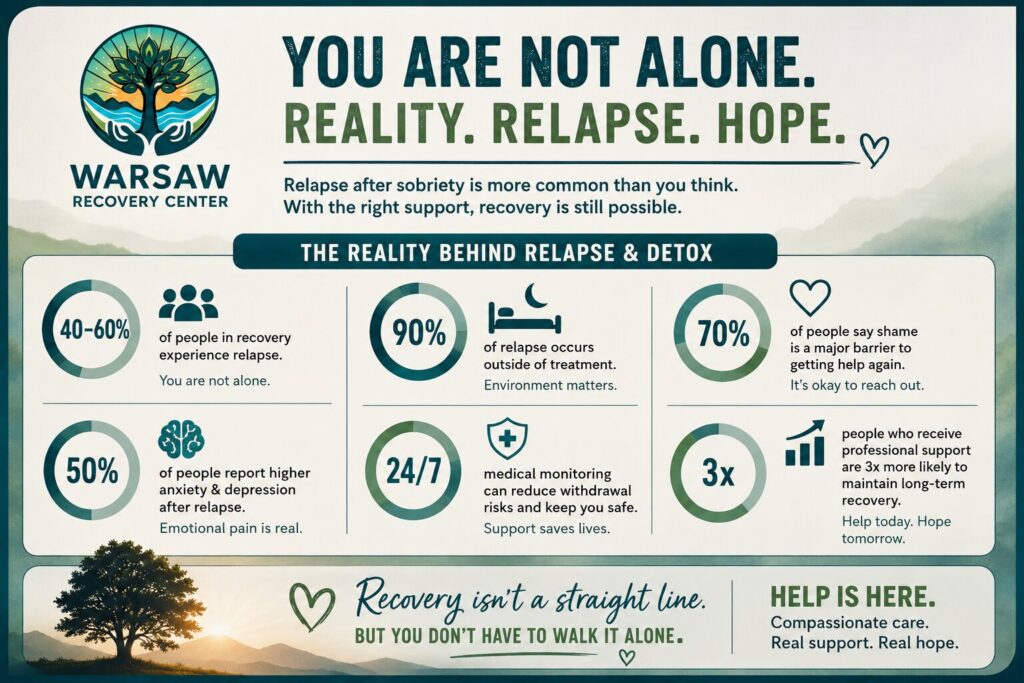
That’s the part people don’t talk about enough. Relapse after 90 days sober—or a year sober, or five years sober—doesn’t just hurt physically. It messes with your identity. You start questioning everything you thought was true about yourself.
And honestly, the shame can become louder than the substance use itself.
By the time I started looking into detox support in Virginia, I wasn’t trying to feel inspired anymore.
I just wanted the fear to stop.
I Thought Relapse Would Be Loud and Obvious
Instead, mine happened quietly.
That’s what caught me off guard.
I still answered texts sometimes. I still showed up to work often enough to look functional from the outside. I still knew recovery language well enough to convince people—and myself—that things weren’t “that bad.”
But internally, I was unraveling.
Sleep got worse first.
Then came the anxiety. The constant mental bargaining. The exhaustion of trying to look normal while planning my entire emotional survival around substances again.
And relapse after real sobriety carries a specific kind of loneliness because you remember exactly what it felt like to be free before.
That memory haunts you.
The Nights Started Feeling Dangerous
Daytime was easier because distractions existed.
At night, there was nowhere to hide from myself.
Withdrawal symptoms became louder in the dark. My thoughts turned sharp and cruel. Every small panic felt enormous at 2am.
I remember lying in bed one night sweating through my shirt while my heart pounded so hard I thought:
“This is either anxiety or something is seriously wrong.”
And the terrifying part was that I genuinely couldn’t tell anymore.
That’s when the idea of round-the-clock support stopped sounding dramatic and started sounding necessary.
Because there’s something terrifying about realizing your body no longer trusts your promises.
I Kept Thinking I Should Be Able to Handle It Alone
This is where a lot of relapsed alumni get trapped.
You already know recovery language. You’ve already been sober before. You’ve already “proved” you could do it once.
So asking for medical support can feel humiliating.
I kept telling myself:
“You’re not bad enough.”
“You should know better by now.”
“Other people need help more than you do.”
Meanwhile, my nervous system was completely overwhelmed.
I think many alumni secretly believe needing more support the second time means they somehow failed harder.
But relapse changes people emotionally. Especially after extended sobriety. The shame deepens. The fear intensifies. And withdrawal can hit differently when your body and mind are already exhausted from carrying secrecy again.
I Wasn’t Looking for Motivation—I Was Looking for Safety
That distinction matters.
People imagine detox as some dramatic turning point where someone suddenly becomes hopeful and determined.
That was not my experience at all.
I wasn’t searching for hope first.
I was searching for safety.
Safety from:
- Withdrawal symptoms
- Panic attacks
- Sleepless nights
- The fear of overdosing
- The fear of losing control completely
- The terrifying thought that maybe I couldn’t stop this time
A lot of people searching things like “medical detox richmond va” are not trying to find luxury treatment or inspirational slogans.
They are trying to survive the next 12 hours safely.
The 24/7 Support Changed Something in Me Emotionally
Not because someone magically fixed me.
Because I finally stopped being alone with the fear.
That matters more than people realize.
There is something deeply regulating about another human staying calm while your nervous system feels completely chaotic.
The nurse checking vitals at 3am.
Someone reassuring you the sweating and panic will ease.
Someone noticing your fear without shaming it.
Someone helping you breathe through the moment instead of telling you to “tough it out.”
Those moments sound small.
They aren’t.
When your body feels like it’s betraying you, calm human presence can feel like oxygen.
Withdrawal Felt Like My Brain Was Turning Against Me
People who have never gone through withdrawal often imagine it as purely physical.
But for me, the emotional side became just as intense.
My thoughts became dark quickly:
- “You ruined everything.”
- “People will never trust you again.”
- “You’re back at square one.”
- “You don’t deserve help this time.”
And the sleep deprivation made everything worse.
Your brain starts lying convincingly during withdrawal. Temporary pain starts feeling permanent. The future disappears completely. All that exists is discomfort and panic and shame.
One night it genuinely felt like my nervous system was screaming louder than my actual thoughts.
That’s why support matters during detox. Sometimes people need someone else to hold perspective for them until their body calms down enough to think clearly again.
I Was Terrified of Being Judged by Staff
This fear almost kept me from going.
I didn’t want to walk in and see disappointment on someone’s face when they heard I’d already been sober before.
I expected:
- Lectures
- Judgment
- Eye rolls
- Subtle disappointment
Instead, what I found surprised me.
Most people working in detox understand relapse is complicated. They understand recovery is rarely linear. They understand that alumni often arrive carrying enormous shame already.
Nobody needed to punish me emotionally.
I was already doing that to myself.
What actually helped was being treated like a human being who was struggling—not a cautionary tale.
Relapse Made Me Feel Like I Lost My Identity
This part hit harder than withdrawal physically.
When you’ve had real sobriety, recovery becomes part of how you see yourself. Other people start seeing you differently too.
Then relapse happens and suddenly you feel disconnected from your own life.
You stop recognizing yourself.
You avoid people who knew you sober.
You feel like a fraud around recovery conversations.
You become terrified of disappointing everyone again.
And eventually isolation starts feeding the relapse itself.
That cycle can become brutal:
- Shame
- Isolation
- More use
- More shame
- More isolation
Until finally asking for help feels almost impossible emotionally.
I Had to Stop Treating Relapse Like Erasure
This changed everything for me.
At first, I acted like relapse deleted every sober day that came before it.
But that isn’t true.
The growth still mattered.
The healing still happened.
The sober version of me was still real.
Relapse did not erase my humanity or every lesson I learned in recovery.
And honestly, the second time around I became more honest.
Less performative.
Less focused on appearing “fixed.”
More willing to admit:
“I’m scared.”
“I need help.”
“I can’t white-knuckle this safely anymore.”
That honesty ended up becoming stronger than pride ever was.
Sometimes Recovery Starts With Letting Someone Help You Through One Night
Not forever.
Just one night.
One terrifying night where your nervous system feels unbearable and your thoughts are spiraling and your body no longer feels safe to manage alone.
That’s sometimes where recovery quietly begins again.
Not in inspiration.
Not in certainty.
Not in confidence.
Just in finally letting someone stay awake with you through the fear.
FAQ: Relapse, Detox, and 24/7 Support
Why does relapse after sobriety feel emotionally worse?
Many people experience deeper shame after relapse because they already know what sobriety feels like. Losing stability after meaningful recovery time can feel emotionally devastating and disorienting.
Why are people searching for “medical detox richmond va”?
Usually because they are scared, overwhelmed, or experiencing withdrawal symptoms they no longer feel safe managing alone. Many people are looking for medical monitoring and emotional support during detox.
Is needing detox after relapse a sign of failure?
No. Relapse does not erase previous recovery progress. Sometimes people need additional support, especially if withdrawal symptoms, panic, or relapse severity increase.
What does 24/7 detox support actually help with?
Round-the-clock support can help monitor symptoms, improve safety, reduce panic, provide reassurance, and help people stabilize physically and emotionally during withdrawal.
Why does withdrawal feel so emotionally intense?
Withdrawal affects both the body and the brain. Anxiety, shame, panic, insomnia, depression, and emotional instability are all common during detox and early recovery.
Can alumni benefit from treatment again after relapse?
Absolutely. Many people return to treatment after relapse and continue building meaningful recovery afterward. Recovery is rarely a perfectly straight line.
What if I’m embarrassed to ask for help again?
That feeling is incredibly common. Many relapsed alumni fear judgment, disappointment, or shame. But asking for help is not weakness—it is often the moment someone stops suffering alone.
You Are Not Starting From Nothing
If you’re reading this after relapse, please hear this clearly:
You are not erased.
You are not hopeless.
And you are not weak for needing more support this time.
Sometimes relapse changes the level of care someone needs. Sometimes fear grows bigger than what isolation can safely hold. And sometimes the bravest thing a person can do is stop pretending they can survive it alone.
Call (888) 511-9480 or explore our detox services in Warsaw, Virginia to learn more.