
If your child stopped drinking two days ago and suddenly seems shaky, sweaty, anxious, emotional, or physically overwhelmed, you may feel caught between two frightening thoughts:
“Maybe this is just anxiety.”
Or:
“What if this is something more serious?”
That uncertainty can feel terrifying for parents.
Especially if your child keeps insisting they are “fine” while their body is clearly struggling.
Many families quietly search for answers during moments like this because alcohol withdrawal does not always look the way people expect it to. Sometimes it looks dramatic. Sometimes it looks like panic, insomnia, sweating, irritability, shaking, or emotional collapse that slowly builds over a couple of days.
And honestly, many people do not realize how physically intense stopping alcohol can become until they witness it firsthand.
That’s one reason some families begin exploring options like detox services in Virginia during this stage. Not because they are overreacting—but because they are trying to figure out what is safe, what is dangerous, and how to help someone they love without making the situation worse.
Why Does Someone Shake After They Stop Drinking?
Alcohol affects the central nervous system heavily over time.
When someone drinks consistently, the body slowly adapts to alcohol being present. The nervous system essentially learns to function around it.
When alcohol suddenly disappears, the brain and body can become overstimulated while trying to rebalance themselves.
That overstimulation may cause:
- Trembling or shaking
- Sweating
- Increased heart rate
- Anxiety or panic
- Restlessness
- Nausea
- Trouble sleeping
- Emotional instability
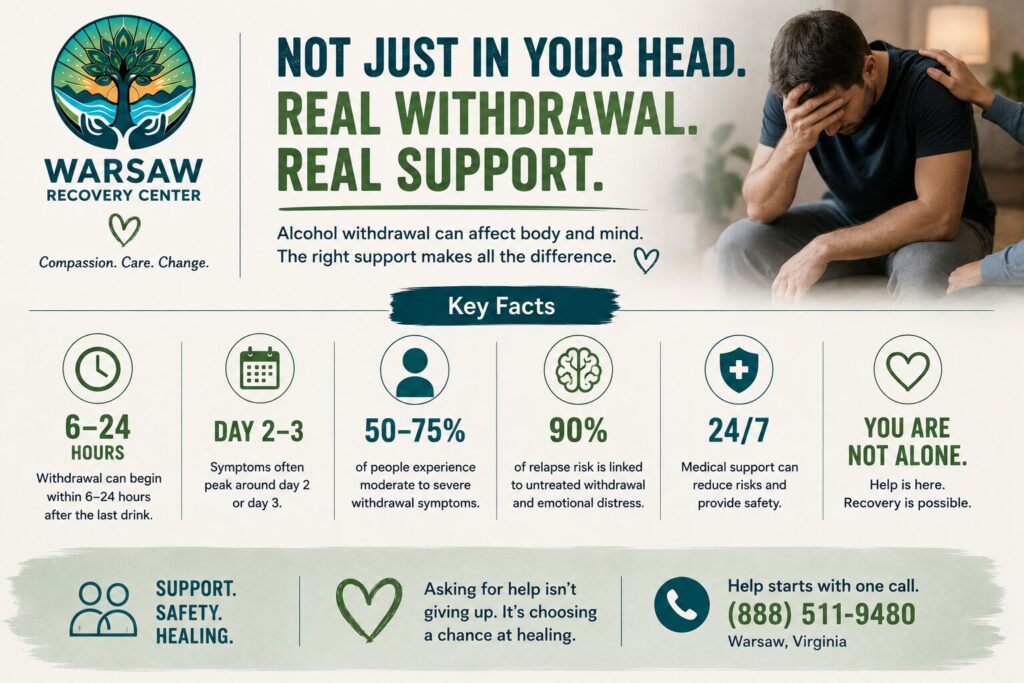
For some people, symptoms begin within several hours after the last drink.
For others, symptoms become much more noticeable around day 2.
And if someone has been drinking heavily or regularly for a long time, the symptoms may intensify quickly.
Why Does It Feel So Similar to Anxiety?
This is one of the most confusing parts for families.
Alcohol withdrawal can absolutely look like anxiety.
Someone may:
- Pace constantly
- Struggle to sit still
- Seem panicked
- Feel emotionally overwhelmed
- Become unusually irritable
- Have racing thoughts
- Say they feel like they are “losing it”
- Wake up in panic repeatedly
From the outside, it may seem like severe emotional distress alone.
But alcohol withdrawal affects both the body and the mind simultaneously. The nervous system becomes hyperactive, which can create very real emotional symptoms alongside physical ones.
That’s why many people searching about alcohol withdrawal symptoms are not looking for technical definitions. They are trying to understand whether the fear, shaking, sweating, and emotional chaos they are witnessing is normal—or medically dangerous.
Day 2 Can Feel Emotionally Brutal
A lot of people assume withdrawal is mostly physical.
In reality, the emotional side can become overwhelming very quickly.
By the second day, many people describe feeling:
- Emotionally raw
- Hyper-alert
- Panicked
- Deeply uncomfortable in their own body
- Unable to relax no matter how tired they are
- Convinced something terrible is about to happen
And sleep deprivation starts amplifying everything.
Someone may be exhausted beyond words while still being physically unable to rest. Their nervous system stays activated. Their body may twitch or jerk awake repeatedly. Small frustrations can suddenly feel enormous.
One patient once described it this way:
“It felt like my body forgot how to calm down.”
That experience can be frightening enough that people begin questioning whether they are having a mental health crisis instead of withdrawal.
Parents Often Feel Helpless Watching It Happen
This part deserves more attention.
Parents witnessing withdrawal often feel trapped between wanting to help and not knowing what is actually safe.
You may find yourself:
- Watching their breathing
- Listening for movement at night
- Monitoring symptoms constantly
- Wondering whether to take them to the ER
- Googling symptoms repeatedly
- Feeling afraid to leave them alone
That fear is exhausting.
Especially because many young adults minimize what they are feeling.
They may say:
“I’m okay.”
“It’s just stress.”
“I just need sleep.”
“I don’t want treatment.”
Sometimes they truly believe they can push through it.
Other times, shame keeps them from admitting how bad it feels.
Shame Keeps Many People From Asking for Help
A lot of young adults feel deeply embarrassed once withdrawal symptoms begin.
Because suddenly the drinking no longer feels casual or manageable.
The body is reacting.
The fear becomes real.
And many people start realizing:
“This may be bigger than I wanted to admit.”
That realization can bring tremendous shame.
Especially for people who still see themselves as functional.
Especially for people who never imagined needing detox support.
Especially for families who thought things were “not that bad.”
Shame causes many people to delay treatment longer than they should.
Not because they do not need help.
Because they are scared of what asking for help means emotionally.
Some Withdrawal Symptoms Can Become Dangerous
This is important to say clearly.
While many withdrawal symptoms are manageable, alcohol withdrawal can become medically serious in some situations.
You should seek medical attention immediately if someone experiences:
- Hallucinations
- Seizures
- Severe confusion
- Chest pain
- Trouble breathing
- Extreme agitation
- Persistent vomiting
- Fainting
- Severe dehydration
- Suicidal thoughts
And honestly, families do not need to wait until symptoms become catastrophic before reaching out for guidance.
If something feels unsafe, it is okay to ask questions early.
Parents often second-guess themselves because they fear overreacting. But alcohol withdrawal can escalate unpredictably, especially if someone has been drinking heavily for a long period of time.
Detox Is About Safety—Not Punishment
Many families hear the word “detox” and immediately picture extreme situations.
But detox is not a punishment.
And it is not reserved only for people who have “lost everything.”
Sometimes detox simply provides:
- Medical monitoring
- Emotional stabilization
- Hydration support
- A safer environment
- Symptom management
- Reassurance during frightening moments
For many families, the biggest relief is no longer feeling completely alone while trying to determine whether symptoms are becoming dangerous.
And for many patients, simply hearing:
“Your body is struggling right now, but you’re safe”
can dramatically reduce panic.
The Emotional Side Does Not End Once the Shaking Stops
This part matters too.
Families sometimes expect things to immediately improve once the physical symptoms ease.
But many people continue struggling emotionally after withdrawal begins stabilizing:
- Anxiety
- Depression
- Shame
- Cravings
- Emotional exhaustion
- Isolation
- Fear about the future
That is one reason some individuals continue into structured daytime care, multi-day weekly treatment, or live-in treatment after detox support.
Because recovery is not just about removing alcohol from the body.
It is about helping the nervous system, emotions, routines, and mental health stabilize too.
Especially when mental health and substance use collide together.
Parents Often Carry Guilt During This Process
Parents quietly ask themselves painful questions during withdrawal situations.
“Did I miss warning signs?”
“Should I have stepped in earlier?”
“Did I make things worse somehow?”
“Why didn’t they tell me how bad things were?”
That mental replay can become relentless.
But addiction and withdrawal are complicated medical and emotional realities—not proof that you failed your child.
Loving someone through this process can feel terrifying because there is no perfect script. Most parents are doing the best they can while trying to manage fear they barely talk about out loud.
And that fear deserves compassion too.
Withdrawal Can Make People Feel Like They’re Dying
This phrase comes up more than families realize.
People experiencing withdrawal often say:
“I feel like I’m dying.”
“I feel trapped in my body.”
“I can’t calm down.”
“I don’t think I can handle this.”
That level of panic can become overwhelming quickly.
And while not every symptom is medically dangerous, the emotional intensity itself can become a crisis if someone feels isolated, terrified, or hopeless.
Support matters during moments like this.
Not because someone is weak.
Because fear changes how people think and cope.
FAQ: Shaking, Sweating, and Alcohol Withdrawal
Is shaking after quitting alcohol normal?
Yes, shaking or trembling can happen during alcohol withdrawal because the nervous system becomes overstimulated after alcohol use suddenly stops.
Why is someone sweating after they stop drinking?
Sweating is a common withdrawal symptom. The body is trying to rebalance itself after alcohol leaves the system.
Can alcohol withdrawal feel like anxiety or panic attacks?
Absolutely. Withdrawal can cause racing thoughts, panic, restlessness, fear, and emotional instability that closely resemble severe anxiety.
When do withdrawal symptoms usually become strongest?
For many people, symptoms intensify during the first couple of days after stopping alcohol, especially around day 2 or day 3.
When should parents seek medical help?
Medical attention is important if someone experiences seizures, hallucinations, confusion, chest pain, breathing problems, severe vomiting, fainting, or emotional crisis symptoms.
Why are people searching for alcohol withdrawal symptoms?
Usually because they are scared, confused, or trying to determine whether what they are experiencing—or witnessing in someone they love—is normal or dangerous.
Does needing detox mean someone failed?
No. Detox is about safety and stabilization, not failure. Many people need support while their body and nervous system recover after alcohol use stops.
Can someone recover after withdrawal?
Yes. Withdrawal is often the first step toward recovery. Many people go on to rebuild emotional stability, relationships, routines, and long-term sobriety with the right support.
You Don’t Have to Wait Until It Becomes an Emergency
A lot of families spend precious time wondering whether symptoms are “serious enough” before reaching out for help.
But fear, shaking, sweating, panic, and emotional distress after stopping alcohol deserve attention—especially if symptoms seem to be intensifying instead of improving.
If your child is struggling physically or emotionally after quitting drinking, you do not have to navigate the uncertainty alone. Support exists for families trying to understand what withdrawal looks like and how to move through it safely.
Call (888) 511-9480 or explore our detox services in Warsaw, Virginia to learn more.