
There’s a specific kind of exhaustion parents carry after enough relapses.
It’s not just fear anymore. It’s emotional whiplash.
The hope that rises when your child says, “I’m done this time.”
The relief when they seem okay for a few weeks.
The panic when something suddenly feels “off” again.
The phone calls. The lies. The guilt. The constant wondering if you’re helping or making things worse.
If your son or daughter keeps trying to stop drinking or using but continues relapsing, you are not alone in feeling confused. Many families eventually reach a painful question:
“If they really want sobriety, why does this keep happening?”
That question is often what leads parents to explore options like residential treatment in Virginia—not because they want to punish their child, but because everyone involved is emotionally exhausted from cycling through crisis without lasting stability.
And sometimes, despite everyone’s best intentions, willpower alone simply isn’t enough.
Most People Do Not Relapse Because They “Don’t Care”
Parents understandably become frustrated after repeated relapses.
You hear promises.
You watch effort.
You see moments where they genuinely seem committed.
Then suddenly everything collapses again.
From the outside, it can start looking intentional. Manipulative. Even selfish at times.
But clinically, relapse is usually much more complicated than someone simply refusing to try harder.
Substance use disorders affect:
- Stress response systems
- Emotional regulation
- Sleep
- Impulse control
- Brain reward pathways
- Physical dependence
- Trauma processing
That means your child may genuinely want recovery while simultaneously feeling neurologically and emotionally overwhelmed by the process of sustaining it.
This is why many people quietly search things like:
“Why do i keep relapsing?”
Because internally, they often feel confused too.
Not just defensive.
Confused.
Shame Often Fuels the Next Relapse
This is one of the hardest realities for families to understand.
Many parents believe consequences alone will stop the cycle. And while accountability absolutely matters, shame can quietly deepen addiction when it becomes overwhelming.
After relapse, many young adults experience:
- Intense guilt
- Panic about disappointing family
- Fear of losing trust permanently
- Self-hatred
- Emotional isolation
- Hopelessness
And once shame spikes high enough, substances can start feeling less like “fun” and more like escape.
Escape from failure.
Escape from fear.
Escape from themselves.
That’s why relapse cycles often become emotionally repetitive:
- Someone promises they’re done
- They struggle internally
- They relapse
- Shame explodes
- They isolate
- Substance use increases again
Over time, the cycle can become emotionally brutal for the entire family.
Willpower Works Differently Under Chronic Stress
This part matters deeply.
Most people think of willpower as a character trait. Something you either have or don’t.
But the brain functions very differently under chronic emotional stress, trauma, sleep deprivation, depression, anxiety, or physical dependence.
Imagine asking someone to make healthy decisions while:
- Their nervous system feels constantly activated
- Their sleep is wrecked
- Their emotions swing rapidly
- Cravings interrupt their thinking
- Shame is constantly running in the background
- Their environment is filled with triggers
That’s not an excuse for harmful behavior.
But it is important context.
One young adult once described relapse this way:
“It felt like my brain kept pulling the fire alarm even when I wanted peace.”
That internal chaos is hard to explain to families who are watching from the outside desperately wanting their child to simply stop.
Some Young Adults Need Structure Before They Can Sustain Recovery
Parents often hope insight alone will fix things.
They think:
“If they finally understand the consequences, maybe this time will stick.”
Insight helps. But stability matters too.
For many young adults, recovery begins improving once daily life becomes more structured and emotionally regulated. That’s one reason some people benefit from live-in treatment or round-the-clock support environments during vulnerable periods.
Not because they are incapable.
Not because they are children.
But because chaos feeds relapse.
And structure creates breathing room.
Consistent sleep.
Meals.
Therapy.
Boundaries.
Reduced access to substances.
Distance from triggering environments.
Support during emotional crashes.
These things matter more than many families initially realize.
Parents Often Start Living in Survival Mode Too
Addiction affects entire households emotionally.
Parents begin scanning for danger constantly:
- Watching bank accounts
- Watching moods
- Watching text patterns
- Watching for signs of intoxication
- Preparing emotionally for bad news
Over time, families stop relaxing.
Even during “good” periods.
Some parents describe it like living next to a smoke detector that might go off at any moment.
That chronic fear changes people.
It can lead to:
- Anxiety
- Sleep problems
- Emotional numbness
- Hypervigilance
- Relationship strain
- Burnout
- Depression
And many parents feel guilty admitting how exhausted they’ve become because they fear it sounds unloving.
But exhaustion does not mean you stopped caring.
It usually means you’ve been carrying fear for too long without enough support yourself.
Relapse Can Happen Even After Genuine Progress
This part is important because families often panic after relapse and assume all prior recovery progress was fake.
Usually, it wasn’t.
Recovery is rarely linear.
Someone may have:
- Learned coping skills
- Built emotional awareness
- Maintained sobriety for meaningful periods
- Improved relationships
- Wanted recovery sincerely
And still relapse later.
That does not erase the progress that came before it.
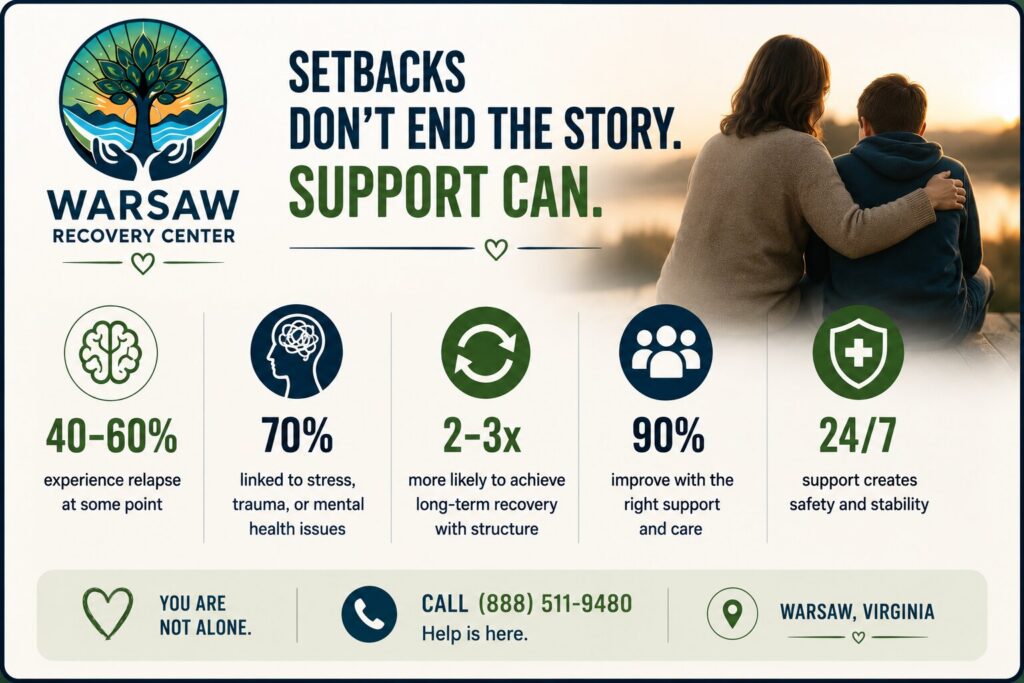
Many people require multiple treatment experiences before recovery becomes more stable. Especially if unresolved trauma, mental health struggles, or environmental triggers continue driving emotional distress underneath the addiction.
Mental Health Often Sits Underneath the Addiction
Parents sometimes focus so heavily on the substance use that they miss the emotional pain underneath it.
Substances are often serving a purpose emotionally.
Maybe your child drinks to:
- Quiet anxiety
- Sleep
- Escape depression
- Feel socially comfortable
- Numb trauma
- Stop intrusive thoughts
- Feel emotionally “normal”
That does not make substance use healthy.
But understanding the emotional function matters.
Because if treatment only addresses the drinking or drug use without addressing the pain beneath it, relapse risks often remain high.
Especially when mental health and substance use collide together.
Love Alone Cannot Regulate Another Person’s Nervous System
This is one of the most painful truths parents face.
You can love your child deeply.
You can sacrifice endlessly.
You can answer every late-night call.
And they may still relapse.
Not because your love failed.
But because addiction recovery often requires layers of support beyond what family alone can realistically provide.
That realization can feel heartbreaking at first.
Many parents secretly think:
“If I just say the right thing…”
“If I become stricter…”
“If I become softer…”
“If I watch them more closely…”
But recovery is not built entirely through parental vigilance.
Sometimes the most loving thing a parent can do is allow professionals, structure, and therapeutic support to step into the space the family can no longer safely hold alone.
Hope Usually Returns Quietly—Not Dramatically
Families often wait for some huge turning point.
A breakthrough speech.
A dramatic apology.
A movie-style recovery moment.
But real healing often looks much quieter than that.
It can look like:
- Someone sleeping normally again
- Honest conversations returning
- Reduced defensiveness
- Small moments of accountability
- Consistency
- Emotional regulation
- Fewer crises
- A willingness to accept help
Those quieter shifts matter.
Because recovery is not usually built on emotional intensity.
It’s built on repetition, safety, honesty, and time.
Your Child Is Probably More Afraid Than They Admit
This perspective changes how many parents see relapse.
A lot of young adults look defensive or detached externally while internally feeling terrified.
Terrified they’ll disappoint everyone again.
Terrified treatment won’t work.
Terrified they’ve damaged relationships permanently.
Terrified they may never fully escape the cycle.
That fear can make people avoid honesty.
Avoid treatment.
Avoid conversations altogether.
Not because they don’t care.
Because they feel emotionally cornered.
And sometimes treatment works best when it stops feeling like punishment and starts feeling like relief.
FAQ: Relapse, Willpower, and Residential Treatment
Why does my child keep relapsing after promising to stop?
Many people genuinely mean it when they promise sobriety. But addiction involves emotional, neurological, and physical factors that can overpower motivation alone without deeper support and stabilization.
Is relapse a sign treatment failed?
No. Recovery often includes setbacks. Relapse may signal that additional structure, longer-term care, or mental health support is needed—not that recovery is impossible.
Why are people searching “why do i keep relapsing”?
Usually because they are scared, ashamed, and confused about why they cannot maintain sobriety despite wanting to stop. That question often comes from emotional pain, not lack of effort.
Can mental health issues increase relapse risk?
Absolutely. Anxiety, trauma, depression, emotional dysregulation, and chronic stress frequently contribute to relapse cycles—especially when emotional pain remains untreated.
When should families consider live-in treatment?
Families often explore live-in treatment when relapse becomes repetitive, safety concerns increase, outpatient support no longer feels enough, or home life becomes emotionally unstable.
Does my child have to “hit rock bottom” before treatment works?
No. Waiting for things to become catastrophic can increase risk and emotional damage. Many people benefit from treatment long before reaching extreme crisis points.
Is it normal to feel emotionally burned out as a parent?
Yes. Loving someone through addiction and relapse can become emotionally exhausting. Parents deserve support, boundaries, and care too.
You Do Not Have to Hold This Entire Situation Together Alone
Parents often spend years trying to become crisis managers, therapists, detectives, and emotional lifelines all at once.
That is an enormous weight for any human being to carry.
If your child is trapped in repeated relapse cycles, it does not mean hope is gone. Sometimes it means more support, structure, and stabilization are needed than your family can realistically provide on its own.
And sometimes healing begins the moment everyone stops pretending sheer willpower will fix something that has already grown bigger than that.
Call (888) 511-9480 or explore our level of care Virginia, residential treatment program Virginia services to learn more.