
The hardest part wasn’t admitting I relapsed.
It was admitting the version of recovery that worked before wasn’t working anymore.
That realization usually doesn’t happen dramatically. It happens quietly. In kitchens at midnight. In parked cars outside liquor stores. In the strange silence after another promise to stop drinking falls apart by Thursday.
A lot of people searching questions like “inpatient vs outpatient for alcohol recovery” are not looking for a perfect answer. They are exhausted. Ashamed. Confused about why sobriety suddenly feels harder to hold onto than it used to.
And honestly, that confusion makes sense.
Relapse after real sobriety changes people emotionally. Especially after 90 days or more. You remember what stability felt like. You remember who you were becoming. Then suddenly you’re hiding bottles again, avoiding phone calls, and wondering whether you’re losing yourself all over again.
That’s often when people begin looking into options like residential treatment in Virginia because the question stops being:
“Can I quit?”
And becomes:
“Why can’t I stay okay once life starts happening again?”
Most Alumni Don’t Want “More Treatment”
They want their old life back.
That distinction matters.
Nobody wakes up hoping they’ll need live-in treatment after already building sobriety once before. Most relapsed alumni spend weeks—or months—trying to avoid that conversation internally.
They negotiate constantly:
- “Maybe I just need meetings again.”
- “Maybe I only need therapy.”
- “Maybe I can handle this privately.”
- “Maybe I’m overreacting.”
And meanwhile, the relapse quietly deepens.
I’ve worked with many alumni who looked “functional” from the outside while emotionally collapsing internally. They still went to work. Still answered texts. Still made jokes socially.
But underneath it all was exhaustion.
The kind that settles into your nervous system slowly until every day starts feeling like emotional survival instead of actual living.
Relapse After Sobriety Carries a Different Kind of Shame
This part catches people off guard.
The first time someone seeks treatment, there’s often desperation mixed with uncertainty. But after real sobriety? Relapse can feel deeply personal.
People start rewriting their entire recovery history in their minds:
- “Maybe I was never really sober.”
- “Maybe I fooled everyone.”
- “Maybe this proves I’m hopeless.”
One alumni client once told me:
“The drinking wasn’t even the worst part. It was watching myself become someone I promised I’d never be again.”
That grief is real.
Because relapse doesn’t just affect routines. It affects identity. Trust. Confidence. The relationship someone has with themselves.
The Environment Starts Mattering More Than Willpower
This is usually the turning point in the inpatient vs outpatient rehab conversation.
Not severity.
Not pride.
Environment.
Many people relapse while trying to recover in the exact same conditions that emotionally destabilized them before.
The same stress.
The same isolation.
The same drinking culture.
The same relationship chaos.
The same nightly loneliness.
And eventually, the nervous system becomes exhausted from fighting itself constantly.
Some people genuinely do well in outpatient settings because they still have enough structure, support, and emotional stability outside treatment to rebuild momentum safely.
Others spend every night white-knuckling cravings alone while trying to appear fine during the day.
That difference matters.
Some People Need Distance Before They Can Hear Themselves Think Again
This is something alumni often describe after entering live-in treatment.
For the first time in months:
- The noise quiets down
- The panic slows
- The hiding stops
- The pressure to “perform normal” eases
And once survival mode calms down even slightly, honesty becomes possible again.
That’s important because many relapsed alumni are not lacking insight. They already know recovery language. They already know consequences. They already know what they “should” do.
What they often lack is emotional safety.
Safety from:
- Constant triggers
- Isolation
- Access to alcohol
- Shame spirals
- The pressure to keep functioning while internally falling apart
Sometimes round-the-clock support provides enough emotional stability for someone’s nervous system to finally exhale.
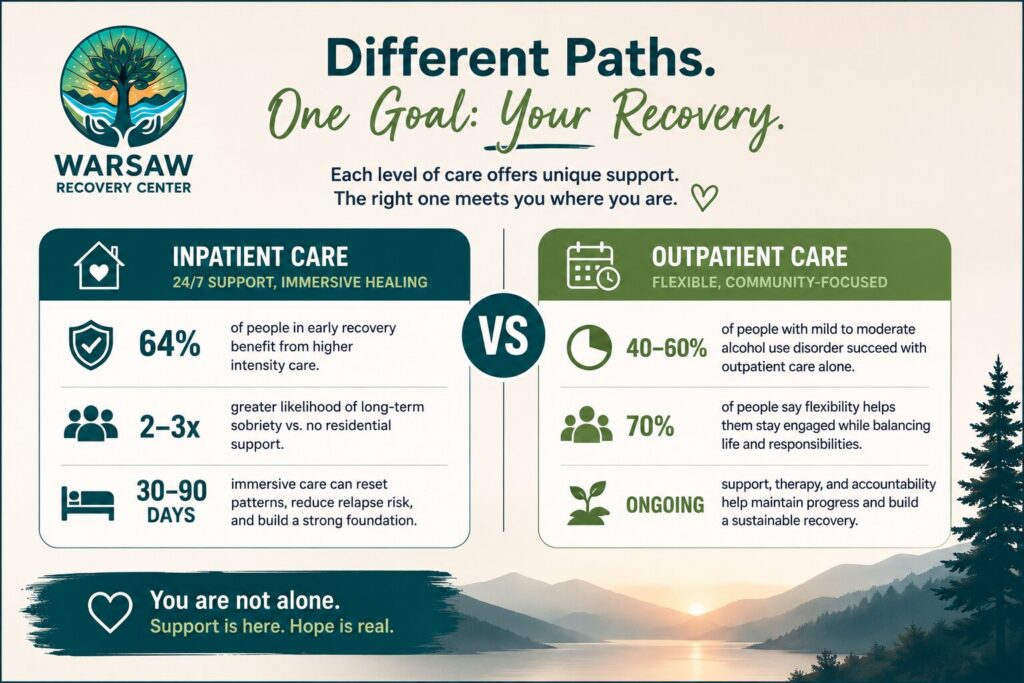
Outpatient Care Can Work Beautifully—For the Right Situation
This matters too.
A lot of people hear these conversations and assume outpatient support “doesn’t work.” That simply isn’t true.
Many people recover successfully through structured daytime care or multi-day weekly treatment when they have:
- Stable housing
- Strong accountability
- Safe relationships
- Lower relapse risk
- Consistent emotional support
- The ability to stay honest outside sessions
For some people, maintaining connection to work, family, and routine while receiving treatment becomes deeply healing.
But outpatient care also requires a tremendous amount of honesty and self-awareness because eventually the person returns home every evening to their real environment.
And if that environment keeps reopening emotional wounds faster than recovery can stabilize them, relapse risks often increase.
Alumni Often Underestimate How Exhausted They Really Are
This is one of the most common things I see clinically.
People focus on whether they are “bad enough” for inpatient care instead of asking:
“How overwhelmed is my nervous system actually becoming?”
There’s a difference.
Many relapsed alumni normalize things like:
- Daily panic
- Sleeplessness
- Constant cravings
- Emotional numbness
- Isolation
- Hiding symptoms
- Feeling disconnected from life
Because compared to previous rock bottoms, they may still appear “functional.”
But functioning is not the same thing as stability.
One patient once described relapse this way:
“It felt like holding a glass together after it already cracked.”
That image stays with me because many alumni are trying to keep life looking intact long after they’ve stopped feeling emotionally safe inside it.
The “Best” Program Is Usually the One Where Someone Stops Pretending
This is the conversation I wish happened more often.
Not:
“What level of care sounds strongest?”
But:
“Where am I most likely to tell the truth before things get worse?”
For some people, outpatient care creates enough accountability and support to stabilize safely.
For others, they need temporary distance from everyday chaos because the emotional pressure has become too intense to navigate alone.
Neither option makes someone stronger or weaker.
The goal is not choosing the most impressive treatment plan.
The goal is choosing the environment most likely to support honesty, emotional regulation, and sustainable recovery.
Success Stories Usually Start Smaller Than People Expect
Families and alumni often expect dramatic recovery moments.
Huge breakthroughs.
Powerful speeches.
Sudden transformations.
But lasting recovery often begins quietly.
Someone sleeping through the night again.
Someone admitting they’re scared.
Someone finally saying:
“I can’t do this safely by myself anymore.”
One alumni client entered live-in treatment after months of trying outpatient support unsuccessfully. He kept saying he “should” be able to manage it because he’d already been sober once before.
A week into treatment he said something simple:
“I forgot what it felt like to not be in survival mode all day.”
That was the breakthrough.
Not inspiration.
Relief.
And relief is often what allows deeper healing to begin.
Recovery Needs Change Over Time
This is one of the hardest truths for alumni to accept.
What worked during one season of recovery may not work during another.
Stress changes.
Mental health changes.
Isolation deepens.
Trauma resurfaces.
Alcohol use escalates faster.
The body responds differently.
Needing a different level of support after relapse is not proof someone failed recovery.
It may simply mean the situation evolved.
And honestly, many people become more open, emotionally honest, and grounded during their second recovery attempt because pride matters less than survival by that point.
FAQ: Inpatient vs Outpatient Alcohol Recovery
What’s the difference between inpatient vs outpatient rehab?
Inpatient care typically involves living onsite with 24/7 support, while outpatient treatment allows someone to live at home and attend structured therapy or treatment sessions during the week.
How do I know which level of care is right for me?
The right level of care often depends on relapse history, emotional stability, home environment, withdrawal risks, support systems, and whether someone can remain safe and honest outside treatment settings.
Can outpatient treatment still work after relapse?
Absolutely. Many people recover successfully in outpatient settings when they have strong accountability, stable environments, and consistent emotional support.
Why do some people need live-in treatment after already being sober before?
Relapse after sobriety can bring deeper shame, emotional exhaustion, increased isolation, and more severe instability. Some people benefit from temporary distance and round-the-clock support during that stage.
Why are people searching for inpatient vs outpatient rehab?
Usually because they feel overwhelmed, unsure what level of support they need, and afraid of making the wrong decision after relapse or escalating alcohol use.
Does needing inpatient care mean someone failed?
No. Recovery needs can change over time. Requiring more structure after relapse does not erase previous progress or mean someone is weak.
What matters most when choosing treatment?
Emotional honesty, safety, and stabilization matter most. The best program is often the one where someone can stop hiding and fully engage in recovery.
You Are Allowed to Need a Different Kind of Support Now
If relapse has left you emotionally exhausted, confused, or questioning your ability to recover again, please know this:
You are not weak because your needs changed.
Sometimes outpatient support is enough.
Sometimes people need more distance, more structure, and more stabilization before recovery feels emotionally safe again.
And sometimes the most important realization is not:
“I need stronger willpower.”
It’s:
“I can’t keep healing inside the same chaos that keeps breaking me.”
Call (888) 511-9480 or explore our level of care Virginia, residential treatment program Virginia services in Warsaw, Virginia to learn more.