
If you’re on day 2 without fentanyl and your body feels like it’s revolting against you, you are not overreacting.
And you are not weak.
For many people, this is the stage where withdrawal stops feeling like “getting sick” and starts feeling genuinely frightening. The physical symptoms intensify. Sleep disappears. Anxiety becomes physical. Time slows down. Your own thoughts may begin to scare you.
A lot of people searching for answers during this stage are not looking for a lecture about addiction. They are looking for relief. They are trying to figure out if what they’re feeling is normal—or dangerous. Some begin looking into options like drug detoxification in Virginia because the fear becomes too heavy to manage alone.
And honestly, that makes sense.
Day 2 Is Often Where the Panic Sets In
The first 24 hours can feel deceptive for some people.
You may feel anxious, achy, restless, uncomfortable. But by day 2, many people describe the experience differently. More intense. More emotional. More consuming.
Your body may feel impossible to settle.
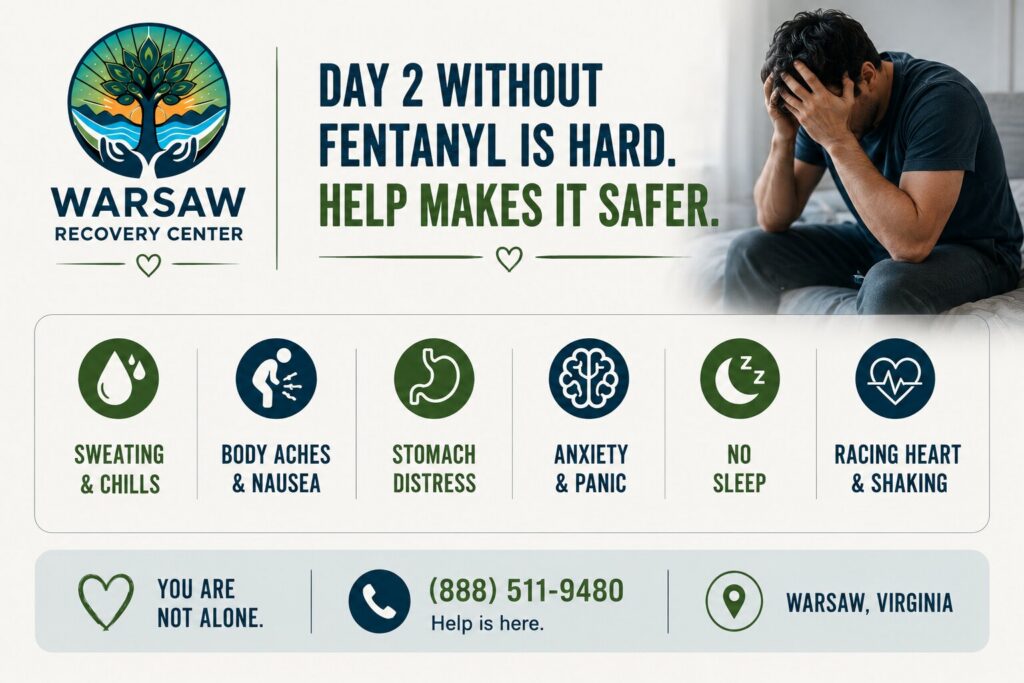
You might:
- Sweat heavily while freezing at the same time
- Feel intense body aches and stomach pain
- Experience nausea, vomiting, or diarrhea
- Struggle with shaking or restless legs
- Feel emotionally overwhelmed for no clear reason
- Become extremely sensitive to sound, light, or stress
And mentally, things can get dark fast.
People often describe feeling trapped inside their own nervous system. Your body is exhausted, but your brain won’t slow down. You want relief so badly that your thoughts start narrowing around one idea:
“Make this stop.”
That desperation can feel terrifying if it’s your first time going through fentanyl withdrawal.
The Emotional Symptoms Can Hit Harder Than Expected
This surprises a lot of people.
They prepare for physical pain.
They do not prepare for emotional chaos.
Day 2 can bring intense waves of:
- Panic
- Hopelessness
- Irritability
- Shame
- Fear
- Emotional numbness
- Sudden crying spells
- Racing thoughts
Some people feel emotionally raw in a way they’ve never experienced before.
Others feel disconnected and empty, like their body is moving but their mind has shut down emotionally.
Withdrawal can distort your thinking. It can make temporary pain feel permanent. It can convince you that you’ll never sleep again, never feel normal again, never get through this.
That’s one reason support matters so much during this phase.
Not because people are incapable.
Because suffering changes perspective.
Sleep Becomes a Battle
For many treatment seekers, this is the breaking point.
You are exhausted beyond words. Your body aches. Your eyes burn. But every time you try to rest, your nervous system jerks back awake.
Your legs twitch.
Your skin crawls.
Your thoughts race in circles.
Some people spend entire nights pacing, stretching, sweating, and counting minutes.
And the lack of sleep starts amplifying everything else:
- Anxiety feels louder
- Pain feels sharper
- Emotions become unstable
- Panic becomes harder to control
It can feel like your body forgot how to relax.
One patient once described day 2 this way:
“It felt like my brain was trapped in a room with all the lights on.”
That’s the kind of exhaustion people rarely talk about openly.
Fear Often Becomes the Real Emergency
This part matters.
Physical withdrawal is difficult, but fear is often what pushes people to the edge emotionally.
Fear of dehydration.
Fear of seizures.
Fear of losing control.
Fear of dying.
Fear that you’ve permanently damaged yourself.
And because fentanyl is so powerful and unpredictable, many people are unsure whether what they’re experiencing is “normal withdrawal” or something more serious.
That uncertainty alone can create panic.
This is why people often search phrases like “fentanyl withdrawal help Richmond” late at night or during the second and third day. Not because they’re looking for a perfect solution—but because they’re scared and trying to figure out whether they can safely make it through.
Some Symptoms Should Never Be Ignored
While many withdrawal symptoms are not life-threatening, some situations require immediate medical attention.
You should seek medical care if you experience:
- Severe dehydration
- Chest pain
- Trouble breathing
- Fainting
- Hallucinations
- Confusion or disorientation
- Persistent vomiting
- Suicidal thoughts
- Severe emotional distress that feels unmanageable
- Inability to keep fluids down
And it’s important to say this clearly:
You do not need to “wait until it gets worse” to deserve help.
A lot of people minimize their own suffering during withdrawal. They tell themselves:
“I should be stronger.”
“This is my fault.”
“I don’t want to waste anyone’s time.”
But your safety matters now—not later.
Isolation Can Make Withdrawal Feel Ten Times Worse
Withdrawal has a way of shrinking the world around you.
People stop answering calls.
They pull the curtains closed.
They isolate because they feel ashamed, exhausted, or afraid.
And once isolation sets in, the symptoms often feel even more overwhelming.
Your thoughts get louder in silence.
The fear echoes.
The hopelessness deepens.
That’s why many people benefit from being around medical professionals or supportive staff during detox. Not because someone else can magically erase withdrawal—but because human support helps regulate panic.
Sometimes the biggest relief is hearing someone calmly say:
“You’re safe. Your body is struggling right now, but you’re not dying.”
That reassurance matters more than people realize.
Withdrawal Can Make You Want to Give Up Right Before Progress Starts
This is one of the cruelest parts of fentanyl withdrawal.
Your brain may become incredibly convincing around day 2 or day 3.
You may start thinking:
- “I can’t survive this.”
- “I’ll never feel normal again.”
- “One hit would fix this.”
- “Treatment probably won’t work anyway.”
These thoughts are common during acute withdrawal. Your nervous system is overwhelmed, your body is depleted, and your brain is trying desperately to stop the discomfort.
That does not mean recovery is impossible.
It means your body is under stress.
And sometimes people need help holding perspective until the physical symptoms calm down enough for hope to feel believable again.
Medical Detox Is Not About Weakness
A lot of first-time treatment seekers carry shame around needing support.
They think detox should be something they survive privately.
Quietly.
Alone.
But fentanyl withdrawal can become medically and emotionally intense very quickly. Medical detox exists because some withdrawals are too overwhelming—or too risky—to manage without support.
For some people, the most important part is symptom monitoring.
For others, it’s emotional stabilization.
And for many, it’s simply the relief of not having to fight every minute by themselves.
Detox support can also help people transition into continued care afterward, whether that means live-in treatment, structured daytime care, or multi-day weekly treatment once the physical crisis begins easing.
Because getting through withdrawal is not the end of recovery. It’s the beginning of clarity.
Your Body Is Struggling—Not Betraying You
This mindset shift matters.
A lot of people feel angry at themselves during withdrawal. Angry at their body. Angry at their brain. Angry that they ever touched fentanyl in the first place.
But withdrawal is not your body punishing you.
It’s your nervous system trying to recalibrate after dependence.
That process can feel brutal.
It can feel frightening.
But it does not mean you are beyond help.
Sometimes people think recovery begins with confidence.
More often, it begins with exhaustion.
The moment someone finally says:
“I don’t want to keep surviving like this anymore.”
You Don’t Need to Reach a Breaking Point to Ask for Help
If you’re reading this while pacing your room, sweating through sheets, shaking, or wondering whether what you’re feeling is dangerous, please hear this:
You are allowed to ask for support before things completely fall apart.
A lot of people in Virginia quietly search for help during the hardest moments of withdrawal because they are overwhelmed, scared, and trying to make it through safely. Compassionate care is not reserved for people at rock bottom. It’s for anyone whose body and mind are struggling under the weight of fentanyl dependence.
FAQ: Day 2 of Fentanyl Withdrawal
Is day 2 of fentanyl withdrawal usually the worst?
For many people, day 2 and day 3 are among the most intense stages physically and emotionally. Symptoms often peak during this period before gradually easing over time.
Why does fentanyl withdrawal feel so emotional?
Fentanyl affects brain chemistry, stress response systems, sleep, and emotional regulation. During withdrawal, the nervous system becomes overstimulated, which can cause panic, hopelessness, anxiety, and emotional instability.
Can fentanyl withdrawal make you feel like you’re dying?
Many people describe it that way because the symptoms can feel overwhelming. While withdrawal itself is not always life-threatening, some symptoms and complications can become dangerous without medical support.
When should I seek medical help during withdrawal?
You should seek help if you experience severe dehydration, trouble breathing, chest pain, hallucinations, confusion, fainting, suicidal thoughts, or symptoms that feel unmanageable or unsafe.
Is it normal to not sleep during withdrawal?
Yes. Insomnia is extremely common during fentanyl withdrawal, especially during the first several days. Lack of sleep can also intensify anxiety and emotional distress.
Does medical detox make withdrawal disappear completely?
Not always. But medical detox can help monitor symptoms, improve safety, reduce complications, and provide emotional and physical support during the hardest stages.
Why are people searching for “fentanyl withdrawal help Richmond”?
Many people are trying to find safe, compassionate care during moments of fear and physical distress. Often, they are looking for support that feels medically safe and emotionally manageable—not judgmental.
You Don’t Have to Prove How Much Pain You Can Survive
There’s a moment during withdrawal where pride stops mattering.
Where proving you can “handle it” alone suddenly feels less important than simply staying safe.
If you’re there right now, you are not failing by needing help. You are human. And fentanyl withdrawal can push even strong people beyond what they can safely manage by themselves.
Call (888) 511-9480 or explore our level of care Virginia, detoxification program Virginia, drug detoxification in Virginia services to learn more.