Graduating from a residential treatment program was supposed to feel like a new beginning.
And it did—at first. I packed up my journals and medallions like proof. I hugged the staff goodbye, half-promising I’d visit. I left with a list of goals, a clean body, a surprisingly full heart, and the belief that I’d found the map back to myself.
But nobody warned me what would come next.
Not relapse. Not depression. Just… stuckness. Quiet. Flatness. A strange emotional distance between the person I was becoming and the life I returned to.
It didn’t feel dramatic enough to call a crisis. But it also didn’t feel like freedom.
If you’ve completed something like the Warsaw Recovery Center residential treatment program, and you’re wondering why things feel weird—even while you’re doing “everything right”—this story is for you.
The Structure Was Gone, and So Was My Compass
In treatment, my days were built like scaffolding—meals, groups, check-ins, journal prompts, human contact everywhere. My mind had room to heal because I didn’t have to make constant decisions.
Then I got home. And the scaffolding fell away.
Suddenly, no one expected me to say how I was feeling. No one noticed if I skipped lunch or sat in silence. I was free—but also completely adrift.
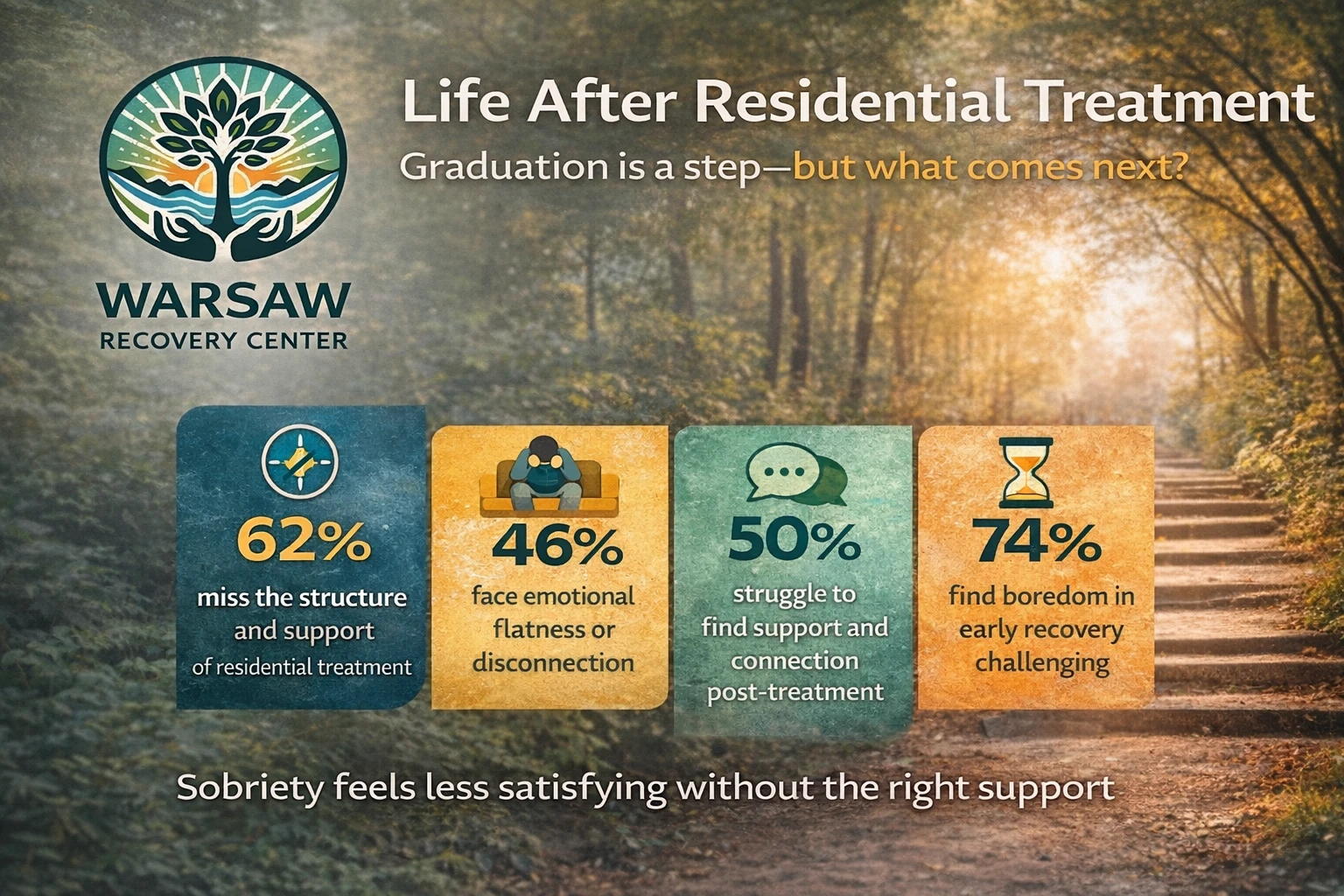
It hit me hardest around week four. I wasn’t in danger, exactly. But I also wasn’t okay.
Everyone Thought I Was Fine—And I Didn’t Know How to Say Otherwise
I looked good. Healthier. Clearer. People commented on my skin, my posture, my “glow.”
They meant well.
But under that, I was quietly unraveling.
The transition from 24/7 support to normal life is jarring. You go from being deeply seen to feeling semi-invisible—especially if the people around you think “graduating” from a residential treatment program means you’re totally good now.
And when everyone around you acts like your healing is complete, it gets harder to say, “Actually, I feel like a cardboard version of myself.”
I Didn’t Miss Using. I Missed Feeling Something
This part was the hardest to admit out loud.
I didn’t want to drink or use again. I wasn’t craving relapse. What I missed was intensity—the ups, downs, chaos, connection, even the tears of group.
In real life, things felt muted. Conversations stayed shallow. Schedules became repetitive. I wasn’t numbing anymore, but I wasn’t alive either.
There’s a word for that: emotional blunting. And it’s more common in post-treatment recovery than people think. You’ve spent so long surviving in high-stakes mode that stillness feels unnatural. Or even threatening.
I Thought Maybe I Was Doing Recovery Wrong
I started asking myself quietly: Is this it? Is this what it feels like to “get better”?
Because if it was, I wasn’t sure I wanted it.
I’d imagined recovery as this vivid, technicolor thing. And instead, I was bored, lonely, and confused about why my progress felt so unsatisfying.
The temptation wasn’t to relapse. It was to isolate. To shrink. To stop trying.
But a small part of me—maybe the part that learned to trust myself during those long mornings in group—knew something was off. And that maybe what I needed wasn’t to push harder… but to reach back.
I Reached Out—and Realized I Wasn’t Alone
It started with an email to my old counselor. Something short and awkward:
“Hey. I’m still sober. But I don’t feel like I’m here. Any chance we could talk?”
I expected radio silence or polite encouragement. Instead, I got a real response:
“We hear this a lot. Let’s reconnect. This isn’t a failure—it’s a phase.”
And just like that, I remembered: recovery isn’t just for people in crisis. Support isn’t only for relapse prevention. It’s also for the in-between. The emotionally stale, existentially foggy, painfully flat days.
And those count, too.
Recovery Doesn’t End When Residential Treatment Does
What no one tells you: graduating from a residential treatment program is like stepping out of a greenhouse into open weather. The structure’s gone. The safety net is thinner. And everything feels sharper—responsibilities, expectations, the loneliness you didn’t have to face when people were checking in every hour.
If you’re in that spot, hear this:
You are not broken for feeling disconnected.
You are not ungrateful for missing treatment.
And you are not alone if the stillness feels heavier than the chaos ever did.
You’re just ready for a deeper layer. One you couldn’t reach when everything was urgent.
Call (888) 511-9480 or visit Warsaw Recovery Center’s residential treatment program page to learn how we continue supporting long-term alumni through every phase—including the ones nobody talks about.
FAQs: Life After a Residential Treatment Program
Is it normal to feel stuck even when I’m sober?
Yes. Many people experience a sense of emotional flatness or disconnection after leaving structured care. It doesn’t mean you’re doing it wrong—it means you’ve exited the most intense phase of healing and are facing the quieter (but just as important) next chapter.
I miss my old treatment community. Is it okay to reach out?
Absolutely. Alumni often reconnect with staff or peers, and many programs—including Warsaw—offer ongoing support, alumni check-ins, and extended therapy options.
Do I need to go back to residential care?
Not necessarily. Feeling stuck doesn’t always mean you need inpatient treatment again. But it does mean you might benefit from additional support—like outpatient therapy, trauma work, or a new structure to stay connected.
Why does everything feel so boring?
Because stability is new. And early recovery tends to over-correct into quiet routines that can feel emotionally dull after years of chaos. This phase often signals that you’re ready to expand your life—not relapse, but re-engage.
What helps with post-treatment disconnection?
- Staying in therapy, even after graduation
- Talking openly about feeling “flat” or disconnected
- Reconnecting with your recovery community
- Exploring new meaning or creativity outside of survival mode
- Avoiding isolation, even when it feels easier