Addiction is not always a one-time battle. For many individuals, recovery involves a series of attempts—and unfortunately, for some, repeated relapses. These chronic relapsers aren’t failing; they are facing a deeply entrenched illness that demands a new approach. At Warsaw Recovery, we believe the answer lies in a paradigm shift: embracing long-term residential treatment as the gold standard for sustained recovery.
As a trusted Addiction Treatment Center in Virginia, we specialize in treating complex, high-relapse cases with structured, immersive, and compassionate care. This blog explains why long-term care is often essential for those who’ve struggled to stay sober—and how our model is built for their success.
Understanding Chronic Relapse: When Short-Term Rehab Isn’t Enough
A chronic relapser is someone who has attempted treatment multiple times but continues to return to substance use. This cycle can be devastating—not just for the individual, but for families who feel hopeless and professionals unsure of what to try next.
Common Traits of Chronic Relapsers:
- History of 3+ failed treatment episodes
- Co-occurring mental health conditions (dual diagnosis)
- Strong environmental triggers at home
- History of trauma or unaddressed emotional pain
- Difficulty with structure, accountability, or post-treatment transitions
These individuals don’t need more of the same—they need more time, more structure, and more comprehensive care.
Why Long-Term Residential Treatment Is a Game Changer
Short-term programs (30 days or less) can provide immediate stabilization—but they rarely offer enough time to rewire deeply rooted behavioral patterns or heal emotional wounds.
Long-Term Treatment at Warsaw Recovery Offers:
90+ Days of Immersive Therapy
Clients can dive deep into trauma work, behavioral change, and relapse prevention without the pressure of rushing back into life prematurely.
24/7 Clinical and Medical Support
Especially vital for those receiving Benzodiazepine Addiction Treatment in Virginia or who require extended Medical Detox Programs.
Sober Social Reintegration
Clients build emotional maturity, life skills, and social coping abilities before returning to high-risk environments.
Tailored Dual Diagnosis Care
We treat both mental illness and addiction simultaneously—vital for clients battling anxiety, PTSD, or depression along with substance use.
True Accountability and Routine
A long-term stay allows time for habits to shift, trust to build, and new rhythms to form.
A Shift in Treatment Philosophy
At Warsaw Recovery, we’ve moved away from the outdated idea that addiction can be “cured” in a few weeks. Chronic relapsers need neurobiological, psychological, and behavioral reconditioning—and that takes time.
We Focus On:
- Rebuilding neural pathways through cognitive-behavioral therapy
- Deep trauma resolution using EMDR and somatic approaches
- Structured living that reintroduces accountability and consistency
- Emotional regulation and executive functioning development
This level of treatment intensity is particularly effective for individuals with long-term issues such as alcohol dependence, methamphetamine addiction, or benzodiazepine abuse.
Case Study: From Relapse to Recovery
Client Profile:
- Female, 42
- 6 previous treatment attempts
- Diagnosed with PTSD and severe alcohol use disorder
- Unable to maintain sobriety more than 30 days post-rehab
Treatment Plan at Warsaw Recovery:
- Entered our Medical Detox Program in Virginia
- Transitioned into a 120-day residential stay
- Received dual diagnosis care with intensive trauma therapy
- Completed 12-step integration and family therapy
Outcome:
Now 18 months sober, working in recovery advocacy, and active in a women’s support network.
The Science Supports Long-Term Care
Studies show that 90-day programs are significantly more effective than 30-day stays, particularly for chronic relapsers:
- According to the National Institute on Drug Abuse (NIDA), longer durations of treatment are associated with better outcomes.
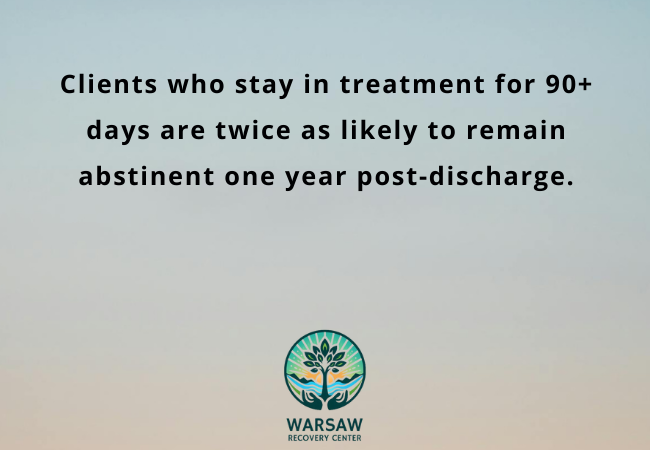
- A 2023 study in the Journal of Substance Abuse Treatment found that clients who stayed 90+ days were twice as likely to remain abstinent a year later.
- Chronic relapsers in long-term care report greater self-efficacy, improved emotional regulation, and stronger family relationships.
Dual Diagnosis: The Overlooked Factor in Relapse
Many chronic relapsers have untreated or under-treated mental health disorders. At Warsaw Recovery, we specialize in dual diagnosis inpatient treatment in Virginia, combining:
- Psychiatric evaluations
- Medication management
- Trauma-informed therapy
- Skill-building for emotional regulation
Whether the substance of choice is alcohol, methamphetamine, or benzos, if the root psychological pain isn’t treated, relapse becomes highly likely.
Rewiring the Brain—Why Time Matters in Recovery
Addiction isn’t just a behavioral issue—it’s a brain disease. Substances like alcohol, methamphetamine, and benzodiazepines alter brain function and structure over time. For chronic relapsers, the brain may need months of stability before it can begin to fully heal.
What Long-Term Treatment Allows:
-
Stabilization of brain chemistry without ongoing disruption
-
Restoration of the prefrontal cortex, responsible for decision-making and impulse control
-
Time to develop and internalize coping skills that override automatic relapse behavior
At Warsaw Recovery, we give the brain time to catch up with the body—replacing chemical dependency with healthy neuroplasticity and new habits.
Daily Structure That Rebuilds Lives
One of the most important benefits of long-term residential care is repetition and consistency. For chronic relapsers, unpredictability, chaos, and poor boundaries are often triggers.
Daily Life at Warsaw Recovery Includes:
-
Consistent wake-up, meal, and activity times
-
Daily individual and group therapy
-
Scheduled fitness, mindfulness, and recreational outlets
-
Regular reflection, journaling, and skill-building sessions
This structure gives clients a foundation of stability they often never had before—and teaches them how to create it in their own lives after treatment.
Community Healing—Why Peer Support Matters
Relapse thrives in isolation. Long-term care helps clients form connections that foster accountability and shared strength. Our residential programs are rooted in community and collaboration.
Peer Support at Warsaw Recovery Includes:
-
Small process groups led by licensed clinicians
-
Community meetings that encourage open dialogue
-
Roommate and dorm settings that mimic real-life social dynamics
-
12-step or peer recovery integration for shared lived experience
These peer relationships help clients rebuild trust, practice communication, and develop the confidence to sustain recovery in the outside world.
Preparing for Real Life—Relapse Prevention Starts Inside
While many short programs focus on stopping use, long-term care at Warsaw Recovery prepares clients for life beyond treatment—a critical shift for chronic relapsers.
Our Relapse Prevention Training Covers:
-
Identifying high-risk situations and emotional triggers
-
Building practical skills like budgeting, employment prep, and conflict resolution
-
Creating a personalized Recovery Roadmap for post-discharge success
-
Connecting to Intensive Outpatient Programs (IOP) or sober living homes for continuity
Clients don’t just leave clean—they leave equipped, aware, and supported.
How Warsaw Recovery Designs Long-Term Success
Our Residential Treatment Program in Virginia provides:
- Individualized treatment plans reviewed weekly by a cross-functional care team
- Access to our Medical Detox Program in Virginia
- Specialized tracks for Alcohol, Benzodiazepine, and Methamphetamine Addiction
- Family therapy, life skills coaching, and discharge planning
- Smooth transition to PHP or IOP for aftercare continuity
We go beyond crisis stabilization—we build recovery that lasts.
Addressing the Barriers: Why Long-Term Care Is Underused
Despite its effectiveness, long-term treatment is underutilized due to:
- Insurance restrictions
- Social pressure to return home or work too soon
- Client resistance to extended separation from family or routines
At Warsaw Recovery, we help navigate these challenges with financial advocacy, family education, and a therapeutic approach that helps clients embrace the commitment required for real change.
Is Long-Term Residential Treatment Right for You or a Loved One?
You may benefit from long-term care if:
- You’ve completed treatment before but quickly relapsed
- Outpatient or short stays haven’t been enough
- Co-occurring mental health issues disrupt your recovery
- You need a true reset—a chance to rebuild from the ground up
Why Choose Warsaw Recovery?
We are not just a Substance Abuse Treatment Center in Virginia—we’re a healing community for those who need deep, enduring transformation.
We offer:
- Full-spectrum care, from detox to long-term residential treatment
- Specialized addiction tracks for alcohol, benzos, and meth
- Integrated dual diagnosis treatment
- Experienced, trauma-informed clinicians
- Supportive environment focused on dignity, respect, and progress
Conclusion
If short-term care hasn’t worked, it doesn’t mean you’ve failed—it means it’s time for a new approach. At Warsaw Recovery, our long-term residential treatment programs in Virginia are tailored for people who need more time, more structure, and more support to reclaim their lives. Call 888.511.9480 today to learn how we can help you or a loved one finally break the cycle—and begin a new chapter of lasting recovery.
FAQs on Long-Term Residential Treatment for Chronic Relapse
How long is “long-term” treatment?
Generally, 90 days or more. At Warsaw Recovery, programs can extend to 120+ days depending on client needs and progress.
Will insurance cover long-term treatment?
Coverage varies, but our team works with clients to maximize benefits and offer payment options. We advocate on your behalf.
Is long-term treatment only for severe addiction?
Not necessarily. It’s ideal for anyone with a history of relapse or complex underlying issues like trauma, anxiety, or depression.
Can families stay involved during long-term care?
Absolutely. We offer family therapy, education, and regular updates—with consent—to keep loved ones involved in the healing process.
What happens after the program ends?
We create personalized discharge plans that include referrals to outpatient programs, sober housing, alumni groups, and follow-up care.