
When you think about quitting alcohol, the first question isn’t always about detox meds or therapy schedules.
It’s this:
“How long until I feel normal again?”
That question lives in your body. It comes from the fog in your brain, the panic in your chest, the morning shakes, the regret hangovers. If you’re sober curious, or thinking about taking a break, or wondering whether detox is your next step—you’re not asking for miracles. You just want to feel like yourself again.
At Warsaw Recovery Center, we hear this question all the time. And we want to answer it honestly—without fluff, fear tactics, or fake timelines.
Here’s what feeling better actually looks like after detox—and what you can expect physically, mentally, and emotionally along the way.
How long does alcohol detox last?
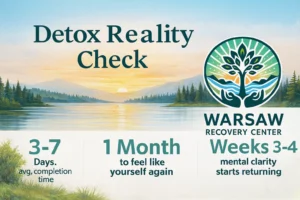
The medical detox process lasts around 3 to 7 days. This is the part where alcohol is leaving your system and your body is reacting to that change.
In those first few days, your system may respond with:
- Headaches
- Shakes or sweating
- Nausea or stomach discomfort
- Anxiety or irritability
- Sleep problems
- Mood swings
- Cravings
It’s uncomfortable, but you won’t go through it alone. In our alcohol detox program, we monitor you 24/7, keep you hydrated, and—if needed—offer medications that reduce symptoms and risk.
The goal isn’t to “tough it out.” It’s to get you stable. So you can actually start healing without being wrecked by withdrawal.
Will I feel mentally better right after detox?
Not right away—and that’s okay.
Your brain takes longer to adjust than your body. During detox, you may feel emotionally numb, restless, or like your thoughts are all over the place. That’s normal.
Here’s what most people report in the first few weeks:
- Week 1–2: Foggy thinking, trouble focusing, waves of guilt or anxiety
- Week 3–4: Mental clarity starts to return; sleep improves; emotions level out
- By Month 2: More energy, steadier mood, sharper memory, deeper presence
Think of your brain like a shaken snow globe. Detox lets the flakes start to settle. But it takes time for everything to come into focus.
Why don’t I feel amazing right away?
Because detox is just the beginning—not the breakthrough.
Feeling “normal” again isn’t just about not drinking. It’s about rebuilding the systems—physical, emotional, relational—that alcohol used to patch over.
After detox, your feelings come back. Fast. You might cry over nothing. Or feel awkward in social spaces. Or sit in your room thinking, “Now what?”
That’s not failure. That’s feeling. And it’s a sign that your nervous system is waking up.
It helps to have support here—whether that’s group therapy, outpatient care, a trusted friend, or just someone to text when your brain gets loud. At Warsaw Recovery, we don’t just help you detox. We help you stay steady afterward, too.
Is there anything I can do to feel better faster?
Yes—but not by rushing it.
You can’t shortcut healing. But you can support it.
After detox, you’ll feel better faster if you:
- Hydrate constantly. Dehydration worsens fatigue and brain fog.
- Eat well—even if it’s simple. Alcohol depletes nutrients. Fuel helps repair.
- Rest. Let yourself nap. Your body is rebuilding.
- Move, gently. Even a walk or stretch can help clear mental static.
- Talk to someone. You don’t have to process everything alone.
Also: go easy on yourself. There’s no gold medal for bouncing back in record time. Recovery is personal. Your pace is enough.
What does “normal” even mean after detox?
Here’s the truth: “normal” might not look like what you expected.
And that’s not a bad thing.
For some people, normal means:
- Waking up without shame
- Being able to eat breakfast without nausea
- Going a day without checking how early it’s “okay” to drink
- Remembering conversations
- Laughing, for real, and remembering why
You might not even know how burnt out you’ve been until it stops. When the buzz is gone, and the noise quiets, there’s room to feel something different—something real.
What if I don’t want to quit forever?
That’s valid. Not everyone walking into detox is ready to write off alcohol for life.
Here’s our take: you don’t have to promise forever. You just have to start now.
Detox is about giving your body and brain a chance to reset. It’s about learning how you feel without alcohol clouding the picture. What you decide next—whether that’s long-term recovery, moderation, or something else—is yours to figure out, one step at a time.
At our center, we’re here to support whatever next step you choose. No pressure. No shame.
What’s the biggest surprise people have after detox?
Most people don’t expect the quiet.
They’re ready for the cravings, the emotional rollercoaster, the exhaustion. But what catches them off guard is how peaceful sobriety starts to feel—how not waking up in chaos changes everything.
“I didn’t think I’d enjoy mornings. But now they’re my favorite part of the day.”
– Former Detox Client, 2024
You may also notice little things:
- You remember your dreams again
- Music hits harder
- Food tastes better
- You look people in the eye more often
- You laugh—not performatively, but deeply
It’s weird. And beautiful. And worth sticking around for.
Will cravings go away?
They will. But they don’t vanish overnight.
Cravings are your brain’s way of trying to solve a problem the old way. They come in waves—and at first, they feel intense. But they also pass. Usually within 20 minutes.
What helps is having a plan:
- Who can you call or text?
- Where can you go (outside, to a safe space, to a meeting)?
- What can you tell yourself to ride it out?
At Warsaw Recovery, we help you create a cravings toolkit before you leave detox, so you’re not caught off guard. You don’t need to be perfect. You just need a way to pause.
When do most people start feeling like themselves again?
It varies, but many people say the first true sense of normalcy returns around the one-month mark.
By then:
- The fog lifts
- Cravings shrink
- You sleep more consistently
- You stop obsessing about alcohol all day
- You feel… like a human again
But real talk? Every win counts. Even the small ones.
Like:
- Saying no to a drink and not feeling weird about it
- Going to a friend’s house and not needing a buzz to socialize
- Waking up and realizing, “I made it another day.”
That’s recovery, too.
Can I get alcohol detox with Medicaid?
Yes. At Warsaw Recovery Center, we offer Medicaid-covered alcohol detox services in Virginia.
This means:
- You can get help even if you don’t have private insurance
- Your detox stay—including care, monitoring, meals, and case management—is covered
- We can help you apply for Medicaid if you’re not enrolled yet
Money should never be the reason you stay sick. We make sure it isn’t.
Is detox really worth it?
If alcohol is taking more than it gives—then yes.
If you’re tired, foggy, scared, or just sick of the cycle—yes.
If you don’t want to live like this forever, but don’t know where to start—yes.
Detox is the beginning.
Not of perfection. Not of some sparkly new life.
But of possibility.
It’s your chance to feel clear again. To come back to yourself.
And honestly? You deserve that.
Wondering what it would feel like to wake up clear again?
Call (888) 511-9480 or visit our Alcohol Detox Program page to learn how we help people feel normal again—one honest step at a time.
You’re closer than you think.