No one tells you how weird it gets in the middle.
You made it through hell. You detoxed. You stayed. You fought through cravings, cried in group, rebuilt trust, maybe even got your life back. People say you look good now. You show up. You’re steady. You’re proud of how far you’ve come.
And still—some mornings, you wake up and wonder:
“Why do I feel nothing?”
If that’s you, you’re not broken. You’re not secretly failing. You’re in the stuck season. And yeah, it’s real.
At Warsaw Recovery Center, we see this all the time in alumni who’ve done the hard work of getting sober through our alcohol detox program—and then find themselves emotionally adrift months (or years) later. This blog is for you.
Not the newly sober you. The you now—the one who’s been doing it, and is wondering what the hell comes next.
It’s Not That You Want to Drink—It’s That You Don’t Feel Anything
Here’s what a lot of us don’t say out loud: sometimes sobriety feels hollow.
It’s not that you’re craving alcohol. It’s that you’re craving aliveness—and you’re not finding it where you thought you would.
You’re showing up to your meetings. You’re doing the routines. But inside? It’s like someone turned the volume all the way down.
Joy feels muted. Purpose feels far away. You’re not spiraling—but you’re not lit up, either.
That doesn’t make you ungrateful. That makes you awake.
After an Alcohol Detox Program, the Feelings Come Back—Then Sometimes…They Don’t
You remember how intense it was, right after detox? The feelings hit like a flood—shame, hope, grief, hunger for connection. You felt everything, all at once.
But now?
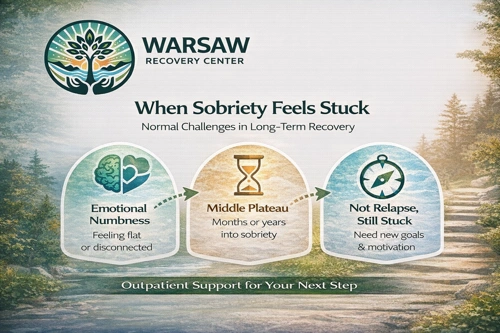
You’re months or years in. The feelings aren’t crashing into you anymore. They’re fading. And the silence they leave behind feels…off.
That quiet isn’t peace. It’s disconnection. And it’s more common than you think.
You’re Not Backsliding—You’re Growing Beyond the Basics
In early recovery, it’s all survival and structure.
You learn how to stay clean. How to feel again. How to be with people without numbing out.
But long-term recovery? It’s a different beast.
Now you’re asking deeper questions:
Who am I when I’m not just fighting to stay sober?
What am I building now that survival isn’t the goal?
This isn’t relapse. This is reinvention.
The Flatness Isn’t Failure—It’s the Middle
Think about detox like a jumpstart. You come in emotionally wrecked and physically spent. The alcohol detox program stabilizes your body. It clears the fog. It gives you a fighting chance.
Then you start living again.
But no one tells you what to do when the engine is running but the road feels empty.
That’s where so many alumni get stuck. Not in relapse—but in emotional limbo. You’re not falling apart. You’re just not moving forward. And that still hurts.
Your Brain Is Still Healing (Yes, Even Now)
Here’s the science piece most people forget:
Your brain doesn’t reset the moment detox ends. Dopamine regulation, emotional processing, cognitive flexibility—they all take time to rebuild. A lot of time.
And guess what can happen while your brain is still repairing?
- Emotional numbness
- Lack of motivation
- Cynicism or boredom
- Disconnection from people and purpose
That doesn’t mean sobriety isn’t working. It means the healing is still in progress—and your soul is waiting for your brain to catch up.
You’re Allowed to Pivot—Even If You “Should” Be Fine
This one might sting: sometimes the routines that got you sober are the ones keeping you stuck.
That sponsor? That group? That meeting format?
They helped you climb out. But they might not be helping you rise.
So let’s ask the uncomfortable question:
What are you still doing out of fear—and what are you ready to do out of desire?
Maybe you need therapy again—but deeper this time. Maybe it’s time to switch up your recovery community, try a new group, or start serving others in ways that feel aligned with who you are now.
You don’t owe anyone the version of yourself that worked 18 months ago.
Real Talk: Sobriety Was Never Meant to Be the Destination
You didn’t get sober just to be sober.
You got sober to live.
And if your sober life feels like beige wallpaper—safe, consistent, but utterly lifeless—it might be time to reclaim something bigger than maintenance.
You can want more. You’re supposed to want more.
That doesn’t make you ungrateful. It makes you alive.
When “Coming Back” Isn’t About Relapse
We’ve had alumni return to our alcohol detox program in Warsaw, VA not because they drank—but because they felt like they were losing themselves.
They missed the depth. The accountability. The why.
And sometimes, coming back isn’t about crisis—it’s about reclaiming clarity.
You don’t need a full relapse to need a reset. You just need honesty. And maybe a little courage to say: “I’m stuck, and I want help getting unstuck.”
That’s not backsliding. That’s growth.
What Help Looks Like in the “Stuck” Season
Let’s reframe support—not as failure, but as fuel.
Here’s what help can look like when you’re not new, but you’re not okay:
- Stepping back into short-term programming to reignite direction
- Joining an alumni group that doesn’t talk about Step 1 every week
- Starting trauma work you weren’t ready for during detox
- Saying the thing out loud you’ve been afraid to name (“I’m bored,” “I’m numb,” “I don’t know what I want anymore”)
- Building new structure—creative outlets, fitness goals, spiritual exploration
You don’t have to overhaul your life. You just have to shake off the dust.
FAQ: What Long-Term Alumni Ask When They’re Stuck
Is it normal to feel flat or disconnected in long-term recovery?
Yes. It’s more common than you think. Many people experience an emotional plateau after their brain and body stabilize post-detox. It’s part of the longer-term healing arc.
Do I need another alcohol detox program if I haven’t relapsed?
Not necessarily. But revisiting care—through short-term stays, alumni check-ins, or reengaging with therapeutic support—can help you reset emotionally and regain clarity.
How do I know if I’m actually stuck vs. just having a bad week?
If the flatness has lasted more than a few weeks, if you’re avoiding your support system, or if you’re feeling deeply unmotivated, it may be time to reach out.
Is it weak to ask for help after being sober for years?
Absolutely not. Emotional disconnection is as real a threat to recovery as cravings are. Asking for help at this stage is a strength move—not a setback.
Can I return to Warsaw even if I haven’t used?
Yes. Many alumni reach out for continued care, structure, or deeper emotional work. You’re always welcome—whether you’re actively struggling or just quietly hurting.
You Didn’t Get Sober to Be Numb. You Got Sober to Be Free.
You survived things most people wouldn’t understand. You walked through detox, stayed through treatment, rebuilt your life one brick at a time.
You didn’t do all that work to end up in a quiet, joyless version of survival.
You’re allowed to want more. You’re allowed to feel off. You’re allowed to ask: What now?
Call (888) 511-9480 or visit our alcohol detox program page in Warsaw, Virginia. Whether you need a reset, a realignment, or just someone to hear the truth—you’re not starting over. You’re just starting again.