You’re not in crisis. You haven’t hit some big dramatic bottom. But maybe something inside you is starting to shift.
Maybe you’re drinking more than you used to—and justifying it more than you want to admit. Maybe you’ve Googled “am I an addict?” and closed the tab before finishing the quiz. Or maybe you’ve noticed that your “just a few times a week” habit has quietly become “every day, like clockwork.”
This isn’t denial. This is questioning. And that matters.
At Warsaw Recovery Center, we meet people like you every day—curious, cautious, thoughtful, and not quite ready to identify with words like “alcoholic” or “addict.” But ready for something.
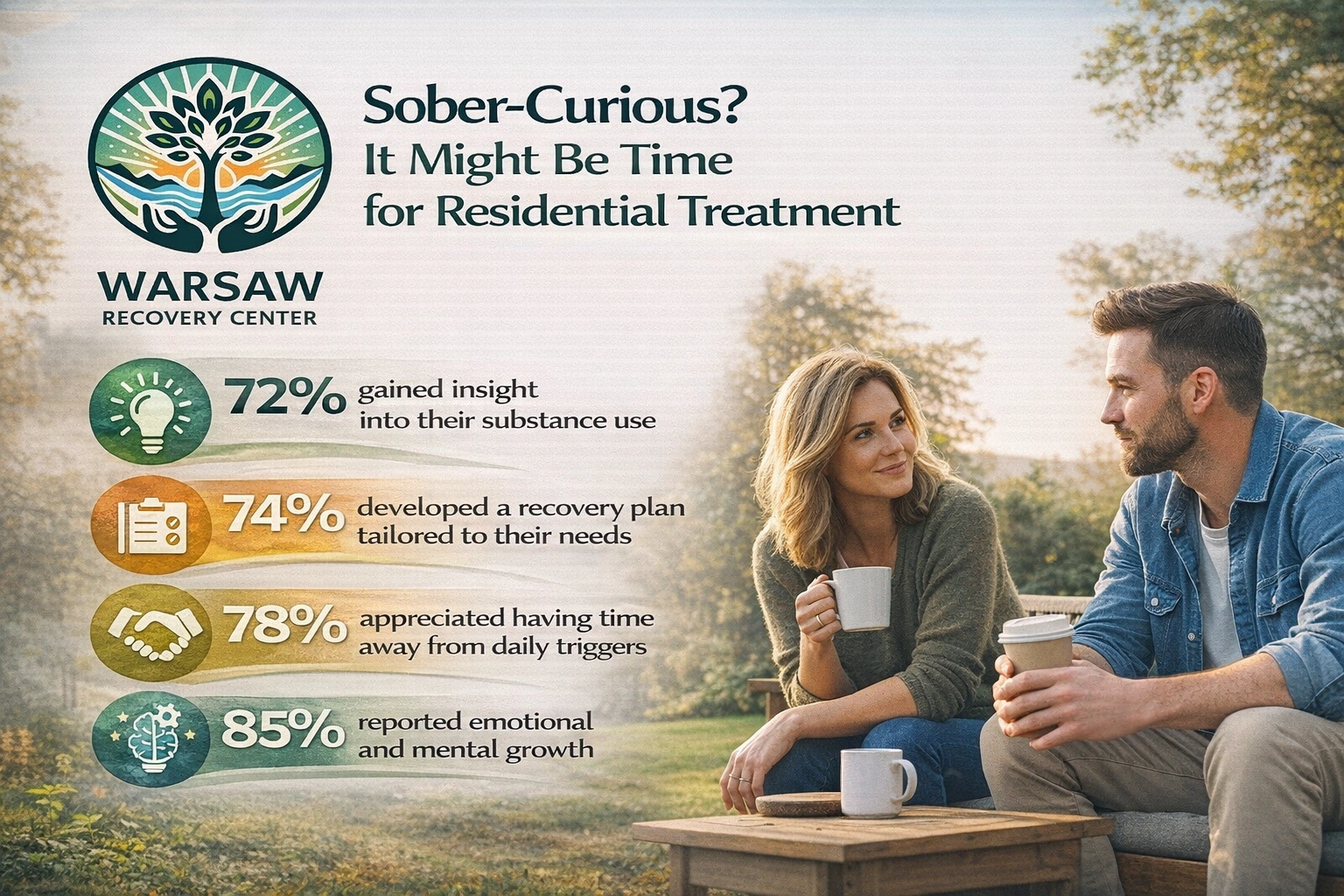
And that something might just be a residential treatment program—yes, even if you’re “not that bad.”
You Don’t Have to Be Falling Apart to Ask for Help
One of the biggest myths about residential treatment is that it’s only for people whose lives are in shambles.
But here’s the truth: many of the people we serve are high-functioning, thoughtful, and still in the early stages of wondering if they need to make a change. They’re not looking for rescue. They’re looking for clarity.
You can walk into treatment while you’re still employed. Still parenting. Still participating in your life. You don’t have to wait until something breaks. In fact, the earlier you come, the less there is to lose—and the more there is to gain.
We often support people from Fredericksburg, Virginia who are in exactly this stage. They’re not spiraling—but they’re not at peace either. They’ve started to notice that their relationship with substances is taking up more space than they’d like. And they’re smart enough to know that ignoring it won’t make it go away.
Treatment Isn’t a Verdict. It’s a Container for Exploration.
If you’re sober curious, you might fear that stepping into treatment means committing to some identity you’re not ready for.
But that’s not what real treatment looks like.
You won’t be labeled. You won’t be lectured. You won’t be pushed into saying anything you’re not ready to say.
What you will get is space—a structured, safe environment where you can start to untangle the why underneath your use.
Why you reach for a drink when the house goes quiet.
Why you feel itchy without a buzz at night.
Why a “normal” weekend doesn’t feel complete without some form of escape.
You don’t have to declare forever. You just have to show up for right now.
How a Residential Treatment Program Actually Works
Let’s make it simple. Here’s what most residential programs (including ours) include:
- Intake and Assessment: You’ll meet with a clinician who will help understand your history, goals, and what you want from the experience.
- Personalized Care Plan: You won’t get a one-size-fits-all schedule. Your treatment is tailored to you—your needs, your background, your comfort level.
- Daily Structure: Think morning check-ins, group therapy, individual sessions, meal times, wellness practices, and rest periods. It’s a rhythm designed to help your nervous system settle.
- Holistic Support: You might engage in art therapy, mindfulness, movement, journaling, or trauma-informed work, depending on your needs.
- Discharge Planning: We don’t just say “good luck” at the end. We help you build a next-step plan—whether that’s continued therapy, outpatient support, or sober community connection.
In short: it’s not a punishment. It’s not a sentence. It’s a supported pause—a chance to hear yourself think without the static.
You Won’t Be the Only One Who Isn’t “Sure”
This fear is common: “Everyone else will be worse off than me. They’ll wonder why I’m even here.”
But once you start talking to people, you realize most of them are wrestling with the same uncertainty:
- “I’m not that bad, right?”
- “What if this is just a phase?”
- “What if I can’t relate to anyone here?”
The surprise? You will relate. Not always to the exact details—but to the emotions, the fear, the longing for more.
People from Williamsburg, Virginia have told us they were afraid of not fitting in at first—but once they allowed themselves to be honest, they found the shared human experience beneath the surface stories.
No one’s measuring your pain. You’re allowed to be here—even if you’re still figuring things out.
You’ll Learn What Your Habit Was Actually Doing for You
Here’s something many people don’t expect: in treatment, we’re not just focused on what you’re doing—we’re focused on why.
Substances aren’t random. They serve a purpose. For many sober-curious clients, the goal isn’t just to stop—it’s to understand.
What were you avoiding?
What were you numbing?
What were you trying to connect to—but couldn’t?
A residential treatment program helps you explore the emotional architecture beneath your habits. And when you get honest about your needs, you can begin to meet them in healthier, more sustainable ways.
It’s Not About Forever. It’s About Right Now.
If you’re sober curious, the word “forever” might feel suffocating. That’s okay.
The goal of treatment isn’t to lock you into a lifetime of abstinence. It’s to give you the tools, insights, and clarity to make your own decisions with honesty and support.
For some, the outcome is a long-term sobriety path. For others, it’s harm reduction, lifestyle changes, or continued exploration.
There’s no one-size-fits-all finish line.
Our job isn’t to decide for you. It’s to walk with you while you figure it out.
Common Questions from the Sober Curious
Do I need to hit a “bottom” before coming to treatment?
No. In fact, the earlier you come, the better. Questioning your use is enough reason to explore support.
Will I be labeled or forced to identify as an addict?
Absolutely not. We don’t require any labels. We meet you where you are and work with your language, not against it.
How long is the program?
Most residential stays range from 28–45 days. But we’ll collaborate with you to determine what makes the most sense for your situation.
What if I’m not sure I want to stop completely?
That’s okay. We support exploration—not perfection. You’ll have space to figure out what’s right for you, with guidance and without pressure.
Will I be cut off from the outside world?
No. You’ll have time to unplug and refocus, but also structured opportunities to connect with loved ones and begin planning for life after treatment.
What if I want to leave early?
Treatment is voluntary. If you decide you’re not ready or it’s not the right fit, we’ll support you in finding next steps that feel right for you.
You’re Not Overreacting. You’re Listening to Yourself.
If you’re wondering whether your relationship with substances is too much, too often, or too central—you’re already doing the bravest thing: listening.
You don’t have to be falling apart to ask for help. You don’t have to be 100% certain to explore a new path.
Sometimes, clarity doesn’t come from thinking about it harder. It comes from stepping into a space designed for healing.
Learn more about our residential treatment program and how it can support you—even if you’re still in the early stages of questioning.
Call (888) 511-9480 to learn more about our Residential treatment program in Richmond, Virginia.