
I didn’t plan to make that call.
I told myself I wouldn’t. That I couldn’t. That going back would mean everything I did before didn’t count.
But there I was, sitting in my car, staring at my phone like it had all the answers—and none of the mercy.
If you’ve been here, you already know. That space after relapse doesn’t feel loud. It feels quiet. Heavy. Like something inside you is folding in on itself.
And the hardest part isn’t always stopping again.
It’s admitting you need help again.
Somewhere between everything falling apart and pretending it wasn’t, I found myself scrolling back to round-the-clock support, not ready to click—but not able to ignore it either.
I Thought 90 Days Meant I Was “Good”
Ninety days felt like proof.
Proof I could do it. Proof I wasn’t as far gone as I once thought. Proof that maybe, just maybe, I had turned a corner.
I remember how people looked at me differently. How I looked at myself differently.
There was pride there.
And then, slowly, that certainty started to slip.
Not all at once. Not in some dramatic crash. Just in small ways that didn’t feel dangerous at the time.
Skipping things that used to matter. Letting thoughts slide. Telling myself I didn’t need to be as careful anymore.
That’s how it started.
Relapse Didn’t Feel Like a Choice
People think relapse is this big, obvious decision.
It wasn’t.
It felt like a series of quiet permissions. Small compromises I didn’t question enough. Moments where I knew better, but didn’t want to feel what knowing better required.
And then I was back there.
Not at the very beginning—but far enough that it didn’t matter.
That’s the part that messes with your head. You know what it took to get out, and suddenly you’re looking at that climb again.
Only now, you’re carrying shame too.
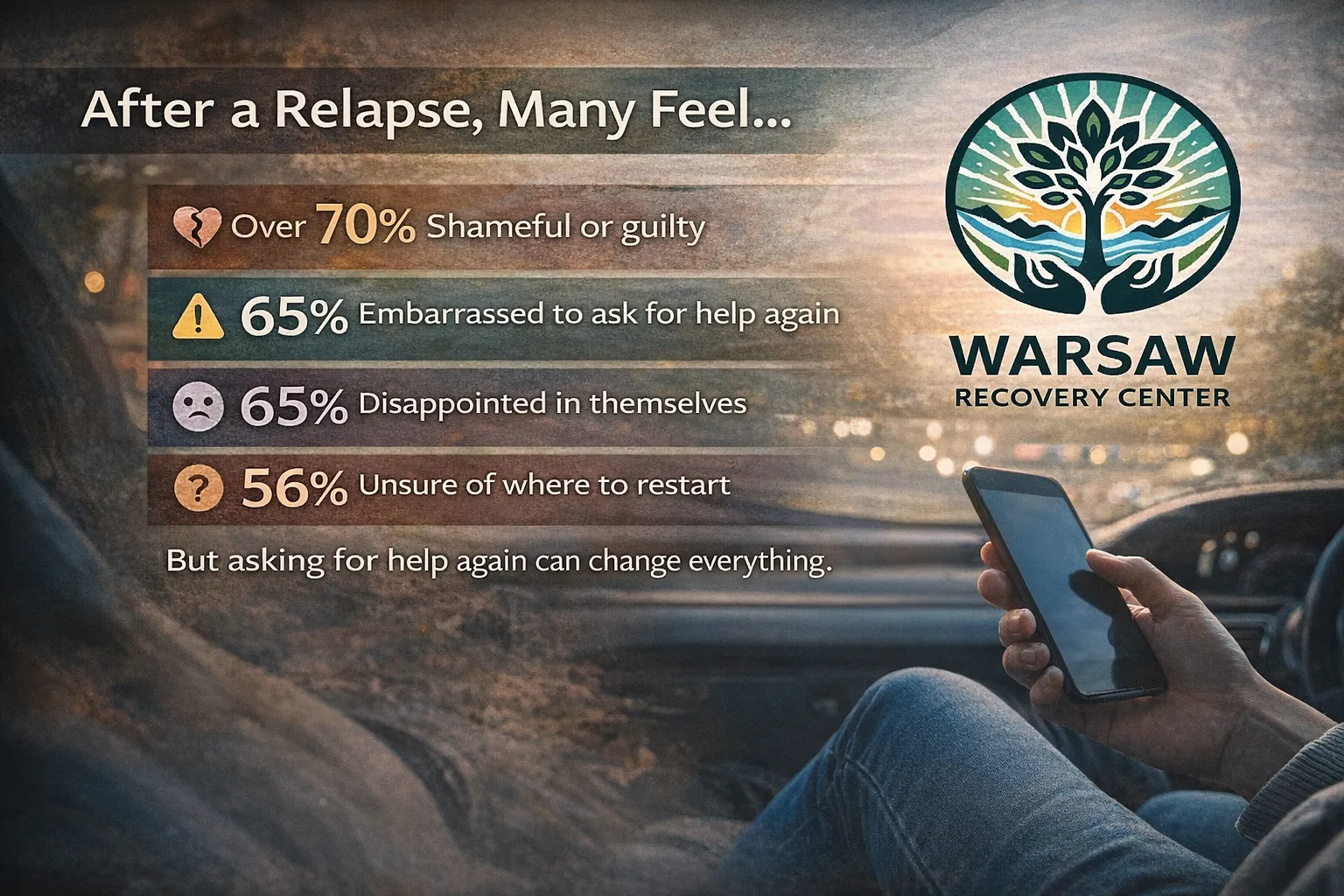
The Shame Was Louder Than Anything Else
I didn’t tell anyone right away.
Not because I didn’t have people. But because I didn’t think I deserved them anymore.
There’s a voice that shows up after relapse. It’s not kind. It doesn’t try to help you fix anything.
It just repeats:
“You had your chance.”
“They were wrong about you.”
“You’re back where you belong.”
And if you listen long enough, it starts to sound true.
That’s what kept me stuck longer than anything else.
I Kept Thinking I Could “Undo” It Quietly
I told myself I’d fix it on my own.
That I didn’t need to go back. That I could just reset, get control, and move forward without anyone knowing.
I tried.
For days. Maybe longer.
But everything felt heavier this time. Not just the behaviors—but the awareness of them. The knowing that I had already learned this, already lived this, and still ended up here.
It’s hard to describe that feeling.
It’s like carrying both the problem and the memory of how hard it was to solve it the first time.
The Moment It Hit Me
It wasn’t some dramatic rock bottom.
It was quieter than that.
I was sitting alone, doing nothing important, and I realized something simple and brutal:
I’m not getting better.
Not slowly. Not eventually. Not in any way that was real.
That thought landed harder than anything else.
Because once you see it, you can’t unsee it.
Making the Call Felt Like Swallowing Glass
I wish I could say I picked up the phone with confidence.
I didn’t.
It felt like swallowing glass. Like admitting something I didn’t want to say out loud.
I kept thinking:
-
- What if they’re disappointed?
- What if they think I didn’t try?
- What if this proves I’m not capable of change?
But underneath all of that was the real fear:
What if they help me again—and I still mess it up?
That’s the one that almost stopped me.
What Actually Happened Wasn’t What I Expected
No one sounded surprised.
No one made me explain myself in a way that felt like I was on trial.
They just met me where I was.
That’s it.
No lectures. No guilt. Just a calm, steady response that made it feel like maybe I wasn’t as far gone as I thought.
I didn’t realize how much I needed that until I heard it.
Going Back Didn’t Feel Like Starting Over
This is something I wish someone had told me earlier.
Going back didn’t erase what I had already done.
It didn’t cancel out those 90 days.
It added context to them.
I came back with more awareness. More honesty. Less energy spent pretending I had it all together.
There was something different this time.
Not easier—but clearer.
The Change Was Subtle, But It Mattered
There wasn’t a big turning point.
No moment where everything clicked and suddenly I was “fixed.”
Instead, things just… steadied.
I started sleeping again. Actually sleeping.
My thoughts slowed down enough to make sense.
I stopped fighting everything I was feeling.
And in that space, something shifted.
Not dramatically. Not perfectly.
But enough.
Enough to remind me that change was still possible.
If You’re Sitting With That Same Decision
If you’re reading this, there’s a chance you’re somewhere in that space right now.
Not fully okay. Not fully ready to ask for help again either.
Just… stuck in between.
Maybe you’re telling yourself you’ll figure it out tomorrow. Or next week. Or once things calm down.
I did that too.
But here’s the truth I had to face:
Nothing changes if nothing changes.
And sometimes, the hardest step is the one that actually opens something up.
You Didn’t Ruin Everything
I know it feels that way.
Like you had something good and lost it. Like you proved every fear you had about yourself.
But relapse doesn’t erase progress.
It complicates it. It challenges it. It forces you to look at things differently.
But it doesn’t mean you’re back at zero.
You’re not.
You’re someone who knows what it takes—and is still willing to try again.
That matters more than you think.
A Different Kind of Strength
There’s a version of strength people talk about that looks like never falling.
That’s not real.
The kind that matters here is quieter.
It’s the kind that picks up the phone even when you feel like you don’t deserve to.
It’s the kind that admits, I need help again, without knowing exactly how it will turn out.
That’s the strength that changes things.
A Small Detail I Didn’t Expect to Matter
I remember sitting outside one evening after going back, noticing how still everything felt.
Not empty—just… calm.
It was the first time in a while that my mind matched that quiet.
I didn’t think something so small would hit that hard.
But it did.
It reminded me that peace doesn’t have to be dramatic to be real.
And that maybe, just maybe, I wasn’t as far off as I thought.
For Anyone Carrying This Alone
If you’re holding this quietly—if you haven’t told anyone, if you’re still trying to figure it out on your own—I get it.
There’s a kind of isolation here that’s hard to explain.
But you don’t have to stay in it.
Even if all you do is consider your options, that’s a step.
Even if all you do is look into something like level of care virginia, residential treatment program virginia again, that’s movement.
And movement matters.
FAQs
Is going back really worth it after a relapse?
It can be.
Not because it guarantees a different outcome—but because it gives you another chance with more awareness than before. That changes how you show up.
Does relapse mean treatment didn’t work?
No.
It often means there’s more to uncover, more support needed, or patterns that weren’t fully addressed yet. It’s part of many people’s process, even if it doesn’t feel that way.
What if I feel embarrassed to reach out again?
That’s normal.
But most programs don’t see relapse as failure—they see it as something to respond to. The fear of judgment is often stronger than the reality.
How is going back different the second time?
You’re not walking in blind.
You know yourself better. You’ve seen what works and what doesn’t. That insight can make the experience more honest and, in many cases, more effective.
What if I’m not ready yet?
You don’t have to be fully ready.
You just have to be willing to consider something different. Read, ask questions, take one small step—that’s enough for now.
Final Thought
There’s a version of this story where I never made that call.
Where I kept trying to fix it quietly. Where things kept slipping further out of reach.
I’m grateful that’s not the version I stayed in.
If you’re standing in that same moment—phone in hand, unsure what to do next—you don’t have to solve everything today.
Just don’t ignore what you already know.
Call (888) 511-9480 to learn more about our level of care virginia, Residential Treatment Program in Richmond, Virginia.