You don’t have to be “ready.”
You don’t have to feel brave.
You don’t have to know if this is forever.
You just have to make one small decision right now—to keep reading.
At Warsaw Recovery Center, we know the early stages of alcohol addiction treatment can feel like standing at the edge of something vast and unfamiliar. Especially if you’ve just been diagnosed. Maybe the word “addiction” still feels too big. Maybe you’re afraid of losing control, your identity, or the parts of your life alcohol helped you navigate. Maybe you’re terrified that saying yes to treatment means saying no to everything you thought made you strong.
But here’s something we want you to hear: Treatment doesn’t start with one big leap. It starts with a whisper—Maybe.
Maybe I’ll talk to someone.
Maybe I’ll try.
Maybe I don’t have to keep doing this alone.
Our alcohol addiction treatment program is built for those “maybes”—not for people who feel ready to overhaul their lives overnight. And if you’re scared, uncertain, or still grieving what this diagnosis means, you’re not broken. You’re exactly where you’re supposed to be.
The First Step Isn’t Admission—It’s Honesty
Most people don’t walk into treatment with confidence. They come in questioning themselves. Numb. Angry. Embarrassed. Or worse—convinced they don’t really need help.
And that’s okay.
The real first step in alcohol addiction treatment isn’t checking into a program. It’s allowing yourself to stop pretending everything’s fine when it isn’t.
It might be a late-night Google search. A conversation with a partner. A tearful confession to your doctor.
Whatever it was—it mattered. It counted. And it was the beginning of something real.
Your Fear Makes Sense. And It Doesn’t Disqualify You.
If part of you wants to get better, and part of you wants to keep drinking—you’re not alone.
Alcohol becomes a coping mechanism long before it becomes a crisis. For many, it’s how you unwind. How you connect. How you feel okay in your own skin. So when someone says, “You need to quit,” it can feel like they’re ripping away the one thing that’s helped you survive.
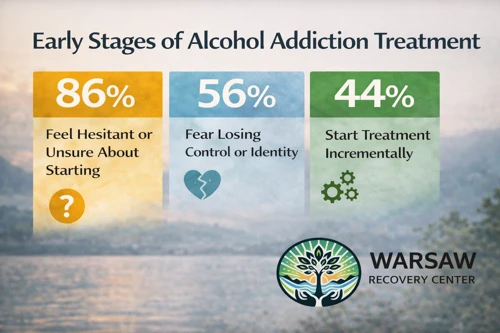
That fear is valid. Especially if you’ve also been told you might benefit from medication. Maybe you’re scared it’ll dull you. Or change who you are. Or be just another thing you depend on.
Here’s the truth: we don’t medicate identities away. We don’t erase who you are. We work with you to understand how alcohol has functioned in your life—and what you need now to feel whole without it.
No decision is forced. No healing path is one-size-fits-all.
Recovery Isn’t One Big Leap—It’s a Series of Micro-Decisions
There’s a story people like to tell about recovery—that it begins with a moment of rock bottom, followed by one big, life-changing decision.
That’s not how it works for most people.
Most recovery journeys begin with dozens of tiny, hesitant choices:
- I’ll make the call, but I won’t commit yet.
- I’ll come to intake, but I don’t want to talk.
- I’ll try group, but I don’t know if it’s for me.
- I’ll stay today. Maybe tomorrow. We’ll see.
Each of those decisions is enough. You’re not weak for inching toward help instead of running into it headfirst. You’re human.
Alcohol addiction treatment is built to meet people exactly where they are. Not where they think they “should” be.
Treatment Isn’t About Changing You—It’s About Bringing You Back
We get it. You’re afraid of losing yourself in this process. Afraid that sobriety will strip away the fun, the spontaneity, the version of you who could be social, confident, magnetic—with a drink in hand.
But alcohol has taken more from you than it’s given.
Maybe it’s your mornings. Your clarity. Your peace. Your ability to trust your own decisions. The truth is, alcohol rarely takes everything all at once—it erodes you slowly, piece by piece, until you don’t remember who you were before the next drink became non-negotiable.
Treatment isn’t about replacing you. It’s about helping you return to yourself—clearer, steadier, and stronger than you remembered.
What Real Alcohol Addiction Treatment Looks Like
Forget the stereotypes. Real treatment isn’t a cold hospital or a group of people confessing their worst moments in a circle of strangers.
At Warsaw Recovery Center, treatment is:
- A medical detox team that keeps you comfortable and safe
- Therapists who don’t shame, push, or preach—they listen
- Group sessions where people are honest, not perfect
- Time to rest, not just “fix”
- Help with mental health concerns, family support, and post-treatment planning
Some people start with residential care. Some begin outpatient. Some just need a quiet place to explore what sobriety could look like.
All are valid.
All are welcome.
One Small Moment of Courage Is Enough
You don’t need to commit to forever. You don’t even need to believe you can do this yet.
All you need is a moment. One small spark that says, Maybe I’ll try.
That whisper of curiosity? That’s the beginning of change. And you can follow it without rushing. Without pressure. Without needing to have it all figured out.
That’s what we’re here for.
We’ve walked alongside clients from Fredericksburg, Virginia and Williamsburg, Virginia who started just as unsure as you. Some of them called three times before picking up. Some of them canceled intake and rescheduled. Some left treatment halfway through—then came back stronger.
Progress isn’t linear. It’s allowed to be messy.
What matters is that you don’t give up on yourself.
FAQs: When You’re Newly Diagnosed and Still Unsure
Do I have to decide everything now?
No. You can start by asking questions. You can come in for an assessment without committing to full treatment. Every part of this process happens at your pace.
What if I don’t want to take medication?
That’s completely your choice. Medication is one of many tools we offer, and we only recommend it if it aligns with your goals and needs. We’ll walk you through it without pressure.
Can I still work while in treatment?
Yes. We offer outpatient options designed for people who are working, parenting, or managing other responsibilities. You don’t have to give up your life to get your life back.
What if I don’t feel “sick enough” for treatment?
If alcohol has started to take more than it gives—your sleep, your peace, your clarity—that’s enough. You don’t need to hit a dramatic low to deserve help. Your exhaustion is reason enough.
How do I explain this to people in my life?
We can help with that. Whether it’s talking to family, managing job leave, or navigating friendships, our team will support you in having those conversations with honesty and care.
When you’re ready—even if it’s just for a conversation—we’re here. Call (888) 511-9480 or visit our alcohol addiction treatment in Richmond, Virginia to learn more about.