
Sometimes the shift doesn’t start with a crisis.
It starts with a quiet question.
“What would my life feel like if alcohol wasn’t part of it?”
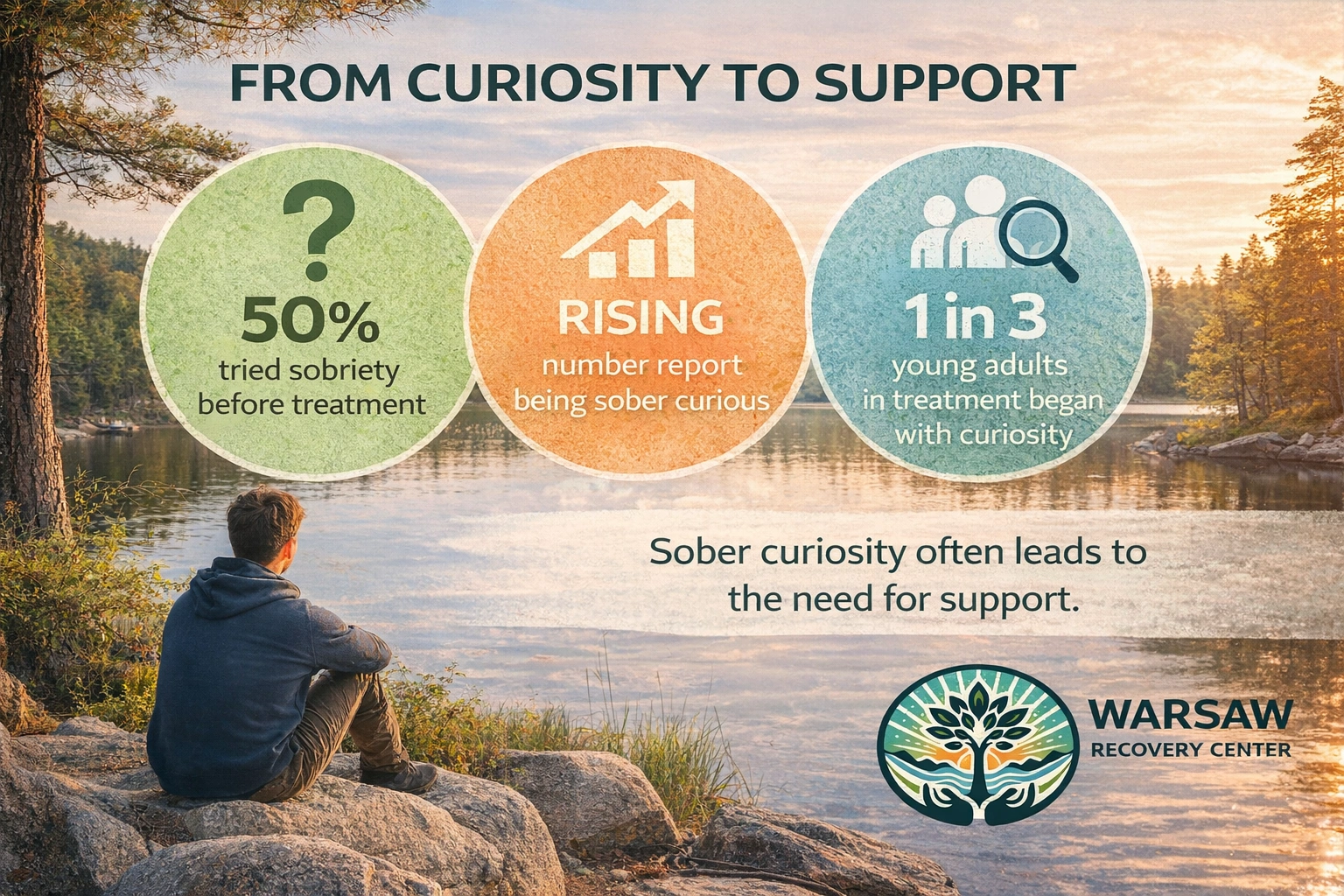
People who describe themselves as sober curious often stand in that in-between space. You’re not necessarily labeling yourself. You’re not committing to anything permanent. But something inside you is paying attention.
Maybe your sleep has changed. Maybe weekends feel heavier than they used to. Maybe alcohol used to feel fun and now it feels… complicated.
If you’ve reached the point where curiosity is turning into questions about support, learning how different recovery environments work can help you take the next step with confidence.
You can explore one example of immersive support through our live-in recovery environment and see how structured spaces help people step away from daily pressures and reset their relationship with alcohol.
Below is a practical guide to help you understand how different levels of support work and how to recognize which one might match where you are right now.
Step 1: Start With the Reason You’re Thinking About Change
People rarely become sober curious randomly.
There’s usually a moment—or a series of small moments—that starts the conversation in your mind.
It might look like:
- Feeling anxious after drinking when you used to feel relaxed
- Waking up more tired than rested
- Realizing alcohol has become your default way to unwind
- Wondering why moderation feels harder than it used to
None of these automatically mean something is “wrong.”
But they are signals. Signals that your relationship with alcohol may be shifting.
The important thing isn’t judging yourself. It’s noticing what your mind and body are already telling you.
For some people exploring sobriety in Fredericksburg, Virginia, these early questions are exactly what lead them to explore structured support before alcohol begins causing larger disruptions.
Step 2: Understand That Support Exists on a Spectrum
One of the most common misconceptions people have is that recovery only exists in extreme forms.
In reality, support comes in many levels. Each level offers a different amount of structure and guidance.
Some people begin with conversations or outpatient counseling. Others benefit from environments that provide more daily structure and accountability.
Think of it like training for a marathon.
Some runners can train independently with occasional coaching. Others perform better with a full training team, structured schedule, and consistent guidance.
Neither approach is “better.” They’re simply different levels of support.
Step 3: Ask Yourself How Much Distance You Need From Alcohol
This question is often surprisingly revealing.
Some sober curious individuals can reduce or stop drinking while remaining in their usual environment. Others notice that the same routines, social circles, or stressors quickly pull them back toward old patterns.
When that happens, temporary distance can help.
That’s where immersive support environments become valuable. By stepping away from daily triggers, individuals can create the mental space needed to reflect, learn, and reset habits.
Many people describe this experience as finally being able to hear their own thoughts again.
Step 4: Consider What Kind of Structure Helps You Stay Consistent
Motivation is powerful—but it’s also fragile.
Life gets busy. Stress builds. Social expectations creep back in.
Structure helps bridge the gap between intention and action.
Different support environments provide different levels of structure:
Live-in support environments
These provide round-the-clock care and remove the distractions of everyday life so individuals can focus completely on healing.
Structured daytime care
Participants spend their days in therapy, group support, and skill-building activities, returning home in the evenings.
Multi-day weekly treatment
This option blends independence with consistent support, allowing individuals to continue work or school while building healthier routines.
Structure isn’t about control. It’s about giving your brain time to rewire habits that took years to form.
Step 5: Pay Attention to Emotional Patterns Around Drinking
Many sober curious individuals initially focus only on how often they drink.
But frequency isn’t always the most important factor.
What matters more is why drinking feels necessary.
Alcohol often fills emotional roles:
- Reducing anxiety in social settings
- Softening loneliness
- Escaping overwhelming thoughts
- Creating a sense of reward after stressful days
When alcohol leaves the picture, those emotional needs don’t disappear.
That’s why supportive environments focus on teaching new coping tools, emotional awareness, and healthy ways to process stress.
The real transformation happens when people discover they can handle life without needing alcohol to get through it.
Step 6: Recognize When Curiosity Is Turning Into Readiness
Sober curiosity can stay theoretical for a long time.
But at some point, many people notice their curiosity becoming more serious.
You might catch yourself researching recovery stories. Reading about mental health. Asking deeper questions about how alcohol affects your body and mind.
These moments often signal readiness.
Not readiness for perfection. Not readiness for lifelong commitments.
Just readiness to explore what change could look like.
Across communities like Williamsburg, Virginia, more people are beginning recovery conversations from this place of curiosity rather than crisis—and many find that beginning earlier makes the journey far less overwhelming.
Step 7: Let Conversation Be the First Step
You don’t have to have everything figured out before reaching out.
In fact, most people who begin exploring support feel uncertain.
Questions are welcome.
Conversations with recovery professionals often help people clarify things they’ve been wrestling with internally for months—or even years.
Sometimes those conversations reveal that small lifestyle changes may be enough. Other times they show that deeper support could accelerate progress and reduce the risk of returning to old patterns.
Either way, clarity is powerful.
What Happens When You Choose a More Immersive Environment
For some sober curious individuals, the most helpful step is stepping into an environment where recovery becomes the main focus.
This doesn’t mean giving up your identity or your life.
It means temporarily creating space to examine patterns, build healthier routines, and understand yourself more clearly.
Immersive environments often include:
- Individual therapy to explore emotional triggers
- Group discussions that build community and accountability
- Wellness practices that support physical and mental recovery
- Skill-building sessions that teach practical coping tools
Many individuals leave these environments with something they didn’t expect.
Not just sobriety.
Clarity.
Clarity about who they are, what they want, and how they want their future to feel.
Recovery Doesn’t Mean Losing Yourself
A common fear among sober curious individuals is that life without alcohol will feel smaller.
Less fun. Less social. Less interesting.
But many people discover the opposite.
Without alcohol clouding energy, sleep, and emotional clarity, life often expands. Creativity returns. Relationships become more genuine. Confidence grows.
You don’t become someone different.
You become someone more aligned with yourself.
And that’s a powerful shift.
Frequently Asked Questions
What does it mean to be sober curious?
Being sober curious simply means exploring your relationship with alcohol. It often involves questioning whether drinking is adding value to your life or creating challenges you’d rather avoid.
Do I have to identify as having a drinking problem to seek support?
No. Many people seek guidance simply because they want to improve their wellbeing. Recovery environments welcome individuals at many different stages of self-exploration.
How do I know if I need more structured support?
If you’ve tried cutting back or stopping but find it difficult to maintain change, structured support can help provide guidance, accountability, and emotional tools.
Will stepping into a recovery environment disrupt my life?
Different support options exist specifically to match different lifestyles. Some programs allow participants to maintain work or school responsibilities while receiving care.
Is it possible to explore sobriety without committing forever?
Yes. Many people begin by simply removing alcohol for a period of time to see how they feel. This exploration often brings clarity about what direction feels healthiest long-term.
What if I’m still unsure whether I want to stop drinking?
Uncertainty is normal. Conversations with recovery professionals can help you explore your thoughts and decide what path feels right for you without pressure.
If you’re feeling curious about what change could look like, you don’t have to navigate that curiosity alone.
Call (888) 511-9480 to learn more about our level of care virginia, residential treatment program in virginia.