Early recovery can feel like walking into a quiet room where everyone else already knows each other. The silence gets loud. The loneliness creeps in. You got sober—and somehow, it still feels empty. If you’re wondering whether a residential treatment program could help you find connection again (or for the first time), you’re not alone. Warsaw Recovery Center’s Residential Treatment Program in Virginia is designed to do more than just keep you sober. It’s built to help you belong.
Let’s walk through some of the most common questions people have about connection, community, and what “real relationships” look like in early recovery.
Can a Residential Treatment Program Help Me Build Real Relationships?
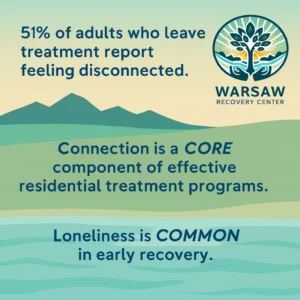
Yes. And here’s what that really means: connection isn’t just a bonus of residential treatment—it’s a core part of why it works. Many of us entered treatment thinking, “I just need to fix myself.” But the deeper truth is this: recovery happens in relationship. We heal because we are seen. Because we are not alone.
In a residential treatment program like the one in Warsaw, Virginia, you live alongside others who are also navigating early recovery. It’s not always instant friendship—and that’s okay. It starts with the simple stuff. Eating breakfast at the same table. Folding laundry next to someone who looks just as tired as you feel. Hearing someone cry in group and realizing you’ve cried for the same reason.
These everyday moments become scaffolding for real connection. You begin to trust again, maybe for the first time in a long while. Trust is the doorway to deeper relationships—not just with others, but with yourself.
Why Do I Feel So Lonely Even Though I’m Sober?
Because sobriety doesn’t magically fix loneliness—it just removes the numbing. In early recovery, you’re raw. You’re awake. You’re noticing all the cracks that alcohol or substances used to fill.
It’s like turning the volume up on your inner world—and for many of us, that inner world is screaming, “I don’t know how to connect.”
If this is where you’re at, you’re not broken. You’re honest. You’re feeling the void that was covered up for years. That’s hard. And it’s also a sign you’re doing the work.
Loneliness in early recovery is common, especially after leaving behind relationships that were built around use. It takes time to build new ones that are real, steady, and mutual. A residential treatment program gives you space and structure to begin again—with people who understand where you’re coming from.
What If I’m Bad at Making Friends?
Honestly? Most of us feel that way in early recovery. Substances were our social lubricant, our buffer, our way to hide. Without them, everything feels awkward. Small talk feels scary. Vulnerability feels impossible.
But you don’t have to be good at it. You just have to stay. Sit through the discomfort. Let people be near you even if you’re not talking. You don’t have to perform connection to build it.
Residential treatment helps because it creates consistent, low-pressure opportunities to be around others. You don’t have to schedule hangouts. You don’t have to pretend to be okay. You just have to keep showing up.
Some of the strongest connections begin in silence—in shared space, not shared words. Over time, you’ll find yourself laughing at a dumb inside joke or feeling safe enough to say something real. That’s what healing looks like.
Will I Be Pushed to Open Up Before I’m Ready?
Not at Warsaw Recovery Center. One of the most important parts of recovery is pacing. Some people are ready to pour their hearts out on Day 2. Others might take two weeks to say anything real. Both are valid.
You’ll never be forced to speak before you’re ready. You’ll be encouraged—but always with respect. The team knows that emotional safety can’t be rushed. Sometimes just hearing others share is enough to soften something in you. Sometimes just nodding is the bravest thing you do all week.
You’re allowed to go slow. Healing doesn’t follow a clock—it follows trust. And that kind of trust takes time, consistency, and permission to be wherever you are.
What Kind of Community Will I Find in Residential Treatment?
You’ll find people who are hurting. People who are hopeful. People who are angry, tired, curious, scared. People like you.
The community inside a residential treatment program is made up of individuals at different stages of healing. Some might be brand new to recovery. Others may have been through treatment before. That mix is part of what makes the community real—it’s not a room full of people pretending everything’s okay. It’s a room full of people trying.
The staff is part of that community, too. Therapists, case managers, group leaders—they’re not just there to supervise. Many of them have walked this road themselves, or helped hundreds of others walk it. They get it. They’re not shocked by your pain or awkwardness or silence. They’re prepared to hold space for it.
And when the program is built with intention—like at Warsaw Recovery Center—there’s structure that supports this kind of connection. Group therapy, shared meals, art or music sessions, casual recreation—all of it is designed to help you reconnect to life and people again.
How Do People Actually Connect in Residential Treatment?
It’s rarely the big, dramatic group therapy moments (though those happen too). It’s the in-between stuff:
- Playing cards after dinner with someone you barely spoke to last week
- Crying in group and realizing no one left the room
- Walking past someone pacing in the courtyard, then turning around to check if they’re okay
- Hearing someone say something that sounds like your own story, and feeling less alone
These moments aren’t flashy. But they’re real. They’re the beginning of connection—and they add up.
One client said, “The first time I felt like I had a real friend in recovery was when someone saved me a seat at group. They didn’t say anything special. They just made space for me.”
That’s what it’s about—making space, holding space, being space.
Can I Stay Connected to People After I Leave?
Yes. Many people do. Especially those who shared milestones together or opened up in group.
Warsaw Recovery Center also helps you stay connected by offering alumni support, local resource referrals, and discharge planning that prioritizes continued community. That might include outpatient programs, peer support meetings, or sober living options nearby.
The truth is, the relationships you build in treatment are often deeper than the ones you had in active addiction. Because they’re built on honesty, not hiding. They’re built on showing up—on your worst days, not just your best.
Some of the strongest recovery communities are made up of people who met in treatment and chose to keep showing up for each other. You don’t have to leave it all behind when you discharge. You get to carry the best of it with you.
What If I Don’t Think I Deserve Connection?
This is the hardest question. And the one most people are too afraid to ask out loud.
If you don’t think you deserve love, friendship, or belonging—please know this: that belief is not the truth. It’s trauma talking. It’s shame lying to you. And it’s common in early recovery.
Residential treatment isn’t just about quitting substances. It’s about confronting the deeper wounds. The stories we tell ourselves about being too much, too broken, too damaged to belong.
You are not too broken.
You may have to relearn how to let people see you. That’s okay. You’re not late. You’re not failing. You’re healing.
And yes—real, honest, lasting relationships are possible for you.
Ready to take the first (or next) step toward healing?
Call (888) 511-9480 or visit Warsaw Recovery Center’s Residential Treatment Program to learn more about how we help people in early recovery build real relationships—and rediscover the part of themselves that longs to be seen, not just sober.