You’ve just been told you have alcohol use disorder—or maybe you already knew, deep down. What you didn’t expect? The treatment plan includes medication. Suddenly the room feels smaller. You hear yourself asking:
“Do I really need meds?”
“What if it changes me?”
“What if I disappear?”
This isn’t just fear. It’s grief. It’s vulnerability. It’s the part of recovery no one warns you about—the fear that the cure might take more than the addiction did.
At Warsaw Recovery Center, we don’t gloss over that fear. We meet it head-on—with clinical truth, personal care, and your voice in the center of every decision. Let’s talk honestly about meds in alcohol addiction treatment.
Medication Doesn’t “Fix” You—But It Might Help You Heal
We say this with love and clarity: medication doesn’t do recovery for you. But it can make doing recovery feel possible. When someone has been drinking heavily, the body and brain have often been running on fumes. Sleep patterns, stress hormones, mood regulation—all of it gets disrupted. Medication can support the brain as it relearns balance.
Think of it like a scaffolding—not the building. It holds up what needs healing while you strengthen from within.
Stat Callout:
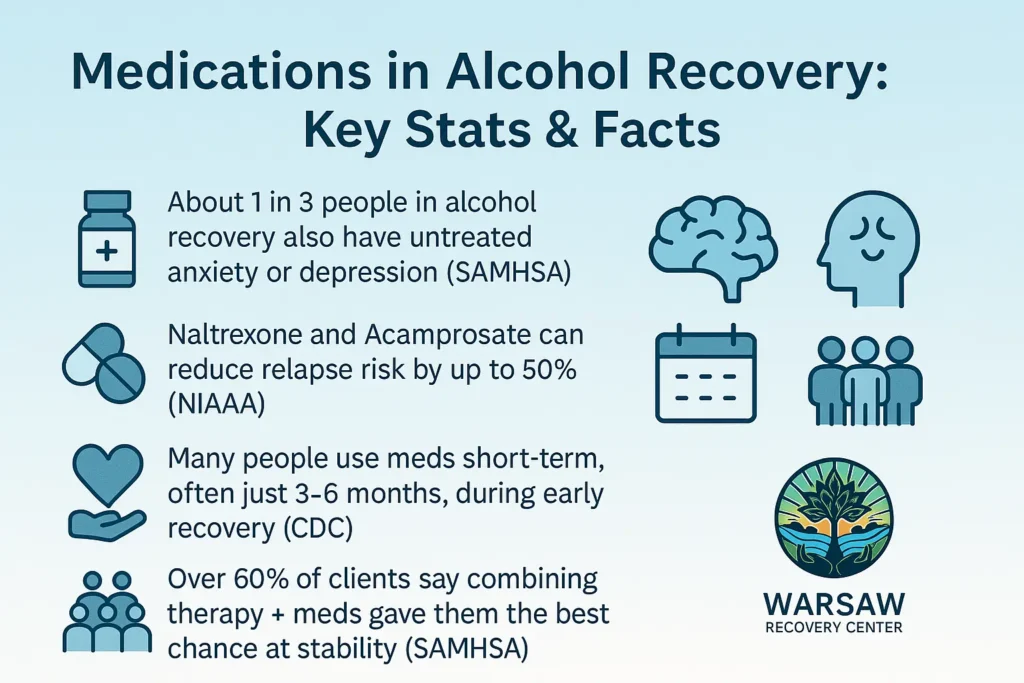
About 1 in 3 people in alcohol recovery also have untreated anxiety or depression that can interfere with staying sober.
You’re Allowed to Ask Every Question (And Say No)
Let’s be clear: you don’t have to take anything you don’t understand. Medication should never feel forced, rushed, or cloaked in medical jargon. If you’ve ever felt dismissed by a provider for asking about side effects, long-term impacts, or whether a med will make you feel “numb”—we hear you. That’s not how we work.
In our alcohol addiction treatment program in Warsaw, Virginia, medication is a conversation, not a command. You get time. You get answers. You get choices.
“Will I Still Be Me?” — The Identity Fear Is Real
This might be the hardest part. Especially if you’re creative. Or sensitive. Or if alcohol once felt like the only way you could fully feel. Now the bottle’s gone, and the idea of taking a med that changes your mood feels like betrayal.
What if you lose your edge? What if you can’t cry? What if you can’t laugh?
We talk about this fear a lot with our clients—and we take it seriously. The goal of treatment is not to flatten you out. It’s to bring you back. If something ever dulls your spark, we adjust. Period. No white coat ego. No, “It’s all in your head.” Just honest collaboration.
Not All Meds Are Lifelong (And Some Aren’t Even Daily)
Another common fear: once you start medication, you’ll never be able to stop.
Here’s the truth: many medications used in alcohol addiction treatment are short-term supports. Some help with withdrawal symptoms. Others address insomnia, depression, or anxiety that often spike in early recovery. Some people take meds for a few weeks. Others for a few months. A few find that ongoing support works best for them.
There is no one-size-fits-all plan. And no one will hand you a lifetime prescription without your full, informed consent.
Real People. Real Recovery. Meds Helped.
We’ll never tell you that medication is a miracle. But we will tell you it’s helped people rebuild their lives.
“I was so against taking anything. I thought meds meant I was broken. But once I started sleeping again… I could actually listen in therapy. I could show up. I could think.”
– Outpatient Client, 2023
“The cravings were eating me alive. I felt like I was fighting my own brain every hour. The medication didn’t erase them, but it gave me enough space to breathe. And that space saved my life.”
– Client in early recovery
We’ve seen people who’ve tried everything—rehab, groups, white-knuckling it—find stability when they finally accepted a small dose of help.
What Kind of Meds Are We Talking About?
We use a variety of medication options depending on what you need. Some target cravings. Others support mental health. None are mandatory.
Some common medications we discuss with clients in alcohol addiction treatment include:
- Naltrexone – Reduces alcohol cravings by blocking the rewarding effects.
- Acamprosate – Helps the brain restore balance post-detox.
- Disulfiram (Antabuse) – Creates sensitivity to alcohol to prevent relapse.
- SSRIs or mood stabilizers – May be prescribed if co-occurring depression or anxiety is present.
All medications are prescribed by our licensed clinicians, reviewed regularly, and tailored to your unique situation.
Medication Is Just One Part of the Plan
Meds are not a standalone solution. At Warsaw Recovery Center, we build whole-person recovery plans that may include:
- Therapy and counseling
- Group support and community
- Nutrition and physical wellness
- Family support options
- Life skills and aftercare planning
And yes—every part of that plan includes your voice.
What If I Want to Try Recovery Without Medication?
That’s okay. We support people who choose to recover without medication—and we still offer every other tool we have. Therapy. Community. Holistic care. You will not be judged. You will not be excluded. You will always have access to compassionate, clinically informed support.
Medication is a tool, not a requirement. You decide the role it plays.
Frequently Asked Questions About Meds in Alcohol Addiction Treatment
Are these medications addictive?
No. The medications commonly used to support alcohol recovery—like naltrexone or acamprosate—are not addictive. They don’t create a high, and they’re not habit-forming.
Can I stop taking the meds whenever I want?
You can stop at any time, but we always recommend doing so with medical guidance to avoid withdrawal effects or symptom rebound. We’ll walk you through every step if and when you’re ready.
What if I’ve had a bad experience with medication before?
That’s valid. Many people come to us with past trauma around meds. We’ll take that seriously. You’ll never be pushed into anything. We’ll explore other options together—or revisit the idea later when it feels safer.
Do I have to be on meds forever?
Not at all. Many people only take medication for a few weeks or months during early recovery. It’s a support, not a sentence.
What if I’m already on mental health meds?
We’ll review your current prescriptions, talk about how alcohol interacts with them, and coordinate care to make sure everything works together safely. We often help clients adjust their meds safely as alcohol leaves the picture.
You Don’t Have to Have All the Answers Today
There’s no perfect plan. No magic fix. But if you’re standing at the start of recovery—scared, skeptical, and unsure—we want you to know: you’re allowed to take small steps. You’re allowed to ask hard questions. And you’re allowed to build a recovery that actually works for you.
📞 Call (888) 511-9480 or visit Warsaw Recovery Center’s Alcohol Addiction Treatment page to learn more about your options. We’ll meet you where you are—and help you find what’s next.