
You’d be surprised how many successful people ask me the same question.
Not publicly. Not in a meeting room. Usually quietly, in a private conversation after everything else in their life seems to be working.
“Can I just stop on my own?”
The person asking usually has a demanding job, responsibilities, and a life that looks steady from the outside. They’re showing up to work. Paying their bills. Taking care of their families.
But somewhere along the way, alcohol stopped feeling like a choice and started feeling like a routine they couldn’t easily interrupt.
If that sounds familiar, you’re not alone. Many high-functioning people wrestle with the idea that they should be able to handle this themselves. Before considering options like medically supervised withdrawal support, most try to solve it privately.
Sometimes they succeed for a while.
Other times, the experience reveals something they didn’t expect.
The Hidden Exhaustion Behind High Functioning
High-functioning individuals often carry a unique burden.
They’ve spent years proving they can manage pressure, deadlines, expectations, and responsibility. Their identity is built around competence.
So when alcohol starts becoming harder to control, their instinct is not to ask for help.
Their instinct is to push harder.
They set rules:
Only on weekends.
Only two drinks.
Only after work.
Those rules often work…until they don’t.
What many people eventually realize is that the exhaustion isn’t just physical. It’s the mental energy required to constantly negotiate with themselves.
A Client Who Looked Completely “Fine”
One man I worked with was a corporate attorney.
He was respected in his field, deeply analytical, and incredibly disciplined. His colleagues described him as calm and dependable.
But every night followed a pattern.
One drink to unwind after work turned into several. Not always. But often enough that he started noticing the impact on his sleep and anxiety.
Eventually he decided to stop.
He told himself he would take a break for a few weeks and reset his habits.
The first night was uncomfortable but manageable.
The second night, he couldn’t sleep.
By the third night, his heart was racing and his anxiety felt unbearable.
He sat in his kitchen at 3:00 a.m. and realized something he hadn’t considered before:
His body had become dependent.
He wasn’t weak. He wasn’t lacking discipline.
His nervous system had simply adapted.
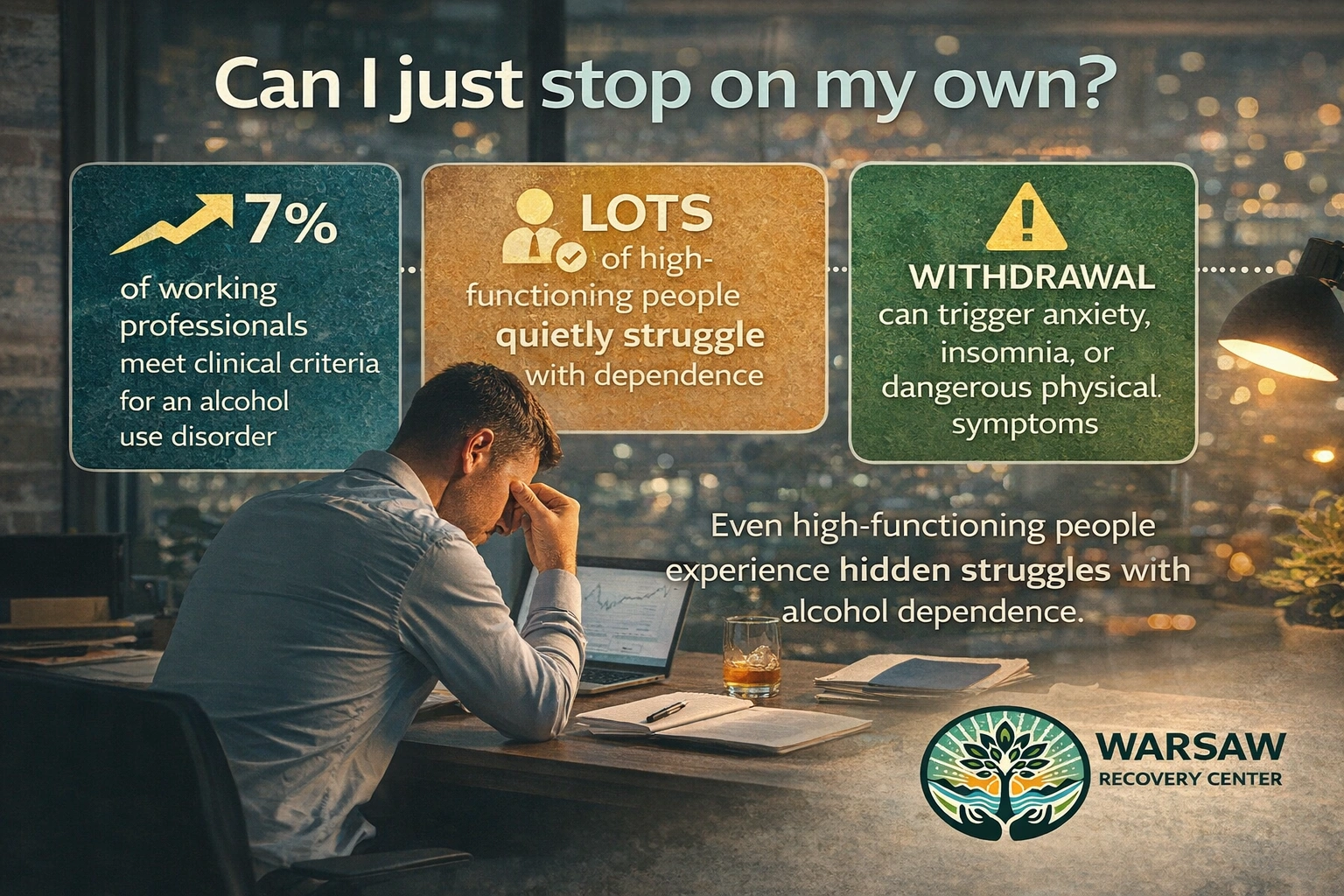
Why High-Functioning People Often Misjudge Withdrawal
When someone’s life appears stable, it’s easy to assume alcohol hasn’t caused physical dependence.
But dependence doesn’t look the same for everyone.
It can develop slowly over time, especially when drinking becomes a consistent part of daily routines.
Many professionals drink regularly enough that their body adjusts to alcohol’s presence. When it suddenly disappears, the nervous system reacts.
That reaction might look like:
- Severe anxiety
- Insomnia
- Shaking
- Racing thoughts
- Irritability or panic
For some people these symptoms remain manageable.
For others they become overwhelming—and sometimes medically risky.
The challenge is that most people don’t know how their body will respond until they try to stop.
The Story of the Business Owner Who Waited Too Long
Another client who comes to mind was a small business owner.
He had built his company from the ground up and prided himself on solving problems independently. Asking for help felt foreign to him.
For years, he drank heavily but privately.
He tried quitting multiple times on his own.
Each attempt followed a similar pattern. The first day felt hopeful. The second day became uncomfortable. By the third or fourth day, the physical symptoms pushed him back toward drinking.
Eventually he came in frustrated and discouraged.
What he expected to hear was criticism.
Instead, he heard something different.
His body simply needed support during the withdrawal process.
Once he received that support, the experience was far less frightening than the attempts he had made alone.
When the Body Needs Help Resetting
One way I explain withdrawal to clients is with a simple metaphor.
Imagine driving a car at highway speed for hours. The engine is running fast, the systems are fully engaged, and the vehicle has adjusted to that pace.
If you suddenly slam on the brakes, everything shifts abruptly.
Alcohol affects the brain and nervous system in a similar way.
Over time, the body adjusts to alcohol’s presence. When alcohol disappears suddenly, the nervous system can swing into overdrive.
Medical support during withdrawal doesn’t mean someone has failed.
It means the body is given the tools it needs to slow down safely.
For many individuals, this phase lasts only a few days—but those days can make a significant difference in how recovery begins.
What Happens After the Physical Symptoms Ease
Many high-functioning individuals assume the hardest part of recovery will be the physical symptoms.
But once the body stabilizes, a different kind of clarity often emerges.
People begin asking deeper questions.
Why was alcohol becoming necessary in the first place?
What stress was I trying to escape?
What habits helped create this pattern?
Some individuals move into structured daytime care to continue building coping strategies. Others participate in multi-day weekly treatment while maintaining work and family responsibilities.
The goal isn’t simply stopping alcohol.
It’s building a life that no longer requires it.
A Moment That Often Changes Everything
One client once told me something I’ve never forgotten.
He had spent years believing that asking for help meant he had lost control.
But after receiving medical support during withdrawal, he said:
“I thought recovery would take away my independence. It actually gave it back.”
What he meant was simple.
For years he had been organizing his life around drinking—planning evenings, hiding habits, managing hangovers.
Once alcohol was no longer driving his schedule, he felt a kind of freedom he hadn’t experienced in years.
When High-Functioning People Start Asking Different Questions
High-functioning individuals often reach recovery through a different door than others.
They rarely arrive because their life collapsed.
They arrive because they notice the quiet cost.
The exhaustion.
The mental negotiation.
The growing sense that alcohol is taking more than it gives.
In many communities, including Fredericksburg, Virginia, professionals are increasingly seeking support earlier—before alcohol begins damaging their careers or relationships.
Early support often leads to smoother recovery experiences and fewer disruptions in daily life.
A Different Kind of Success Story
One of the most encouraging transformations I’ve seen came from a client who initially insisted he would never enter a recovery environment.
He believed he could solve everything through discipline.
But after receiving short-term medical support during withdrawal, something unexpected happened.
He relaxed.
For the first time in years, he wasn’t fighting his own body.
From there he began exploring therapy, healthier routines, and new ways to manage stress.
Months later he described the experience in a way many high-functioning people understand:
“I didn’t lose anything by getting help. I gained my focus back.”
Stories like his are becoming increasingly common in places like Williamsburg, Virginia, where more individuals are recognizing that recovery can coexist with professional success.
The Question You Might Be Quietly Asking
If you’re reading this and wondering whether you can skip medical support, the honest answer is that some people can.
But many who attempt it alone discover the process is far more uncomfortable—or risky—than they expected.
Getting guidance early isn’t a sign of weakness.
Often, it’s the moment someone finally stops fighting their body and starts working with it.
Across the state, individuals exploring recovery often begin by understanding the level of care virginia options available to them and whether their situation requires medical stabilization.
When withdrawal symptoms are a concern, a medically monitored detoxification program virginia can help people move through those early days safely while preparing for the next stage of healing.
You Don’t Have to Prove Your Strength
High-functioning people are used to solving problems alone.
But recovery isn’t a test of toughness.
It’s a process of giving your mind and body the support they need to reset.
Sometimes the strongest decision isn’t pushing through discomfort.
Sometimes it’s recognizing when help makes the path forward safer and clearer.
Frequently Asked Questions
Can someone who appears successful still develop alcohol dependence?
Yes. Alcohol dependence does not discriminate based on career success, education, or lifestyle. Many high-functioning individuals maintain professional stability while quietly struggling with alcohol.
Is withdrawal always dangerous?
Not always, but it can be unpredictable. Some people experience mild symptoms, while others develop severe reactions. Medical guidance helps determine what level of support is safest.
How long do withdrawal symptoms usually last?
Physical symptoms often begin within the first day after stopping alcohol and may last several days. Emotional symptoms like anxiety or sleep disruption may take longer to stabilize.
Can professionals maintain their careers while seeking help?
Yes. Many treatment paths allow individuals to continue working while receiving structured support and therapy.
Does needing help mean someone has lost control?
Not at all. Seeking support is often the moment someone begins regaining control over their health and choices.
What happens after the withdrawal phase?
After stabilization, many individuals continue with therapy, structured care, or support groups to address the emotional and behavioral patterns connected to alcohol use.
Call (888) 511-9480 to learn more about our level of care virginia, detoxification program in virginia.