You don’t have to be in crisis to start asking questions. Maybe you’ve noticed that your weekends feel less fun and more like a blur. Maybe you’ve tried cutting back but felt off—anxious, nauseous, on edge. Or maybe you’re just wondering: “Is this something I should be worried about?”
If that’s where you are, you’re not alone—and you don’t need to have all the answers yet.
This blog is for anyone quietly exploring their relationship with substances. No assumptions. No pressure. Just a clear explanation of what a medical detox program is, how it works, and how to tell if it’s something you might want to consider.
What Is a Medical Detox Program?
A medical detox program is a short-term, clinically supervised setting where your body can safely withdraw from drugs or alcohol. It’s often the first step in treatment—but it’s also a standalone service for people who simply need support getting through withdrawal safely.
Think of detox like hitting “pause” on a fast-moving train. You’re stepping off with help, not being thrown off alone.
At Warsaw Recovery Center in Virginia, medical detox includes:
- 24/7 medical monitoring
- Licensed staff who understand substance withdrawal
- Medication support, when needed, to ease symptoms
- A calm, safe environment that respects your privacy
- A plan for what comes next—whatever that looks like for you
It’s not a punishment. It’s a support system for your nervous system. It gives your body space to stabilize, so your mind can catch up.
Why Detoxing on Your Own Can Be Risky
The idea of quitting “cold turkey” might sound strong or admirable—but depending on what you’ve been using, it can also be dangerous.
Alcohol, benzodiazepines, and opioids carry especially high risks during withdrawal. Without medical supervision, symptoms can include:
- Severe dehydration
- Seizures
- Hallucinations
- Cardiac complications
- Extreme psychological distress
And even with milder substances, trying to quit alone can bring up intense emotions: panic, anger, fear, restlessness. It’s not weakness. It’s chemistry. Your brain is adjusting.
A medical detox program keeps you safe physically—and steadies you emotionally. It can mean the difference between spiraling and starting fresh.
Signs You Might Need a Medical Detox Program
You don’t have to meet some dramatic criteria to qualify for detox. You just need to notice that your body isn’t bouncing back the way it used to. Here are a few common signs:
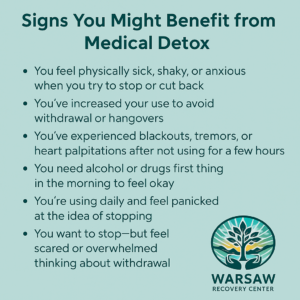
Signs You Might Benefit from Medical Detox:
- You feel physically sick, shaky, or anxious when you try to stop or cut back
- You’ve increased your use to avoid withdrawal or hangovers
- You’ve experienced blackouts, tremors, or heart palpitations after not using for a few hours
- You need alcohol or drugs first thing in the morning to feel okay
- You’re using daily and feel panicked at the idea of stopping
- You want to stop—but feel scared or overwhelmed thinking about withdrawal
Even if you’re not sure where you land, talking it through with a professional can help. There’s no shame in asking. You don’t have to label yourself. You just have to be curious.
What Happens During Detox at Warsaw Recovery Center?
Every detox is different—because every person is different. But here’s what you can generally expect at our Warsaw, VA location:
1. Intake + Assessment
We begin with a medical and psychological evaluation to understand your needs. What substances have you been using? For how long? What’s your physical health like? This helps us create a personalized detox plan.
2. Stabilization
If you’re experiencing withdrawal symptoms, we use approved medications and comfort supports to stabilize your system. The goal is to reduce discomfort, minimize health risks, and help you feel more like yourself again.
3. Continuous Monitoring
Our nursing and medical staff are available 24/7. We monitor your vital signs, manage symptoms, and offer reassurance. If you need to talk, someone’s there.
4. Nutrition & Rest
We help support your physical recovery with meals, hydration, and a quiet environment where you can rest. Sleep may be irregular at first, but your body is doing essential repair work.
5. Transition Planning
Near the end of your detox, we’ll talk through next steps. Whether that means entering a residential program, starting outpatient therapy, or going home with a referral—you’re not pressured. We’ll help you make the best next decision for you.
Detox vs. Treatment: What’s the Difference?
Detox is about safety.
Treatment is about healing.
You can complete a detox without enrolling in full treatment—but most people find that physical withdrawal is just the tip of the iceberg. Underneath the substance use, there’s usually stress, trauma, or emotional pain that deserves care.
Detox clears the path. Treatment helps you walk it. At Warsaw Recovery Center, we can guide you through both, if and when you’re ready.
FAQs About Medical Detox
Is detox the same as rehab?
Not quite. Detox is the first phase—helping you stop safely. Rehab typically includes therapy, skills-building, and longer-term support. Some people only need detox; others continue into full treatment.
How long does detox last?
Most detox programs last between 3–7 days, depending on the substance, your health, and how your body responds. We’ll keep you informed every step of the way.
Will I be given medications during detox?
Possibly. Medications can ease withdrawal symptoms and reduce risks. We only use evidence-based protocols and always discuss options with you first.
Can I visit or talk to family during detox?
Yes. We encourage family connection when it supports your recovery. We can work with you to set boundaries that feel safe and healthy.
Is detox covered by insurance?
In many cases, yes. Warsaw Recovery Center accepts most major insurance plans, and we can verify your benefits quickly and confidentially.
“I was scared to admit I needed detox. But it wasn’t scary—it was a relief. For the first time in years, I could just rest and breathe.”
– Detox Client, 2023
Let’s Talk It Through—No Pressure
Whether you’re ready to detox, curious about your options, or just need someone to walk you through the unknown—we’re here.
Call (888) 511-9480 or visit our medical detox program page. Our team at Warsaw Recovery Center offers clarity, safety, and support—on your terms.