
After the medication wears off, you may feel like someone flipped a switch.
The focus disappears. Your energy crashes. Simple tasks suddenly feel overwhelming, and you may become irritable, emotional, or so exhausted that getting off the couch feels impossible.
If you’ve been searching for Adderall crash, you’re probably trying to understand whether what you’re experiencing is normal—or whether it’s a sign that something more serious is happening.
For people who take Adderall exactly as prescribed, a mild “comedown” can sometimes occur as the medication leaves the body. But when someone begins taking higher doses, using the medication without a prescription, or taking extra doses to avoid the crash, the pattern can become much more concerning.
If you’re worried that stimulant use is becoming difficult to control, learning more about prescription drug addiction treatment can help you understand when professional support may be appropriate. At Warsaw Recovery Center, we help individuals throughout Fredericksburg, Williamsburg, and surrounding Virginia communities address prescription stimulant misuse with compassionate, evidence-based care.
The most important thing to know is this: feeling a crash once isn’t the same as addiction. What matters is what happens next—and whether the crash starts driving repeated medication use.
What an Adderall Crash Is
An Adderall crash is the period of physical and emotional symptoms that can occur as the medication’s effects wear off.
Adderall contains amphetamine salts that increase activity of brain chemicals such as dopamine and norepinephrine. While the medication is active, many people experience:
- Improved focus
- Greater alertness
- Increased motivation
- Better concentration
- Reduced impulsivity (for people with ADHD)
As the medication leaves the bloodstream, those stimulating effects gradually decline.
For some people, this transition is barely noticeable.
For others—particularly after higher doses, misuse, or extended periods of use—the change can feel abrupt and uncomfortable.
Think of it less like “running out of energy” and more like your brain adjusting after several hours of increased stimulation.
Symptoms of an Adderall Crash
Not everyone experiences the same symptoms, and severity varies depending on factors such as dosage, duration of use, sleep, nutrition, and whether the medication is being taken as prescribed.
Common symptoms include:
Extreme fatigue
Many people feel physically drained once the medication wears off.
Tasks that felt manageable earlier in the day suddenly require tremendous effort.
Some people sleep for several hours.
Others feel exhausted but struggle to fall asleep.
Low mood
A temporary drop in mood is common.
People often describe feeling:
- Sad
- Empty
- Unmotivated
- Emotionally flat
This doesn’t necessarily mean someone has depression, but the emotional shift can feel significant.
Irritability
Small frustrations may suddenly feel overwhelming.
Someone who felt calm during the day may become:
- Easily annoyed
- Short-tempered
- Emotionally reactive
- Impatient with family or coworkers
Brain fog
Concentration often becomes much more difficult.
Many people notice:
- Slower thinking
- Forgetfulness
- Trouble completing tasks
- Difficulty making decisions
Increased appetite
Because stimulants commonly suppress appetite, hunger often returns once the medication wears off.
Some people experience intense cravings or eat much more than usual during this period.
Sleep changes
Depending on timing and dose, people may experience:
- Sleeping much longer than usual
- Difficulty falling asleep
- Restless sleep
- Feeling unrefreshed after sleeping
Why It Happens
The brain naturally works to maintain balance.
While Adderall is active, it increases levels of neurotransmitters involved in attention, motivation, and reward.
As the medication wears off, those levels decrease.
Your brain doesn’t instantly return to its previous balance, so there’s often a temporary adjustment period.
Several factors can make the crash feel stronger:
- Higher doses
- Taking medication more often than prescribed
- Missing meals
- Dehydration
- Poor sleep
- Using Adderall recreationally
- Combining stimulants with other substances
Someone who takes medication exactly as prescribed under medical supervision may experience only a mild afternoon decline.
Someone taking large amounts without medical guidance is much more likely to experience a severe crash.
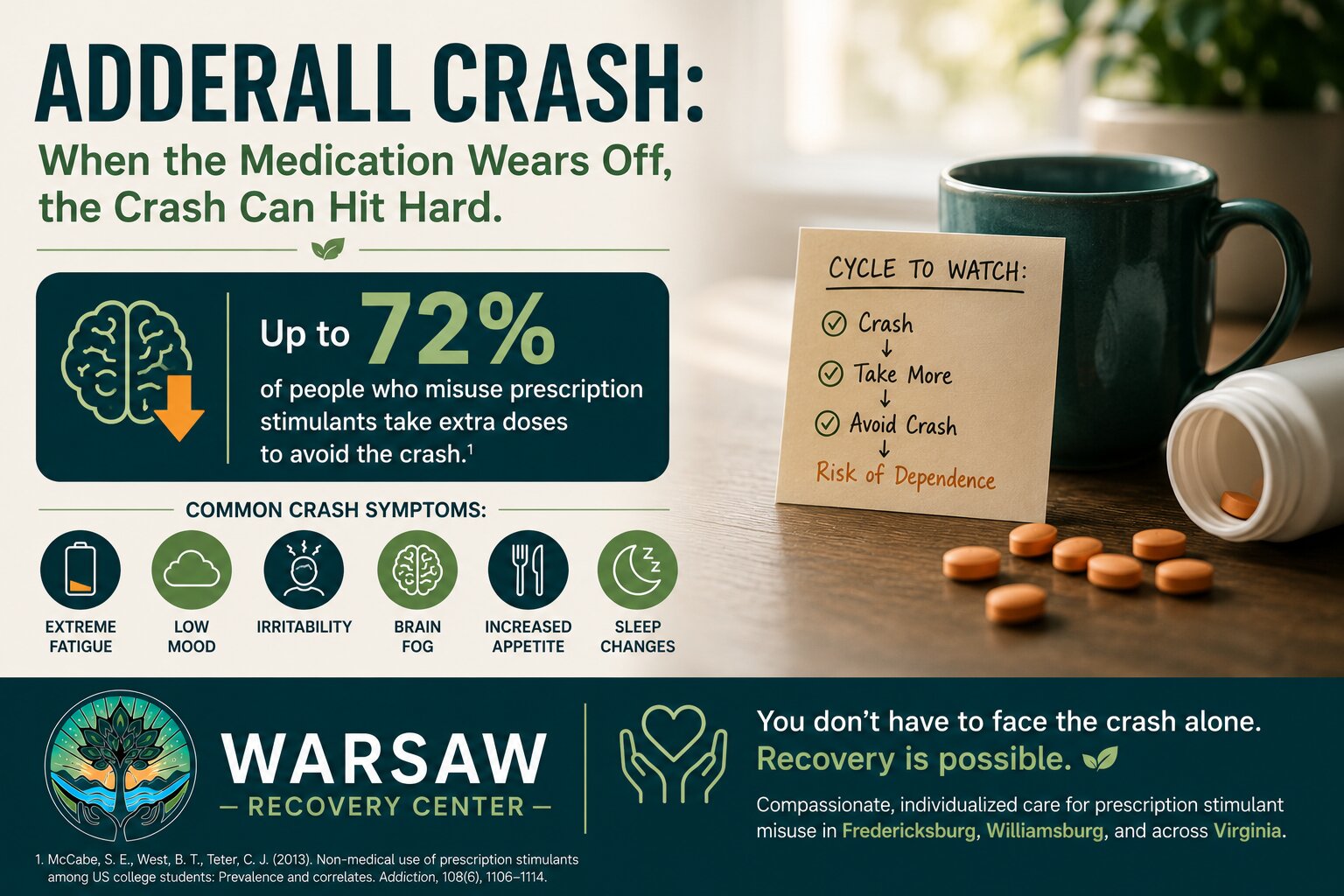
When Crashing Leads to Chasing—and Dependence
This is where the situation can begin to change.
Many online articles focus only on getting through the crash.
They often overlook what happens when someone decides they never want to experience it again.
Instead of waiting for the medication to wear off, they may:
- Take another pill early
- Increase their dose without medical advice
- Use someone else’s prescription
- Take medication later into the evening
- Use stimulants on days they weren’t prescribed
Initially, this may seem like a practical solution.
The unpleasant feelings disappear temporarily.
But over time, the brain begins adapting to repeated stimulant exposure.
Eventually, someone may find themselves taking medication less to improve focus—and more to avoid feeling terrible.
This pattern is sometimes described as chasing the high or chasing relief.
The goal shifts from enhancing performance to preventing the crash.
That cycle can increase the risk of:
- Psychological dependence
- Escalating doses
- Running out of medication early
- Difficulty functioning without stimulants
- Withdrawal symptoms when stopping
Importantly, this doesn’t mean everyone who experiences a crash will develop addiction.
Many people never do.
The concern arises when avoiding the crash becomes the primary reason for continuing stimulant use.
Warning Signs That the Pattern Is Becoming a Problem
It may be time to seek professional guidance if you notice that you:
- Frequently take more medication than prescribed
- Feel unable to function without Adderall
- Become anxious when your prescription runs low
- Take extra doses specifically to avoid crashing
- Borrow or buy medication from others
- Continue using despite problems at work, school, or home
- Hide your stimulant use from loved ones
- Spend much of the day thinking about your next dose
These behaviors suggest the medication may be serving a different role than originally intended.
How Long Does an Adderall Crash Last?
The duration varies from person to person.
For many individuals, symptoms improve within several hours after the medication wears off.
Others may continue feeling fatigued or emotionally low into the following day.
Several factors influence recovery, including:
- Immediate-release versus extended-release formulations
- Dosage
- Frequency of use
- Overall health
- Sleep quality
- Whether the medication has been misused
People who have developed dependence may experience longer-lasting withdrawal symptoms after stopping stimulant use.
Can You Ease the Crash?
If you’re taking Adderall exactly as prescribed, your prescribing clinician is the best person to discuss bothersome crashes with. Never increase or change your dose on your own.
Some general strategies that may help include:
- Eating regular, balanced meals
- Staying well hydrated
- Maintaining a consistent sleep schedule
- Avoiding additional stimulant use without medical guidance
- Engaging in light physical activity if energy allows
- Giving yourself time for lower-demand tasks as the medication wears off
What generally doesn’t help is taking additional medication simply to delay the comedown.
While that may provide temporary relief, it can reinforce the cycle of repeated use and increase the risk of dependence.
Getting Help for Prescription Drug Misuse in Virginia
Prescription stimulant misuse often develops gradually.
Many people don’t set out intending to misuse medication. They simply start trying to avoid feeling exhausted, emotionally drained, or unable to focus once the medication wears off.
Over time, those extra doses can become harder to stop than expected.
If you’ve noticed that you’re taking more than prescribed, relying on Adderall just to feel “normal,” or feeling trapped between crashes and repeated use, you’re not alone.
At Warsaw Recovery Center, we provide compassionate treatment for prescription drug misuse for individuals throughout Fredericksburg, Williamsburg, and communities across Virginia. Treatment may include medical assessment, individualized therapy, relapse prevention planning, and support for any co-occurring mental health concerns.
Recovery isn’t about judging why stimulant misuse began. It’s about helping you regain stability, protect your health, and build a life that no longer revolves around avoiding the next crash.
Frequently Asked Questions
How long does an Adderall crash last?
Many people notice symptoms for several hours after the medication wears off, although some may continue feeling fatigued or emotionally low into the next day. Duration depends on the dose, formulation, frequency of use, and individual factors.
How do you ease it?
Eating regular meals, staying hydrated, getting adequate sleep, and following your prescription exactly as directed may help. If crashes are severe or frequent, talk with your prescribing clinician rather than increasing your dose on your own.
Is it a sign of addiction?
Not necessarily. A crash alone does not mean someone has an addiction. However, repeatedly taking extra doses to avoid the crash, increasing medication without medical guidance, or feeling unable to function without Adderall may indicate developing dependence or a stimulant use disorder.