
For many people, combining alcohol and cannabis doesn’t feel like a serious decision.
It might happen at a party, during a concert, or while spending time with friends. Someone has a drink, someone else offers cannabis, and using both together feels casual—almost expected in some social settings.
If you’ve been searching for crossfading, you may simply be wondering whether mixing the two is actually riskier than using either one on its own.
The answer is yes—but probably not for the reasons most people assume.
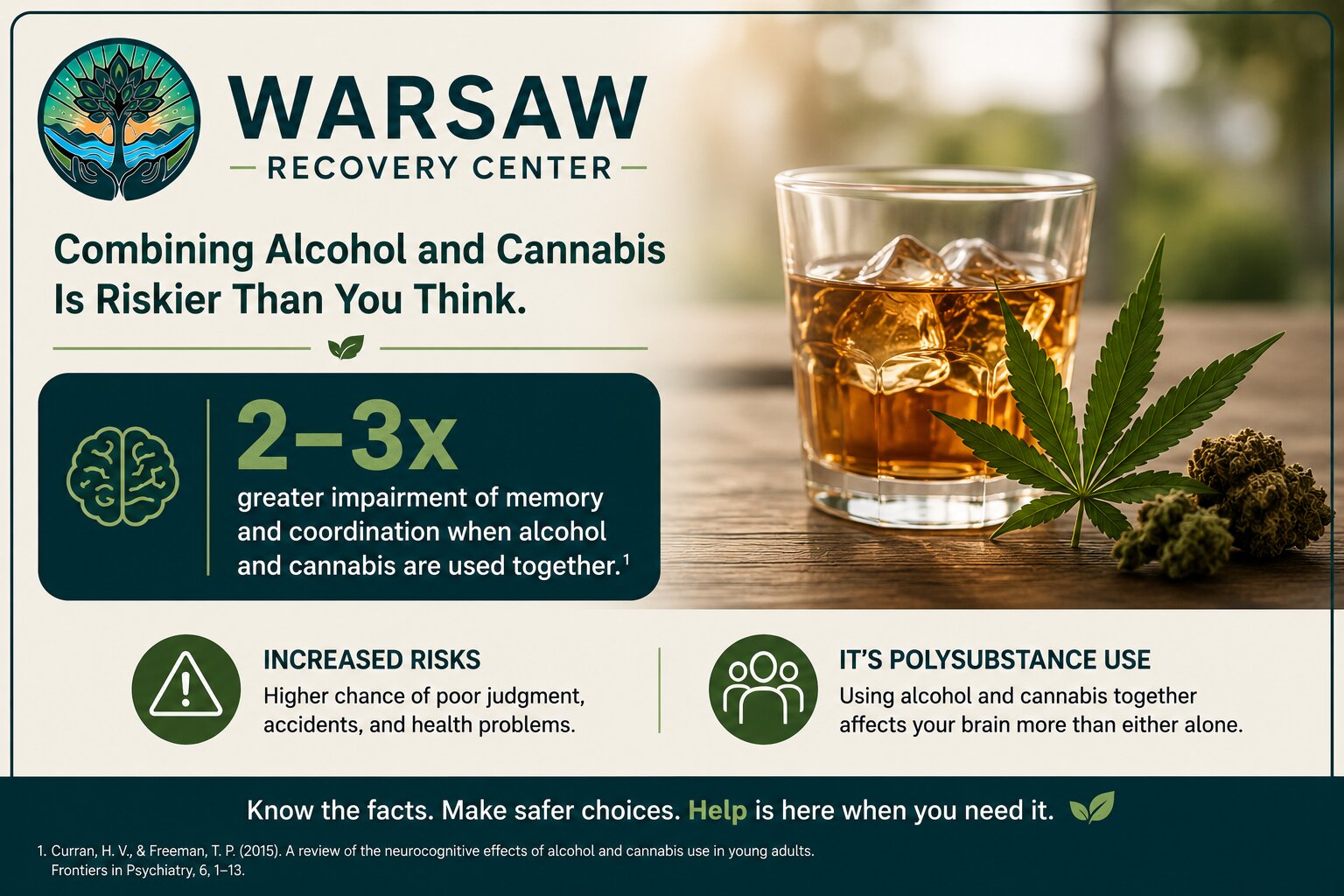
Many people don’t realize that combining alcohol and cannabis is a form of polysubstance use, meaning more than one psychoactive substance is affecting the brain and body at the same time. That doesn’t automatically mean someone has an addiction, but it does increase the potential for unexpected effects, impaired judgment, and harmful consequences.
If mixing substances has become a regular pattern or is becoming difficult to control, learning more about polysubstance addiction treatment can help you understand when additional support may be appropriate. At Warsaw Recovery Center, we help individuals throughout Fredericksburg, Williamsburg, and surrounding Virginia communities address substance use with compassionate, individualized care.
Understanding why the combination affects the body differently can help you make more informed decisions without relying on myths or assumptions.
What Crossfading Is
Crossfading refers to using alcohol and cannabis during the same period of time, so that the effects of both overlap.
Some people:
- Drink first, then smoke or use cannabis later
- Use cannabis before drinking
- Alternate between alcohol and cannabis throughout the evening
Regardless of the order, both substances are active in the body simultaneously.
Because alcohol and cannabis affect the brain in different ways, their combined effects are not simply “added together.” In many cases, they amplify one another, making intoxication stronger and less predictable than using either substance alone.
Why the Combination Is Riskier Than Either Alone
Alcohol and cannabis each impair thinking, coordination, reaction time, and decision-making.
When combined, those effects often become more pronounced.
One reason is that alcohol may increase the body’s absorption of THC—the primary psychoactive component in cannabis. This can cause someone to feel much more intoxicated than they expected, even if they used an amount of cannabis they normally tolerate.
The combination can lead to:
- Greater impairment
- Stronger dizziness
- Increased confusion
- Slower reaction times
- Poor coordination
- More difficulty judging risks
Because the effects are less predictable, people may underestimate how impaired they really are.
Someone who believes they’re “only a little high” or “just buzzed” may actually have significantly reduced judgment and motor skills.
The Specific Dangers
Most people who combine alcohol and cannabis don’t expect a medical emergency.
However, the combination can create situations that become frightening—or even dangerous.
Greening out
One of the most common experiences is greening out.
This term describes an intense negative reaction to cannabis that may include:
- Severe nausea
- Vomiting
- Sweating
- Pale skin
- Dizziness
- Rapid heart rate
- Anxiety or panic
- Feeling disconnected from reality
Alcohol can make this reaction more likely by increasing THC absorption and intensifying intoxication.
Blackouts and memory problems
Alcohol already affects memory formation.
Adding cannabis may increase confusion and make it more difficult to remember events accurately.
Someone may remain awake and interacting with others while later having little or no memory of what happened.
Poor judgment
Both substances reduce the ability to make safe decisions.
Together, they can increase the likelihood of:
- Driving while impaired
- Unsafe sexual behavior
- Falls and injuries
- Risk-taking
- Conflicts with others
Often, people don’t recognize how impaired they are until after something has gone wrong.
Panic and paranoia
Some individuals experience intense anxiety after combining alcohol and cannabis.
Symptoms may include:
- Feeling out of control
- Racing thoughts
- Panic attacks
- Suspicion
- Fear that something terrible is happening
While these feelings often improve as the substances wear off, they can be extremely distressing.
Accidents and injuries
Because coordination, balance, and reaction time are all affected, the risk of accidents increases.
This includes:
- Falls
- Vehicle crashes
- Sports injuries
- Drowning
- Workplace accidents
Why People Underestimate the Risks
One reason this combination is often viewed as harmless is that both substances are relatively common.
People may think:
- “Everyone does it.”
- “It’s safer than other drugs.”
- “I’ve done it before without a problem.”
- “It’s just part of going out.”
Those beliefs can make it easy to overlook the fact that mixing substances changes how each one affects the body.
Even if someone has used alcohol or cannabis separately many times, the combination can still produce unexpected reactions.
The risk also changes based on factors such as:
- How much alcohol was consumed
- THC concentration
- Edible versus inhaled cannabis
- Body size
- Food intake
- Sleep
- Other medications
No two experiences are exactly alike.
When Crossfading Becomes a Concern
Occasionally combining alcohol and cannabis does not necessarily mean someone has a substance use disorder.
The bigger concern is the pattern.
It may be time to take a closer look if:
- You regularly use both substances together
- You find it difficult to enjoy social events without them
- You need larger amounts to achieve the same effects
- Friends or family express concern
- Mixing substances has led to accidents or risky behavior
- You continue despite negative consequences
- You feel unable to relax without combining alcohol and cannabis
Over time, repeated use of multiple substances can increase the complexity of treatment if dependence develops.
Rather than one substance reinforcing a habit, two substances become linked to the same routines, emotions, and environments.
That can make stopping feel more difficult than expected.
Is It Always Polysubstance Use?
Yes.
From a clinical perspective, using alcohol and cannabis during the same period is considered polysubstance use because multiple psychoactive substances are active in the body.
That term isn’t meant to label or judge someone.
It simply describes the pattern of substance use.
Many people hear “polysubstance use” and imagine combinations involving illicit drugs.
In reality, alcohol and cannabis are among the most common substances used together.
Understanding that terminology helps people recognize that combining substances carries its own unique risks—even when each substance seems familiar on its own.
Getting Help for Polysubstance Use in Virginia
Many people who regularly combine alcohol and cannabis never planned for it to become a habit.
What started as an occasional social activity gradually became the default way to relax, celebrate, or cope with stress.
If you’ve noticed that mixing substances is becoming more frequent, harder to control, or causing problems in your relationships, work, or health, help is available.
At Warsaw Recovery Center, we provide compassionate, individualized treatment for people experiencing polysubstance use throughout Fredericksburg, Williamsburg, and communities across Virginia.
Treatment focuses on understanding the whole pattern of substance use—not simply one drug at a time—while helping individuals develop healthier ways to manage stress, emotions, and daily life.
Recovery doesn’t require waiting until things become severe. Sometimes recognizing a pattern early is one of the strongest steps a person can take.
Frequently Asked Questions
What does crossfaded mean?
The term refers to being under the influence of both alcohol and cannabis at the same time. Clinically, this is considered a form of polysubstance use because multiple psychoactive substances are affecting the brain and body simultaneously.
Is it dangerous?
It can be. Combining alcohol and cannabis may increase impairment, dizziness, nausea, poor judgment, panic, and the risk of accidents compared with using either substance alone.
Why is it worse than drinking or smoking separately?
Alcohol and cannabis can amplify each other’s effects, making intoxication stronger and less predictable. Alcohol may also increase THC absorption, which can contribute to unexpectedly intense impairment and reactions such as greening out.