You love someone who’s using.

Not casually. Not occasionally. But in that all-consuming, mood-shifting, panic-inducing way that’s quietly been taking over your days. The kind where you hide keys, check the trash for bottles, and wonder if you’re the one losing your mind.

You’ve Googled “what happens if I send my spouse to detox.” You’ve written (but never sent) texts that say, “You need help. I can’t keep doing this.” You’ve had the fight. You’ve apologized for the fight. You’ve curled up next to someone who feels like a stranger.

And now you’re asking the question you’ve been scared to say out loud:

If they go to detox, are they going to hate me for this?

Let’s talk about that—honestly, without shame. Because you’re not just a support system. You’re a person who loves someone in active addiction. And that comes with its own heartbreak, questions, and decisions.

Will They Hate Me for Suggesting a Medical Detox Program?

It might feel that way—at first. Addiction can make any suggestion feel like an attack. But what feels like betrayal now might become gratitude later.

Here’s what one woman said after encouraging her partner to enter a medical detox program in Virginia:

“He told me I was ruining everything. That he wasn’t that bad. But two weeks after detox, he looked me in the eye and said, ‘I didn’t know how to stop. I needed you to say it.’”

The truth? They may be angry. They may be scared. But the pain of doing nothing will likely cut deeper—for both of you.

What Actually Happens in a Medical Detox Program?

Detox isn’t punishment—it’s protection.

When someone enters a medical detox program, they’re medically supervised 24/7 as substances clear from their system. This includes:

  • Clinical monitoring of vital signs
  • Medications to ease withdrawal symptoms
  • Nutritional support and hydration
  • A calm, safe environment where their brain and body can begin to stabilize

At Warsaw Recovery Center’s medical detox program, our team uses trauma-informed care to treat each person with dignity. No judgment. No lectures. Just safety and skilled support.

Will They Be Angry With Me the Whole Time?

Maybe. Maybe not.

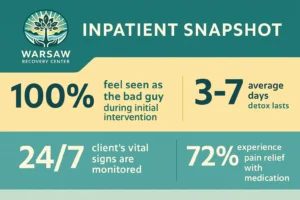
Addiction often distorts perception. You might be seen as the “bad guy” for breaking the pattern—even if the pattern is hurting them. That’s not your fault. It’s the disease.

Your partner may:

  • Be emotionally volatile
  • Cry or lash out
  • Say things they don’t mean
  • Go silent or push you away

That doesn’t mean you did the wrong thing. It means you interrupted a destructive cycle. And even when the anger is loud, there’s often relief underneath.

Let them feel it all. And let yourself step back if you need to. It’s okay to say: “I love you, but I’m not the one who can fix this. I’ll be here when you’re safe.”
Detox Insights

How Long Does Detox Last—and What Happens After?

Medical detox typically lasts 3–7 days, depending on:

  • The substances involved
  • How long they’ve been using
  • Their physical health

But detox is only step one. After stabilization, many clients transition into:

  • Residential treatment for continued support
  • IOP (Intensive Outpatient Programs) for flexible, therapy-driven care
  • Sober living environments for added structure

We’ll help create a plan tailored to their needs—and yours. Because your stability matters too.

How Can I Support Them Without Losing Myself?

Start by drawing a line between love and responsibility.

You’re not their therapist. You’re not their detox nurse. You’re their partner. And that role deserves support too.

While they’re in detox:

  • Rest—for real
  • Talk to someone who gets it (Al-Anon, therapy, support groups)
  • Set boundaries for communication if needed
  • Resist the urge to fix or manage their experience

And remember: needing space doesn’t mean you’re abandoning them. It means you’re protecting the part of you that’s still standing.

What If I’ve Threatened Detox Before—and Didn’t Follow Through?

That doesn’t disqualify you now.

Many partners have said some version of “If this happens again, I’m done.” And then… it happened again. And again. That doesn’t make you weak—it makes you human. You loved someone in crisis. You gave grace.

But detox isn’t a punishment for relapse. It’s a doorway to safety. If you’re here now, asking these questions, it means something inside you knows it’s time.

What If They Beg Me Not to Make Them Go?

They might. Addiction thrives on avoidance and delay. But if your gut says, “We can’t wait,” listen to it.

It’s okay to say:

“I love you. I’m scared. I’m not doing this to control you—I’m doing this because I don’t want to watch this destroy you. And I’m not doing it alone anymore.”

You don’t have to be perfect to be clear. You just have to be brave enough to name the truth.

What Does Success Look Like in Detox?

It’s not a dramatic breakthrough. It’s not an apology speech. It’s this:

  • They show up.
  • They stay.
  • They complete the program.
  • They start looking you in the eyes again.

That’s a win.

One couple shared:

“The first text I got after detox just said: ‘Thank you. I didn’t know how much I needed that.’ That’s all I needed to keep hoping.”

What If I’m Still Angry, Confused, or Burned Out?

You’re allowed. Just because your partner is detoxing doesn’t mean you have to hit pause on your own pain.

Talk to a therapist. Join a support group. Journal what you can’t say out loud. Rage. Cry. Breathe.

You’ve been holding your breath for too long. This is your detox too.

You don’t have to wait for disaster to make the call.

If your loved one needs help, and you need hope—start here. Call (888) 511-9480 to learn more about our Medical Detox Program services in Warsaw, Virginia. You’re not the villain. You’re the one still believing. And that matters more than you know.


*The stories shared in this blog are meant to illustrate personal experiences and offer hope. Unless otherwise stated, any first-person narratives are fictional or blended accounts of others’ personal experiences. Everyone’s journey is unique, and this post does not replace medical advice or guarantee outcomes. Please speak with a licensed provider for help.

Samantha Mizelle, RN picture

Samantha Mizelle is a licensed Registered Nurse bringing more than 25 years of clinical and nursing leadership experience across acute care, behavioral health, home health, and senior living settings. She has held multiple Director of Nursing roles, overseeing clinical operations, regulatory compliance, staff development, quality assurance, and accreditation of readiness. Samantha contributes extensive expertise in patient- and family-centered care, infection control, policy development, and team leadership. She earned her Diploma in Nursing from Riverside School of Professional Nursing and holds an active Virginia Registered Nurse license with BLS and ACLS certifications.

S. Michelle Worrall, MSW, DSW, LCSW, picture

S. Michelle Worrall previously served as Clinical Director at Warriors Heart Virginia, where she helped open and establish a 65-bed residential treatment facility serving Veterans, Law Enforcement, and First Responders with substance use and behavioral health needs. She brings over 20 years of experience as a licensed clinical social worker and leader across outpatient, residential, partial hospitalization, and community-based treatment settings. Michelle contributes extensive expertise in clinical operations, staff training and supervision, curriculum development, and regulatory compliance, including Joint Commission standards. She earned her Bachelor of Social Work from Virginia Commonwealth University, her Master of Social Work from Temple University, and her Clinical Doctorate in Social Work from the University of Pennsylvania.

Shelby Bush

Shelby Bush is a dedicated and experienced administrative and communications professional with a background in behavioral health and emergency services. Since 2016, she has built a strong foundation in customer service, crisis communication, scheduling, financial record-keeping, and multitasking in high-pressure environments. Her roles include administrative assistant in behavioral health and communication officer in law enforcement, where she demonstrated consistent reliability, attention to detail, and problem-solving skills. Shelby is certified as a CIT Instructor and in CPR/AED. She is recognized for her ability to learn quickly, maintain a positive attitude, and consistently demonstrate a strong commitment to excellence.

Lavar's headshot

Lavar Reynolds is a seasoned behavioral health professional and dynamic leader with over a decade of executive experience in the mental health and addiction treatment fields. He holds a Master’s degree in Human Services with a specialization in Marriage and Family Counseling, and is credentialed as a Certified Sex Offender Treatment Provider (CSOTP), Certified Substance Abuse Counselor (CSAC), Qualified Mental Health Professional (QMHP), and Master Addictions Counselor (MAC).

Mr. Reynolds brings a unique blend of clinical expertise and strategic acumen to his work. His experience spans program development, business operations, marketing, and community outreach. With a passion for accessible, high-quality care, he has established a reputation for building effective, person-centered programs that support long-term recovery and emotional wellness.

A dedicated advocate for underserved communities, Lavar Reynolds continues to be a driving force in behavioral health innovation, workforce development, and integrated care solutions throughout the region.

Picture of Dr. William Cooke

At Warsaw Recovery Center, we believe healing starts with compassionate, knowledgeable care—and that’s exactly what Dr. William Cooke brings to our team. As our Medical Director, Dr. Cooke leads with heart, integrity, and over 20 years of hands-on experience in addiction medicine.

Board-certified in both Family Medicine and Addiction Medicine, Dr. Cooke takes a whole-person approach to treatment. He understands that addiction doesn’t happen in a vacuum—it affects every part of a person’s life. That’s why he works closely with each patient and our clinical staff to build individualized care plans that address not just physical health, but also emotional and social well-being.

Dr. Cooke is a Fellow of the American Society of Addiction Medicine (ASAM), a distinction that speaks to his deep commitment to best practices, continued learning, and improving outcomes for those battling substance use disorders. But more than his credentials, it’s his compassion and presence that make the biggest difference here. He listens. He adapts. And he believes in every person’s ability to change.

Under his leadership, Warsaw Recovery Center remains a safe and trusted place to begin the journey toward long-term recovery.

With over a decade of experience in behavioral health and substance use treatment, Alexandra “Allie” Fisher is a nationally credentialed clinical supervisor and licensed substance abuse counselor, formerly providing clinical supervision services in Virginia through Motivo. Her professional background spans direct client care, program development, supervision, and leadership roles across residential and outpatient settings.​

Allie holds a Bachelor of Arts in Philosophy from the University of Mary Washington with a focus on environmental sustainability and ethics. She is certified and licensed in multiple states, including Minnesota, Virginia, Ohio, Illinois, California, and Rhode Island. She is also a SMART Recovery Certified Facilitator and has completed advanced training through Harvard Medical School in the psychiatric management of borderline personality disorder.