There’s a quiet moment that happens more often than people realize.
It’s not dramatic. No big scene. Just a person, newly diagnosed, sitting in a treatment center holding a medication cup—or maybe a clipboard—and staring at it like it might swallow them whole.
You want to get better. But the fear is real.
What if this changes me?
What if I go numb?
What if this is just another way to lose myself?
If this is you, you’re not alone. We see this moment every day. At Warsaw Recovery Center, we meet people in that pause. In fact, that’s where our drug detox program begins—not with the dose, but with what comes before it.
Our drug detox program in Warsaw, Virginia is built for people who are scared, newly diagnosed, and need real clarity before they can say yes to recovery.
You’re Not Resistant—You’re Human
Let’s start with this: being afraid to take medication doesn’t make you difficult. It makes you thoughtful.
If you’ve just been diagnosed with a substance use disorder, especially if you’ve never been in treatment before, it’s natural to feel hesitant. You might be afraid of side effects. Of being overmedicated. Of losing something in yourself.
That isn’t resistance. That’s care. And at Warsaw Recovery, we honor that care—not override it.
We take time. We explain everything. And we don’t move forward until you’re ready, informed, and heard.
Detox Is Not a Pill—It’s a Process
In media, detox is often reduced to someone shivering on a couch or getting “knocked out” with meds. But in real life? Detox is a gradual, medically supported process designed to help your body reset safely.
Our drug detox program is built to support both physical withdrawal and emotional re-regulation. That means:
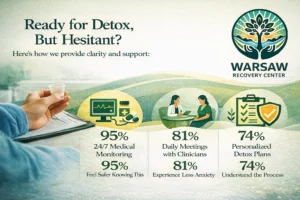
- You’ll be medically monitored 24/7
- You’ll meet with clinicians every day
- You’ll be emotionally supported as you come out of the fog
- You’ll get a plan before you get a pill
No one’s just handing you something and walking away.
We Walk You Through Everything—Before Anything Enters Your Body
We don’t believe in rushing people into treatment plans they don’t understand. So before you receive any medication, we’ll sit down with you and explain:
- What the medication is
- Why we recommend it
- How it works in your body
- What side effects to expect
- What to do if it doesn’t feel right
You’ll also be given the space to ask your own questions—even the ones that feel “silly” or uncomfortable.
- “Will this make me feel weird?”
- “What if I don’t want it after I take it once?”
- “What if I’ve never taken anything like this before?”
We’ve heard it all—and we’ll answer without pressure or judgment.
Medication Isn’t About Changing You—It’s About Clearing Space
Here’s a truth that often surprises people: detox medications are not designed to erase who you are. They’re designed to help you feel stable enough to meet yourself again.
For some people, medication means relief from shaking or nausea. For others, it means the panic in their chest finally quiets down enough to sleep. And for many, it means the chance to think clearly for the first time in weeks—or months.
Medication doesn’t have to feel like defeat. It can feel like a bridge. A way to cross from chaos into calm, one moment at a time.
You Stay in Control of Your Body
Consent doesn’t stop when you enter detox.
You are allowed to say:
- “I’m not ready.”
- “I need more information.”
- “Can we try something else first?”
We don’t take your voice away when you walk through our doors. In fact, part of recovery is reclaiming that voice—especially when it comes to your body and your care.
If something doesn’t feel right, you can speak up. And we will listen.
What Happens If You Choose Not to Take Medication?
We support that, too.
Detox doesn’t require medication to be meaningful or safe—it depends on the substance, the severity of use, and your health history. Some people detox with minimal medical support. Others choose supportive medications to ease symptoms.
At Warsaw Recovery Center, your detox plan is personalized. We work with your body and your comfort level. If you want to try without medication first, we’ll make a plan to do that safely. And if that plan needs to change, you’ll be part of that decision every step of the way.
We Hold Space for Fear Without Forcing Optimism
You don’t have to be excited about recovery to start it.
You don’t have to believe that detox will work, or that you’ll feel amazing in a week. That’s not how it works anyway.
What you do need is a space where your fear won’t be dismissed. A team who understands that doubt isn’t weakness—it’s wisdom that needs care.
One of our clients recently said:
“I didn’t trust the process. I still don’t know if I trust myself. But you gave me enough safety to try one day. And that one day turned into a week. I’m still here.”
That’s what we’re offering. One safe step. Then the next. Until the fog starts to lift.
Real People. Real Relief.
We don’t promise detox will be easy.
But we do promise that you won’t be alone. That you won’t be judged for asking questions, changing your mind, or needing time. That your body, your fears, and your story will be respected.
You are not a problem to be solved. You’re a person learning to feel again—and we’re here for every shaky, beautiful, terrifying step of it.
FAQs for the Newly Diagnosed, Scared to Start Detox
Q: What if I’m scared the medication will numb me or make me feel flat?
That’s a common fear. We use medications that support stabilization, not emotional shutdown. If something doesn’t feel right, we adjust. You’re never trapped.
Q: Can I go through detox without medication?
Yes—if it’s safe for your body. We evaluate each client’s situation individually. Some people do well with non-medicated detox protocols, and we support that when appropriate.
Q: Will I be monitored the whole time?
Yes. Our detox program includes round-the-clock medical monitoring to ensure your safety and comfort. You won’t be left alone to suffer.
Q: What happens if I have a panic attack or freak out during detox?
We’re prepared for that. Our staff is trained in emotional regulation and trauma-informed care. We’ll help you ride out tough moments without shame or fear.
Q: How long does detox take?
Most clients stay in detox between 3–7 days, depending on the substance and symptoms. We’ll talk you through every phase, so you’re never left guessing.
Q: What happens after detox?
Detox is just the beginning. We’ll help you transition into outpatient care, therapy, or whatever next step makes sense for your recovery journey.
You Deserve to Feel Safe Before You Say Yes
If you’re newly diagnosed and scared to take that first step, you’re not broken—you’re careful. And that care is something we protect, not push past. Call (888) 511-9480 or visit our drug detox program page to learn what compassionate, informed detox really looks like.