Admitting you need help can feel like standing at the edge of something unfamiliar.
Part of you feels relief. Another part feels afraid. And somewhere in the middle is a quiet question many people ask themselves:
“Where do I even start?”
For many people seeking help for the first time, the confusion isn’t about whether life needs to change. It’s about understanding what the path forward actually looks like. The truth is, recovery doesn’t begin with a huge leap. It begins with a few careful steps that help your body and mind stabilize before deeper healing begins.
If you’re exploring your options, learning about the first stage of recovery—like medically supervised withdrawal support—can help make the journey feel less overwhelming.
You don’t need to understand every stage today. You just need a place to begin.
Why the Beginning of Recovery Focuses on Safety
When someone decides to stop using alcohol or drugs, the body often needs time to adjust.
Substances affect the nervous system in powerful ways. Over time, the body adapts to their presence. When someone stops suddenly, the system can react with a range of symptoms that feel uncomfortable, confusing, or even frightening.
This early phase of recovery isn’t about proving strength.
It’s about helping the body reset safely so the mind has space to heal as well.
Many people imagine recovery beginning with therapy or life changes. But often the most important first step is helping the body regain balance.
The Fear That Stops Many People From Reaching Out
One of the biggest barriers to treatment is uncertainty.
People worry they’ll lose control over their choices. They worry treatment will be overwhelming or permanent. They worry about what others will think.
These fears are incredibly common for first-time treatment seekers.
But the reality is that recovery programs are designed to meet people where they are. No one is forced into a single path. Instead, professionals help individuals understand their situation and guide them toward the environment that fits best.
That flexibility is one reason more people are willing to explore treatment earlier than they might have in the past.
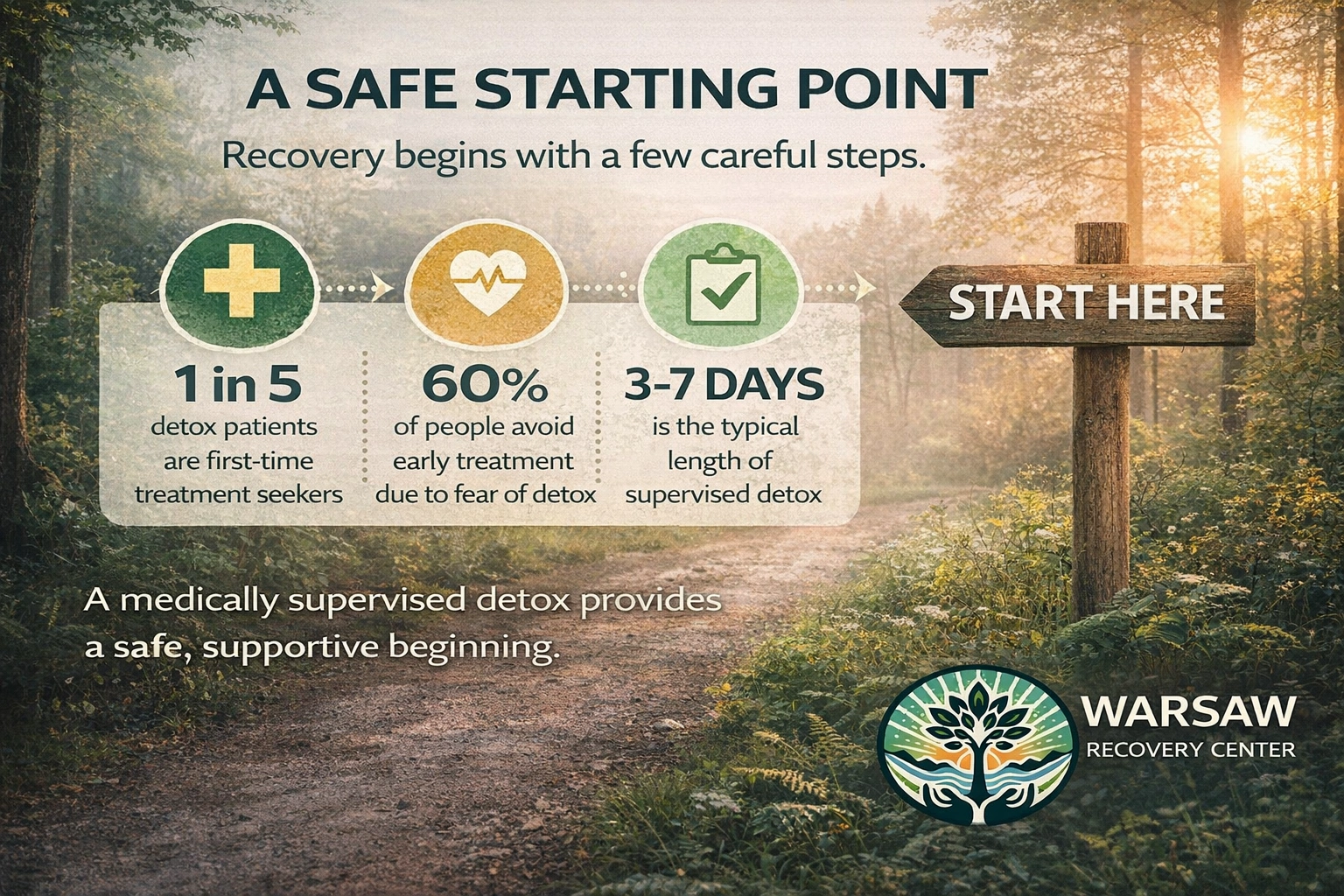
The First Days Are Often About Stabilizing the Body
During the earliest stage of recovery, the goal is simple: help the body settle.
For people who have been using substances regularly, the nervous system may react strongly when those substances are removed. Sleep disruption, anxiety, and physical discomfort are common experiences during this adjustment.
With medical supervision and support, these symptoms can be managed safely.
Once the body begins to stabilize, the rest of recovery becomes much easier to focus on.
Many individuals describe this moment as the first time they’ve felt physically calm in a long time.
Why the Right Environment Makes a Difference
Recovery happens more easily in an environment designed for healing.
In everyday life, stress, responsibilities, and triggers can make it difficult to focus on change. Structured recovery environments provide distance from those pressures so individuals can concentrate on their health.
Some people benefit from live-in treatment settings that offer round-the-clock support. Others continue their recovery through structured daytime care or multi-day weekly treatment programs.
Each environment provides a different level of structure, allowing individuals to choose the path that best supports their needs.
The important thing is that recovery is not one-size-fits-all.
When the Mind Finally Starts to Clear
One of the most powerful moments in early recovery often comes after the body begins to stabilize.
People notice something they hadn’t felt in a long time—clarity.
Sleep improves. Anxiety softens. Thoughts slow down enough to become manageable.
In that space, people begin asking deeper questions:
What led me here?
What changes do I want for my life?
What support will help me maintain those changes?
These questions mark the beginning of real transformation.
Understanding That Recovery Happens in Stages
Many first-time treatment seekers imagine recovery as a single program or event.
In reality, it’s a process that unfolds over time.
After the early stabilization phase, individuals often move into other forms of support that help them build healthier routines and coping strategies. Some people continue into live-in environments for deeper work, while others participate in structured daytime care that allows them to maintain outside responsibilities.
This step-by-step approach allows recovery to grow naturally rather than forcing immediate change.
Hope Often Appears in Unexpected Ways
People who enter recovery for the first time often expect to feel fear or resistance.
What many don’t expect is relief.
For the first time in a long time, they’re not trying to manage everything alone. They have guidance, structure, and people who understand what they’re experiencing.
That sense of support can change how the entire process feels.
Recovery stops feeling like punishment and begins feeling like possibility.
Why Early Support Matters More Than People Think
Many individuals delay treatment because they believe their situation isn’t serious enough.
But early support can make recovery significantly smoother.
When someone seeks help before their physical health, relationships, or career are deeply affected, they often have more resources and stability to build a strong recovery foundation.
Across Virginia, many people exploring recovery begin by learning about the different level of care virginia options available so they can find the type of support that fits their current situation.
For individuals whose bodies need help adjusting after stopping substances, a medically supported detoxification program virginia can provide the safe starting point that allows the rest of recovery to unfold.
A Simple Truth Many People Discover
One thing many individuals realize once they begin treatment is that asking for help didn’t mean giving up control.
It meant gaining support.
Recovery doesn’t erase who you are. It helps you reconnect with the parts of yourself that may have been buried under stress, fear, or addiction.
That realization can be incredibly empowering.
In communities like Fredericksburg, Virginia, more people are discovering that recovery is not about judgment—it’s about rebuilding stability and hope.
You Don’t Have to Know the Whole Journey
If you’re considering treatment, you might feel pressure to understand every step before making a decision.
But recovery rarely begins with certainty.
It begins with curiosity and a willingness to ask questions.
Each step forward reveals the next one.
And over time, what once felt overwhelming begins to feel manageable.
That’s how real change happens—one decision, one conversation, one moment of courage at a time.
Frequently Asked Questions
How do I know if it’s time to seek treatment?
If substance use is affecting your health, relationships, work, or mental wellbeing, it may be time to explore support options. Many people reach out simply because they want their life to feel more stable and manageable.
What happens during the first stage of recovery?
The earliest stage often focuses on helping the body adjust after stopping substances. Medical supervision can help manage symptoms safely and comfortably.
Do I have to commit to long-term treatment right away?
No. Recovery programs typically evaluate your needs first and help determine what type of support will be most helpful. The process often unfolds step by step.
Can I continue working while receiving treatment?
Some treatment paths allow individuals to maintain work or family responsibilities while receiving care. Options vary depending on the level of support needed.
What if I feel scared about starting treatment?
Feeling scared is completely normal. Many people entering recovery feel uncertain at first. Supportive environments are designed to help ease those fears while providing guidance and encouragement.
What happens after the early stabilization phase?
After the body stabilizes, individuals often continue working on emotional health, coping skills, and lifestyle changes that support long-term recovery.
Call (888) 511-9480 to learn more about our level of care virginia, detoxification program in virginia.