
You’re keeping up. Barely.
Your calendar is full, your inbox is cleared, and your family thinks you’re fine. Maybe you even believe it, too—until that moment around 4 p.m. when your chest tightens and your mind starts scanning for the first sip. Not because you’re desperate. Not because you’re out of control. But because it’s the only way to breathe.
This is what high-functioning alcohol use looks like. It’s not falling down. It’s not missing work. It’s hiding in plain sight, under the weight of everything you’re still managing. And the scariest part? No one’s worried—because you’re still getting it done.
At Warsaw Recovery Center, we’ve helped hundreds of people like you—smart, responsible, high-achieving adults who never imagined needing help—walk into detox with dignity, and walk out clearer, stronger, and free.
This isn’t about labels. It’s about your life. And alcohol detox might be the step you didn’t know you needed.
Learn more about our alcohol detox program in Warsaw, Virginia.
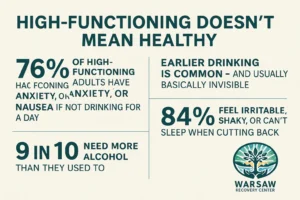
High-Functioning Doesn’t Mean Healthy
Let’s name the truth: functioning is a performance—and you’ve been starring in the lead role for years.
You show up. You keep things moving. You manage stress better than most people. But when the curtain drops—when the kids are in bed, the emails stop, or the house gets quiet—you’re not okay.
That glass of wine has turned into half a bottle. That buzz you used to enjoy now just helps you feel normal. And somewhere deep down, you know: this isn’t sustainable.
Detox Is Where the Pretending Stops
When someone like you walks into detox, it’s not because they’ve lost everything. It’s because they’re ready to stop lying to themselves.
Detox isn’t just about alcohol leaving your system. It’s about stepping out from behind the mask and letting someone see what’s really going on—physically, mentally, emotionally.
There’s power in that honesty. And there’s peace in no longer carrying the weight of secrecy.
You Might Be More Dependent Than You Think
Most high-functioning drinkers don’t realize how physically dependent they are—until they try to stop.
Here’s what dependence often looks like in people who are still “functioning”:
- You get headaches, anxiety, or nausea if you go a day without drinking
- You’ve started drinking earlier in the evening (or even during the day)
- You need more alcohol than you used to for the same effect
- You feel irritable, shaky, or can’t sleep when trying to cut back
- You’ve convinced yourself it’s not that bad—because nothing has blown up (yet)
Even if you only relate to one of these, it’s worth having a medical professional help you evaluate your next step. Because alcohol withdrawal isn’t just uncomfortable—it can be dangerous.
What Alcohol Detox Actually Looks Like
Forget the horror stories. Here’s what detox looks like at Warsaw Recovery Center:
- Medical Monitoring 24/7: You’ll be in a safe, medically supervised environment where nurses and clinicians support you through the process.
- Medication-Assisted Withdrawal: We use evidence-based medication to reduce symptoms like tremors, anxiety, insomnia, or blood pressure spikes.
- Dignity and Respect: No judgment. No lectures. Just real care from people who understand how hard it is to ask for help.
- Quiet, Structured Environment: Detox is often the first real rest you’ve had in years. Many of our clients say it’s the first time they’ve felt safe in their own body.
And most importantly: we build a clear next step after detox—whether that’s outpatient therapy, residential care, or another level of support.
Explore what detox in Warsaw, Virginia looks like.
You Don’t Have to Hit Rock Bottom
You can be high-functioning and still at risk.
Alcohol withdrawal can happen even if you’re only drinking a few drinks per night—if it’s consistent and long-term. We’ve had ER doctors, parents, business owners, and schoolteachers come through our program with nearly identical words:
“I didn’t think it was that bad… until I stopped.”
Detox doesn’t mean you’ve failed. It means you’ve decided to stop managing symptoms and start reclaiming your health.
What Happens After Detox?
Detox is the start, not the solution.
After your body clears the alcohol, that’s when the real work begins. For many clients, we recommend one of the following:
- Residential Treatment – If you need space to heal and reset fully
- Intensive Outpatient (IOP) – Ideal for high-functioning individuals who want continued support while working or parenting
- Therapy or Psychiatry – Especially if alcohol has been masking anxiety, depression, trauma, or stress
Our team will help build a plan that respects your life and responsibilities, while giving you the support needed to stay sober—for real this time.
Check out our full range of levels of care in Virginia to see what might be the right next step.
From Functioning to Living
Here’s the quiet truth that many of our high-functioning clients discover in detox:
They were surviving, not living.
They weren’t falling apart—but they weren’t really here, either. Joy was dulled. Rest was a distant memory. And connection? That took a backseat to just getting through the day.
After detox, many tell us the same thing: “I didn’t realize how foggy I’d become until it cleared.”
Alcohol detox isn’t the end of your story—it’s the first chapter of a much better one.
FAQs: Alcohol Detox for High-Functioning Adults
Is alcohol detox really necessary if I’m still functioning well?
Yes—if your body is showing signs of physical dependence, detox is not only helpful, it may be medically necessary. High-functioning doesn’t mean low-risk.
How long does alcohol detox take?
Most detox programs last between 3–7 days, depending on the severity of your symptoms and how your body responds. You’ll receive an assessment to determine your personalized timeline.
Will I have to stop working or parenting?
During detox, yes—it’s a time for your body to stabilize without stress. But post-detox, many high-functioning clients transition into outpatient programs that offer flexibility while continuing recovery.
What if no one knows I’m struggling?
That’s incredibly common. We work with people who’ve hidden their drinking for years. Detox is confidential, and we’ll help you navigate any personal or professional concerns.
What makes detox at Warsaw Recovery different?
We specialize in compassionate care for high-functioning individuals. You’ll be met with professionalism, discretion, and respect—not judgment.
You’ve done hard things before—this is just a different kind.
Call (888) 511-9480 or visit our alcohol detox program in Warsaw, Virginia. Whether you’re ready to stop drinking or just tired of holding it all together, we’re here to help you take the next step—with clarity, safety, and support.