What starts as socializing or a few drinks after work can slowly develop into a drinking problem. Whether you call it alcohol use disorder or alcoholism, the result is that you have lost some control over aspects of your life to drinking. It’s not just a matter of willpower and putting down the drinks. Regular alcohol abuse can change your brain and body chemistry.
At that point, you will experience withdrawal symptoms when you don’t have alcohol in your system. The best way to break the cycle of alcohol addiction is through professional alcohol detox and addiction treatment.
Detoxing from alcohol means letting your body clear itself of alcohol and adjust to functioning without it. For anyone who drinks heavily or daily, this process should happen under medical supervision because alcohol withdrawal can become dangerous, and in some cases life-threatening. Understanding the withdrawal timeline, the symptoms, how safe detox works, and when it’s essential to get medical help can better prepare you to break the cycle of addiction.
Alcohol Withdrawal Can Be Life-Threatening
Seizures and delirium tremens (DTs) are real risks for heavy or long-term drinkers.
Never attempt to detox from alcohol alone if you drink heavily. If you or someone you love needs help, contact us at any time.
Call Now |
Contact Us Online |
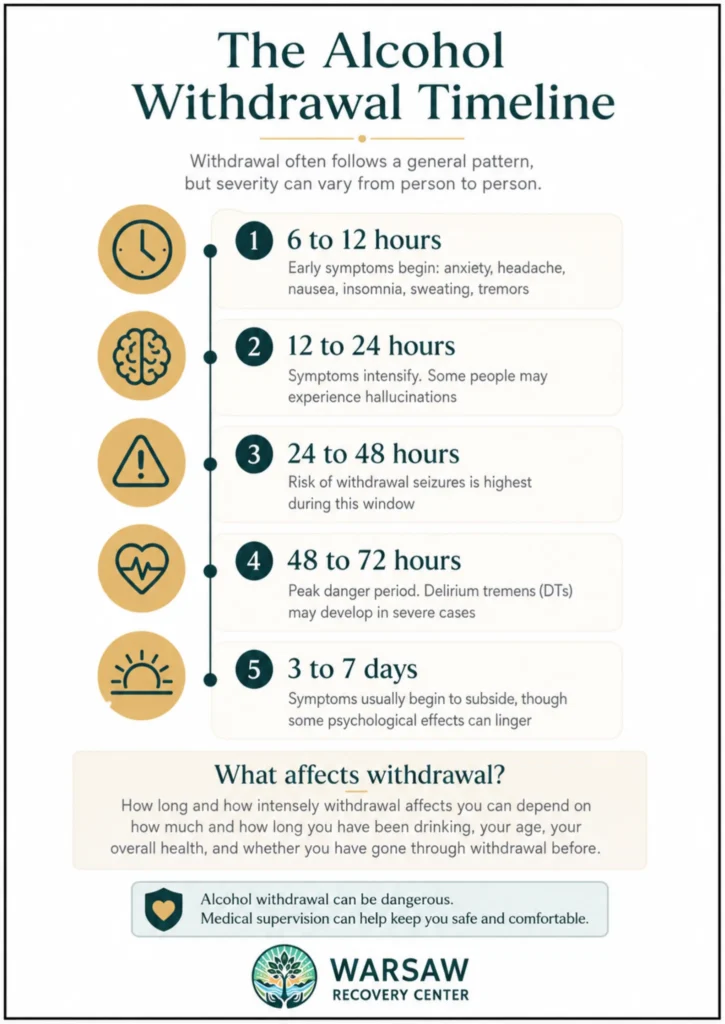
The Alcohol Withdrawal Timeline
Alcohol Withdrawal Symptoms
Mild to Moderate Symptoms
- Anxiety and irritability
- Headache
- Nausea and vomiting
- Sweating and rapid heartbeat
- Tremors (“the shakes”)
- Trouble sleeping
Severe Symptoms (Medical Emergencies)
- Seizures — most likely in the first 48 hours
- Delirium tremens (DTs) — confusion, agitation, fever, hallucinations, and dangerous changes in heart rate and blood pressure
- Severe hallucinations
Severe symptoms require immediate medical care. This is exactly why medical supervision matters so much during alcohol detox.
Can You Detox from Alcohol at Home?
This is one of the most common questions. However, for anyone who drinks heavily or daily, detoxing at home is simply not safe.
The danger with alcohol isn’t the discomfort of withdrawal; it’s that withdrawal can escalate quickly and unpredictably into seizures or DTs. At home, there’s no one to intervene if that happens. People at the highest risk include anyone who drinks large amounts daily, has been drinking for years, has gone through withdrawal before, or has other health conditions.
If you’re a light or occasional drinker, you may be able to cut back safely with guidance from your doctor. But if alcohol is a daily part of your life, the safest path is medically supervised detox. For more information, refer to our guidance on medical detox vs. natural detox.
How to Detox from Alcohol Safely
Medical Detox
In a medical detox program, you’re monitored around the clock by clinical staff who can manage symptoms, prevent complications, and keep you safe and as comfortable as possible. This is the gold standard for anyone with alcohol dependence.
Medications Used in Alcohol Detox
Medication can make alcohol withdrawal safer and more comfortable, but the treatment plan depends on your symptoms, medical history, withdrawal risk, and response to care.
Benzodiazepines are the most commonly used medications for moderate to severe alcohol withdrawal. Medications such as diazepam, lorazepam, or chlordiazepoxide may help calm the nervous system, reduce agitation and tremors, and lower the risk of seizures and delirium tremens. Although benzodiazepines can be addictive when misused or taken for long periods, detox teams administer them in controlled doses and typically use them only for a short time.
Certain anticonvulsant medications may be appropriate for some people with mild to moderate withdrawal or may be used alongside other treatment. Examples can include carbamazepine or gabapentin. They are not interchangeable with benzodiazepines in every situation and may not provide enough protection for someone at high risk of severe withdrawal.
Medications for specific symptoms may also be used as part of a broader treatment plan. For example, beta-blockers or similar medications may help manage a rapid heartbeat, elevated blood pressure, or tremors. However, these medications can mask signs that withdrawal is becoming more severe, and they do not prevent seizures or delirium tremens.
Every medication administered is selected and monitored by trained medical professionals. Alcohol detox medications should never be taken without clinical guidance because the wrong drug, dose, or combination can create serious risks.
Nutrition and Hydration
Heavy drinking depletes the body of essential vitamins, especially thiamine (B1). Clinicians may also provide fluids, electrolytes, and vitamins such as thiamine to address dehydration, nutritional deficiencies, and complications linked to long-term alcohol use.
A Support System
Recovery is easier when you’re not alone. A combination of professional care and personal support gives you the strongest foundation. To learn more, please read why alcohol detox is a turning point.
What Happens After Detox?
Detox handles the physical dependence, but it doesn’t address the underlying reasons that drinking took hold in the first place. That’s where professional addiction treatment comes in.
After detox, most people benefit from continuing care such as residential treatment or an inpatient program, where therapy and counseling help build lasting recovery.
For Family Members
If you’re watching someone you love struggle, you don’t need the perfect words to help. Encourage them gently, avoid shaming, and know that you can reach out to a treatment center on their behalf to understand the options.
Making the first call is often the hardest part, and you don’t have to do it alone. Call Warsaw Recovery Center at (888) 511-9480 today.
Alcohol Detox near Richmond, VA
At Warsaw Recovery Center, our medically supervised alcohol detox provides 24/7 monitoring, compassionate care, and a safe, comfortable environment to begin recovery. We’re CARF-accredited and within reach of Richmond, Fredericksburg, Williamsburg, and Hampton Roads.
Learn more about our alcohol detox program, or verify your insurance in minutes.
Ready to take the first step?
Call Now
(888) 511-9480
for a confidential, no-obligation conversation.
Frequently Asked Questions About Alcohol Detox
How long does it take to detox from alcohol?
Most people experience withdrawal symptoms for about 5 to 7 days, with the most intense symptoms occurring between 48 and 72 hours after the last drink. Some psychological effects can last longer.
What are the first signs of alcohol withdrawal?
Early signs usually begin 6 to 12 hours after the last drink and may include anxiety, headache, nausea, sweating, insomnia, and tremors.
Is it dangerous to detox from alcohol?
It can be. For people who drink heavily or have used alcohol for a long time, withdrawal can lead to seizures or delirium tremens, which can be life-threatening. This is why medically supervised detox is strongly recommended.
Can you detox from alcohol at home?
Detoxing at home may be unsafe for anyone who drinks heavily, drinks daily, or has experienced withdrawal before. Symptoms can become severe quickly. A medical professional can help determine the safest level of care.
What medications help with alcohol detox?
Clinicians often use benzodiazepines to reduce severe withdrawal symptoms and help prevent seizures. Other medications may be used to manage specific symptoms, nutritional deficiencies, or related health concerns. All medications should be prescribed and monitored by medical professionals.
Clinically reviewed by Dr. William Cooke.